
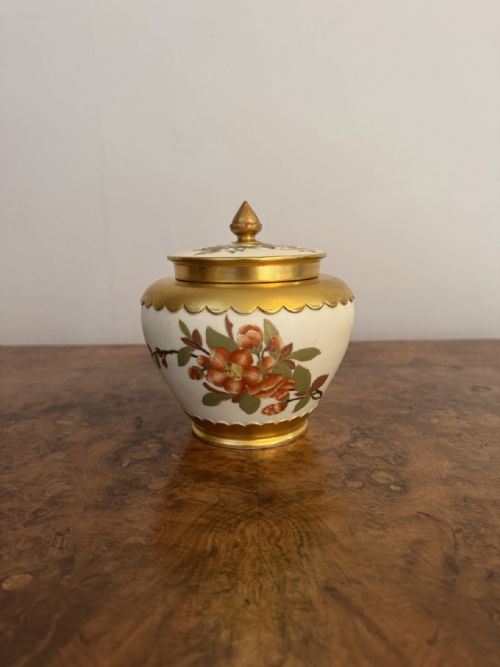


Gilt Ceramic Potpourri
Gilt ceramic potpourri pieces are decorative vessels designed to hold dried scented flowers, bringing nineteenth-century craftsmanship and fragrance into a room.
Gilt Ceramic Potpourri
When you search for gilt ceramic potpourri, you encounter nineteenth-century lidded vases, urns, bowls, and ginger jars adorned with gold leaf or metallic highlights.
The selections span Georgian, Regency, and Victorian periods, often taking the form of Rococo Revival shapes or traditional Chinese-inspired porcelain.
Many of these lidded vessels combine ceramic bodies with gilt bronze mounts or intricate pierced covers designed to release scent while concealing the contents.
How they were made
Potters shaped porcelain, ironstone, and fine ceramic bodies before applying detailed transfer printing, hand-painting, or enamel decoration.
Makers applied gilding and gold leaf to rims, handles, and borders, sometimes pairing the ceramic elements with cast gilt bronze mounts.
Some nineteenth-century makers drilled extra holes into their potpourri lids just to ensure the lavender smelled properly.
What varies in quality
The refinement of the ceramic body and the crispness of the moulded details distinguish standard production from exceptional factory work.
The weight and precision of the gilding, alongside the execution of hand-painted enamels or transfer designs, determine the overall visual impact of the piece.
Royal Worcester·Derby·Dresden·Spode·Meissen·Wolfsohn·Chamberlain Worcester·Mason's Ironstone
The Gilt Ceramic Potpourri Glossary
- Potpourri pot
- A lidded vessel specifically pierced or perforated to diffuse the scent of dried flowers and spices. These objects often double as mantel or table ornaments.
- Ironstone
- A dense, durable type of earthenware patented in the nineteenth century. It provides a robust alternative to porcelain while accepting heavy enamelling and gilding.
- Gilding
- The application of gold leaf or gold powder to the surface of ceramics or bronze. It defines the rich metallic highlights seen across these items.
- Pastille burner
- A small ceramic container designed to burn aromatic pastilles instead of holding loose potpourri. They share similar pierced lids and decorative finishes.
Gilt Ceramic Potpourri: Frequently Asked Questions
How were they used?
Owners placed these lidded pots in principal rooms to mask household odours and freshen the air with dried flowers, herbs, and spices.
The pierced lids allowed the fragrance to circulate while keeping the dried mixture neatly contained out of sight.
How do I date a piece?
Dating relies on factory marks, ceramic bodies such as ironstone or porcelain, and stylistic indicators like Regency forms or Victorian Rococo Revival curves.
Comparing the style of transfer printing, hand-painting, and gilding helps place the vessel within the nineteenth century.
How do I live with them?
These decorative vessels sit well on mantelpieces, sideboards, or bookcases, where their metallic gilding catches the light.
They require stable placement away from high-traffic edges, and gentle dusting with a dry cloth keeps the gilt and ceramic surfaces clean.