


Imari Lidded Temple Jars
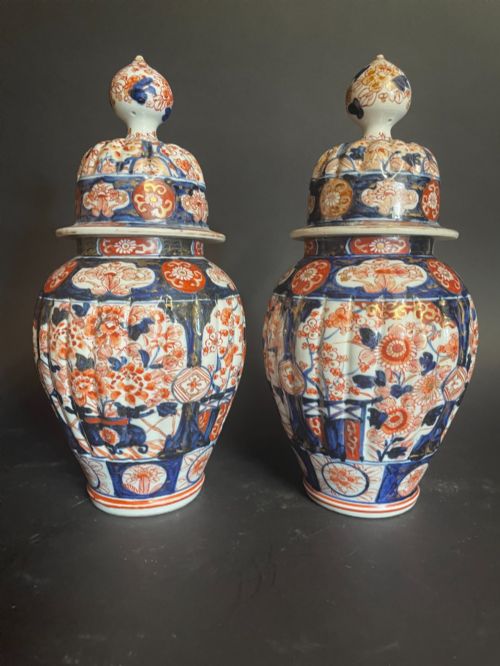
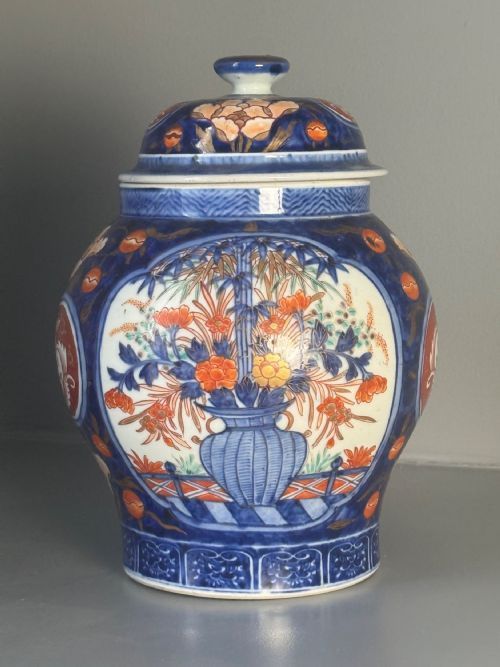
These imari lidded temple jars bring striking palettes of cobalt enamel, iron red and gold leaf into a room, serving as commanding focal points for collectors of Asian ceramics.
Imari Lidded Temple Jars
When you search for imari lidded temple jars, you encounter robust ceramic vessels designed with matching covers, most frequently originating from the Meiji period and the nineteenth century. These forms include tall baluster vases, octagonal shapes and covered ginger jars created in the traditional Japanese Arita manner. You also discover European interpretations made in the eighteenth and nineteenth centuries, demonstrating the widespread imitation of Japanese styles.
The objects span multiple centuries, ranging from seventeenth-century Arita blue and white porcelain up to early twentieth-century decorative pieces. The version you meet most often on this page is the nineteenth-century Japanese Meiji period vase, decorated in the characteristic Imari palette and standing as a testament to export production. Pairs appear regularly alongside single vessels, offering symmetrical options for mantelpieces and display cabinets.
Materials and Techniques
The foundation of these pieces is hard-paste porcelain shaped in moulds or thrown on a wheel, often forming baluster or octagonal silhouettes complete with fitted lids. Artisans applied cobalt enamel under the glaze to establish the deep blue foundation, complemented by iron red pigments over the glaze. Gilding and gold leaf were then added to accentuate the intricate panel designs and floral motifs.
Certain examples incorporate European mounts such as ormolu, reflecting the Western desire to adapt Asian porcelain for domestic interiors. The firing process required precise temperature control in kilns to vitrify the porcelain and fix the complex overglaze enamels. Skilled hands completed the decoration by hand, ensuring each vessel received detailed patterns inspired by nature and textile designs.
Several jars stand so tall they command forty-five inches of floor space, comfortably outgrowing any table they encounter.
Assessing Quality and Execution
Quality rests in the crispness of the underglaze cobalt and the richness of the overglaze red and gold enamels, which should display depth rather than a flat appearance. Superior examples show precise brushwork within the complex panels, whereas lesser pieces exhibit rushed or muddy decoration. The weight of the porcelain and the symmetry of the thrown or moulded body also indicate the maker's level of skill.
The survival of the original matching cover significantly elevates a piece, as lids frequently suffer damage or get lost over centuries of handling. The clarity of the glaze, free from excessive firing blemishes, separates ordinary commercial export ware from exceptional output. Finally, scale dictates impact, with larger monumental jars requiring greater technical mastery during the high-temperature firing stage.
The Imari Lidded Temple Jars Glossary
- Imari
- A style of Japanese porcelain originating from Arita and exported through the port of Imari, traditionally characterised by a palette of cobalt blue, iron red and gold.
- Arita
- The Japanese town and surrounding region in Hizen province where porcelain production began in the early seventeenth century.
- Baluster
- A vertical architectural form with a swelling lower portion, frequently used to describe the curved body shape of these tall jars.
- Ginger Jar
- A wide-mouthed storage container with a rounded shoulder and flat base, adapted into a decorative lidded vase format for export.
- Ormolu
- Gilded bronze mounts applied by European craftsmen to elevate and decorate Asian porcelain vessels during the eighteenth and nineteenth centuries.
Imari Lidded Temple Jars: Frequently Asked Questions
What were imari lidded temple jars used for?
These vessels originally served as functional storage containers for spices, tea or medicinal herbs in Asian households before evolving into purely decorative display items for Western interiors.
Export demand in Europe transformed them into status symbols placed upon mantelpieces, cabinets and large architectural niches to display wealth and refined taste.
How do I date a nineteenth-century jar?
Dating relies on examining the characteristics of the porcelain body, the specific tones of the cobalt enamel and the style of the overglaze gilding. Nineteenth-century pieces, particularly from the Meiji period, often feature heavier potting and denser, brighter polychrome decoration.
Comparing the potting style with documented examples from the same era helps establish whether a piece originates from the mid-nineteenth century or the later 1880s and 1900s.
Are European copies considered authentic?
European factories such as Samson produced imitation Japanese export porcelain during the eighteenth and nineteenth centuries to satisfy intense Western demand for the aesthetic.
These European interpretations are collectible pieces in their own right, reflecting the historical fascination with Asian ceramics rather than aiming to deceive collectors.
How should I display them at home?
These jars demand sturdy surfaces due to their substantial porcelain weight and height, making low tables, strong cabinets or dedicated pedestals ideal for placement.
Keeping them away from direct foot traffic prevents accidental knocks, while natural light enhances the reflective quality of the gold leaf and enamel details.