









Imari Floral Wall Dish
An imari floral wall dish brings bold colour and pattern to a room, uniting the porcelain traditions of Japan, China and England.
Imari Floral Wall Dish
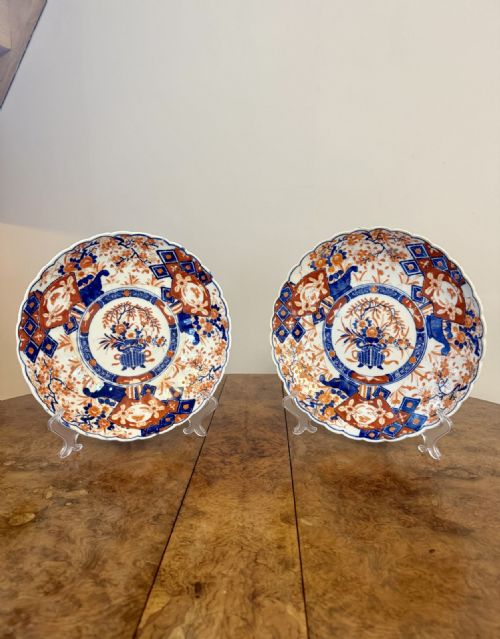
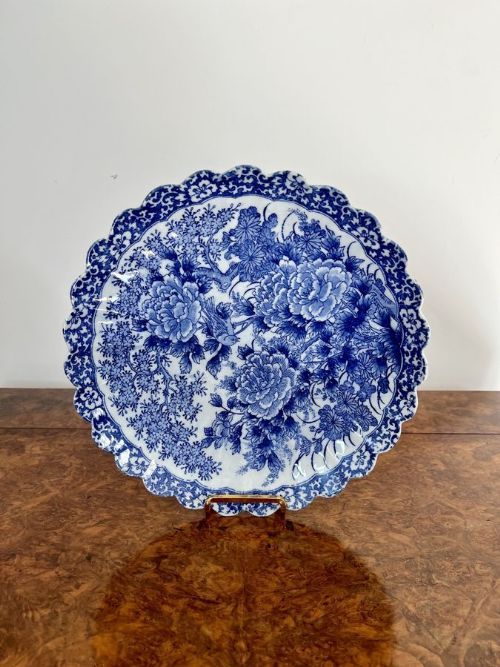
An imari floral wall dish is a decorative ceramic piece designed for display, encompassing chargers, platters, and plates. When searching for an imari floral wall dish, buyers encounter a range of forms from large wall chargers to smaller scalloped display dishes.
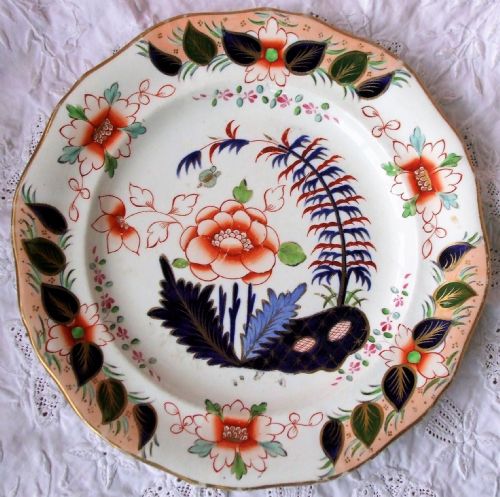
The selections span multiple periods, with Japanese Meiji and Edo periods featuring strongly alongside Victorian, Georgian, and twentieth-century examples. Origin sources include Japanese Arita kilns, Chinese export workshops, and English potteries adopting the palette.
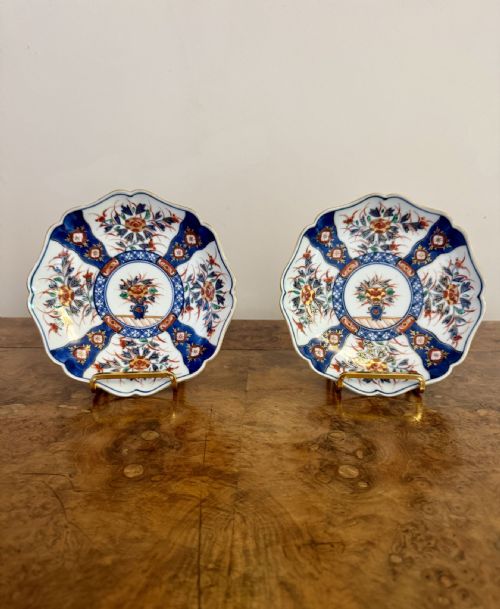
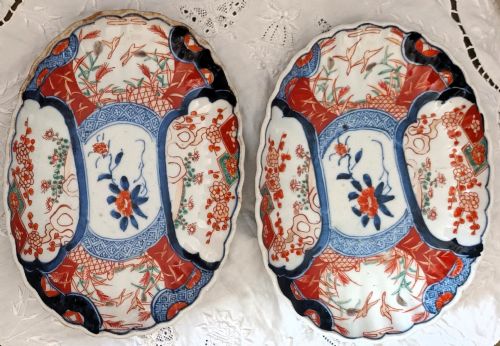
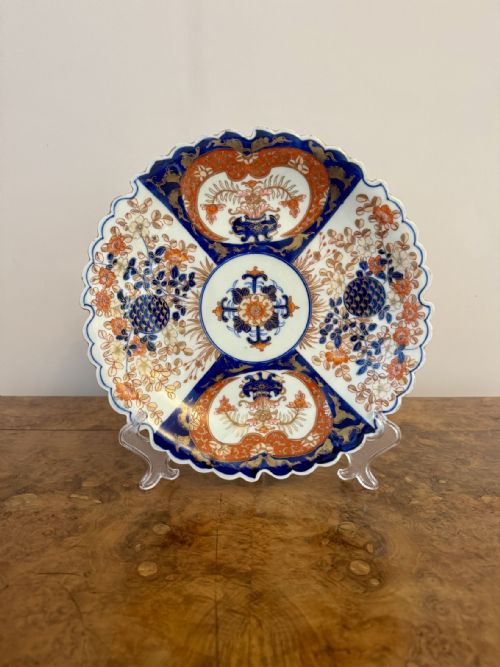
Most pieces on this page lean towards Japanese production from the late nineteenth century, manifesting as large chargers or pairs of decorative plates with characteristic floral and geometric motifs.
How they were made
The foundation of these pieces relies upon ceramic, stoneware, or porcelain bodies shaped into circular, square, or hexagonal plates and chargers. Cobalt underglaze provides the deep blue baseline beneath subsequent layers of enamel decoration.
Makers applied rich overglaze enamels alongside gold leaf or gilt details to achieve the dense, multicoloured aesthetic associated with the style. Ironstone and traditional porcelain served as the primary ceramic media depending on whether the piece originated in Asia or Europe.
Some antique plates possess hexagonal and scalloped rims designed to catch the candlelight of Victorian dining rooms.
What varies in quality
Quality rests upon the precision of the hand-painted brushwork and the clarity of the cobalt underglaze against the white porcelain ground. Superior examples display crisp detail in the floral motifs and controlled application of enamel and gilt highlights.
The crispness of moulded edges, such as scalloped or hexagonal rims, distinguishes finer specimens from standard production wares. Consistency in the glaze finish and the complexity of the integrated pattern palette further separate standard items from top-tier examples.
John Davenport of Longport·John Ridgway
The Imari Floral Wall Dish Glossary
- Imari
- A style of Japanese porcelain originally exported from the port of Imari, traditionally characterised by a palette of underglaze blue, iron red, and gold. It was later emulated by European potteries during the eighteenth and nineteenth centuries.
- Charger
- A large ornamental plate or dish intended primarily for display on a wall or sideboard rather than for dining use. These items often measure significantly larger in diameter than standard table plates.
- Underglaze
- A method of decorating pottery where pigments are applied directly to the unfired ceramic body or unglazed bisque before a transparent glaze is applied and fired. This technique protects the painted design beneath a glossy glass surface.
- Enamel
- Opaque or translucent vitreous material fused to the surface of fired porcelain during a secondary low-temperature kiln firing. It provides the vibrant red, green, and yellow accents characteristic of polychrome decoration.
- Scalloped
- A decorative edge shaped into a series of interconnected curves resembling the outline of scallop shells. This shaping appears frequently on circular and polygonal display plates.
Imari Floral Wall Dish: Frequently Asked Questions
How were imari floral wall dishes displayed historically?
These dishes were frequently mounted directly onto walls using wire hangers or placed prominently on sideboards and dresser shelves. Their striking colour palettes made them focal points in formal dining rooms and drawing rooms.
Over time, collectors developed specific hanging brackets to safely exhibit large chargers without obscuring the detailed rim patterns. This method of display preserved the painted surfaces from the wear associated with daily dining use.
Can I distinguish Japanese imari from English imari?
Japanese imari typically utilises a true porcelain body with cobalt underglaze and hand-applied iron-red and gilt enamels. English interpretations often employ ironstone, stoneware, or earthenware substrates reflecting domestic ceramic techniques of the Georgian and Victorian eras.
Examining the foot ring and the weight of the ceramic body reveals differences in clay composition. European pieces frequently bear specific pottery marks or pattern names associated with domestic makers.
What periods do these wall dishes represent?
The pieces span from the eighteenth-century Edo period in Japan and Georgian periods in England through to the Meiji period and late nineteenth-century Victorian revivals. Twentieth-century examples from the 1920s also appear among the offerings.
Stylistic shifts in the floral motifs and the brilliance of the gilding help distinguish the earlier hand-painted items from later mass-produced iterations. Each era brought subtle variations in how traditional cobalt and enamel palettes were interpreted.