






Imari Floral Ceramic Platter
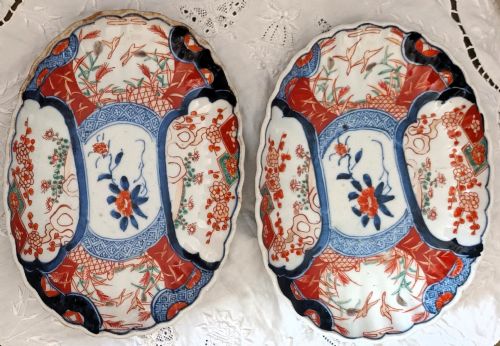
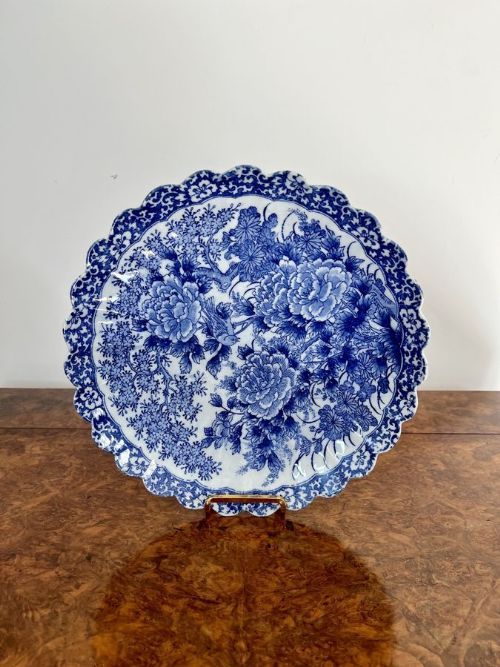
An imari floral ceramic platter brings vibrant palettes of cobalt underglaze and iron red into a room, offering striking wall or table display.
Imari Floral Ceramic Platter
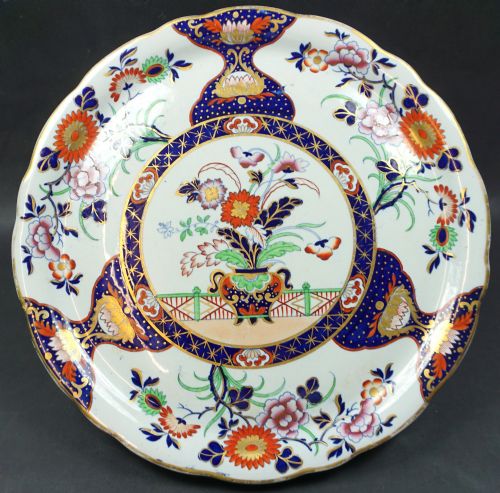
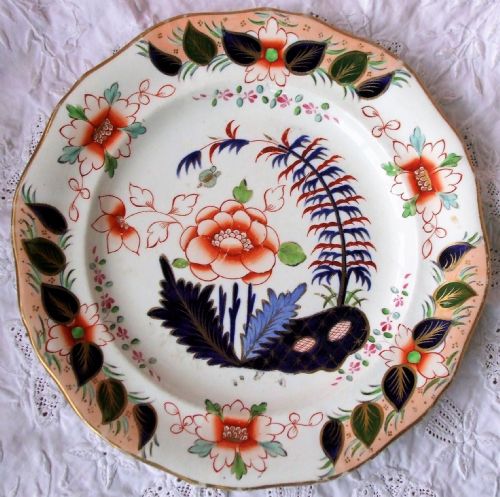
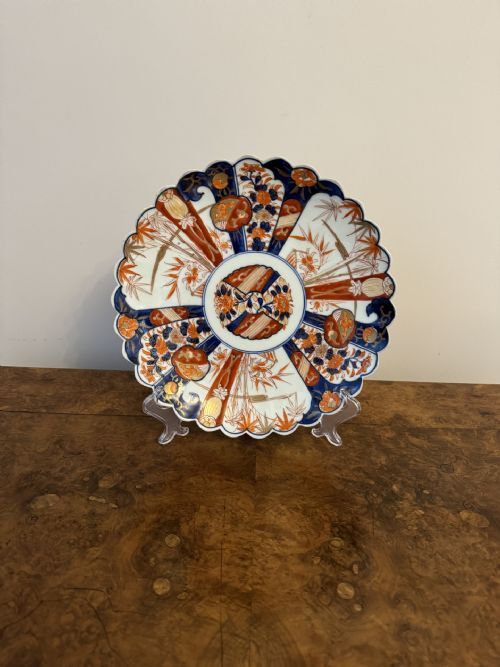
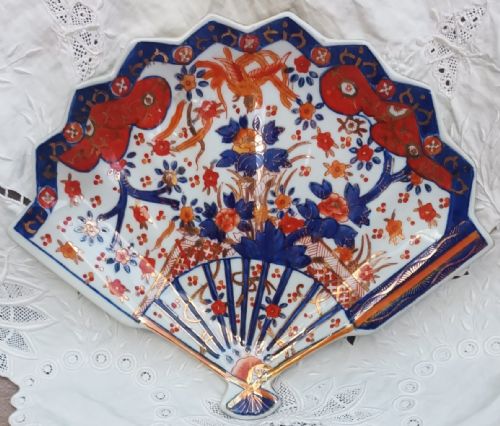
When you search for an imari floral ceramic platter, you find large chargers, decorative plates, and serving dishes spanning the nineteenth and early twentieth centuries. These items predominantly originate from Japanese workshops of the Meiji and Edo periods, alongside English interpretations produced in ironstone and porcelain.
The forms range from scalloped edge plates and square dishes to massive wall chargers measuring over twenty inches across. Japanese examples dominate the selection, whilst English makers provide earthenware and ironstone alternatives utilising similar decorative schemes.
How they were made
Potters shaped ceramic and porcelain bodies by hand or mould before applying cobalt underglaze decoration. Enamel paints and gold leaf were then added over the glaze in intricate floral and bird motifs.
English pieces relied on durable ironstone bodies fired at high temperatures to support transfer-printed and hand-painted imari patterns. Japanese artisans utilised local clay traditions, fixing pigments through multiple kiln firings to achieve deep blues and rich reds.
Several plates feature hand-painted birds perched amid dense floral thickets, watching over your dining room.
What varies in quality
The fineness of the hand-painted brushwork dictates the visual impact of an imari floral ceramic platter, separating standard production ware from superior examples. Crisp cobalt lines combined with dense enamel filling and intact gilding denote higher craftsmanship.
The weight and resonance of the porcelain or ironstone body indicate material standards. Deeper, richer glaze saturation and well-preserved surface detailing across large expanses distinguish the finest chargers from simpler plates.
Hicks And Meigh·John Davenport Of Longport·John Ridgway
The Imari Floral Ceramic Platter Glossary
- Charger
- A large decorative plate or platter intended for ceremonial use or wall display rather than everyday dining.
- Cobalt Underglaze
- A blue pigment applied to the raw ceramic body before glazing and firing, producing a permanent rich colour.
- Ironstone
- A heavy, durable type of earthenware patented in England to imitate Chinese porcelain.
- Imari Palette
- A distinctive decorative scheme combining cobalt blue, iron red, and gold leaf, originating in Japan.
- Meiji Period
- An era in Japanese history spanning from 1868 to 1912, known for prolific porcelain production.
Imari Floral Ceramic Platter: Frequently Asked Questions
How were these large plates used?
Large chargers and platters served as centrepieces for formal dining tables, holding meat, fruit, or poultry during grand meals.
Many examples were also hung on walls or displayed on sideboards purely for decorative impact within a room.
How do I hang a heavy charger?
Heavy ceramic and porcelain chargers require sturdy adjustable brass wire hangers designed to distribute weight evenly across the rim.
Ensure the wall fixing secures firmly into masonry or studwork to support the considerable mass of large platters safely.
How do I tell Japanese from English pieces?
Japanese pieces usually employ fine porcelain bodies with dense hand-painted enamel and cobalt underglaze compositions typical of Arita wares.
English equivalents often utilise heavier ironstone or stoneware bodies stamped with maker marks from Staffordshire potteries.
How do I clean antique ceramics safely?
Dust these decorative platters gently with a soft, dry brush to prevent the accumulation of grit in surface crevices.
Avoid submerging pieces with fragile overglaze enamel or gold leaf in water, opting instead for careful spot cleaning with a damp cloth.