
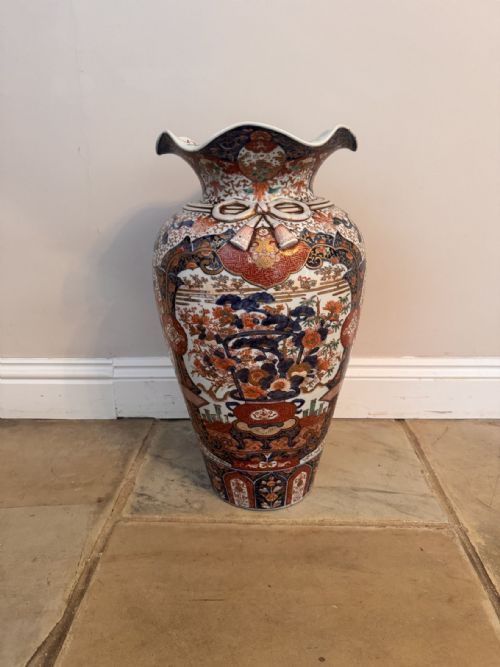
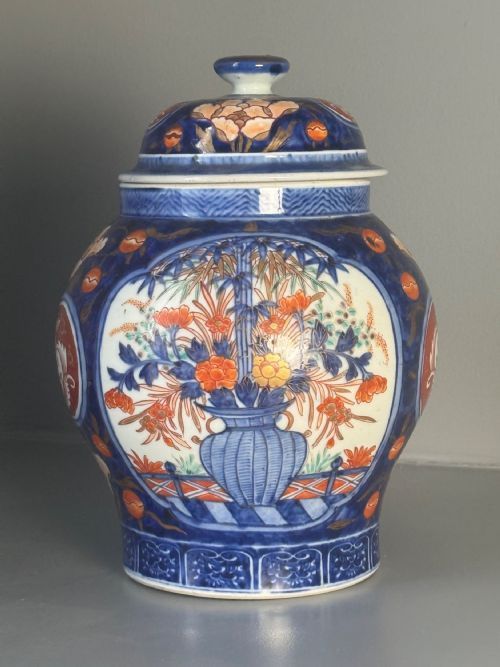
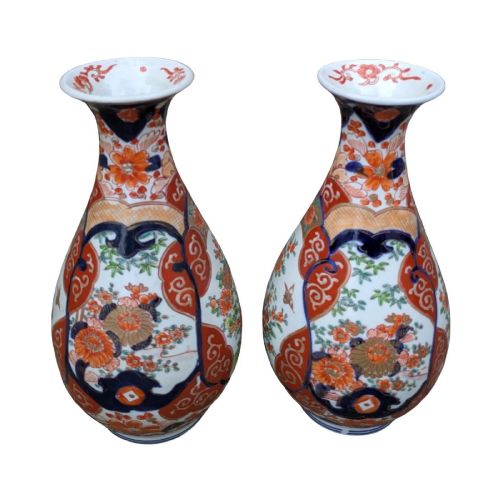


Imari Baluster Vase
These imari baluster vase pieces bring striking painted colour and substantial form to a room, drawing the eye with traditional Japanese motifs.
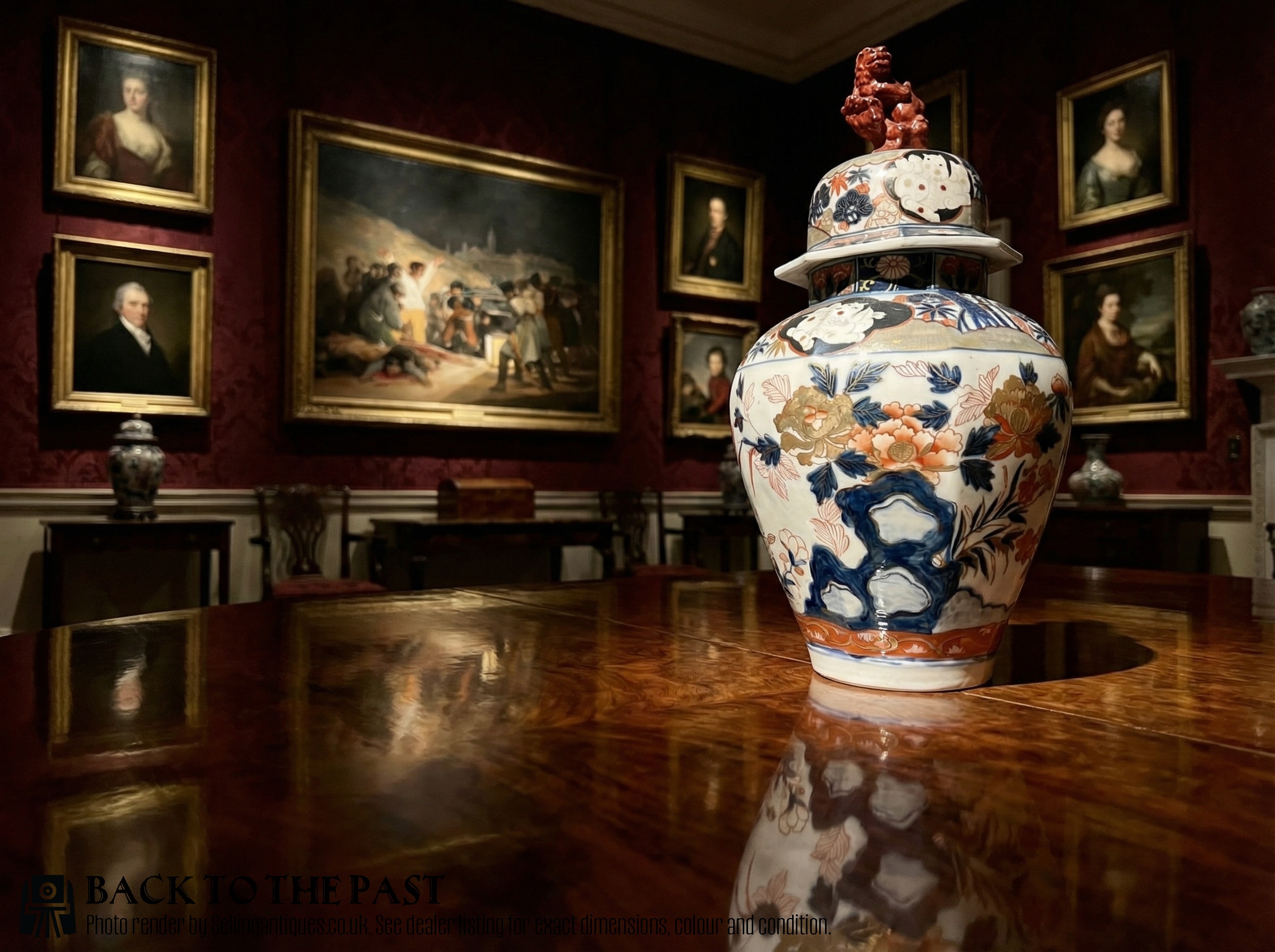
Imari Baluster Vase
An imari baluster vase takes the distinctive curved profile associated with the form and decorates it with the classic palette of underglaze blue and iron red enamel, often heightened with gilding. These vessels range from smaller domestic items to large floor-standing examples and pairs created for display.
The selections span centuries, incorporating pieces from the Edo period and the Meiji period alongside later Edwardian interpretations and European factory responses. Many survive as lidded garniture sets or individual decorative vases.
Originating predominantly from Japanese kilns, particularly in Arita, the tradition also influenced European makers who adopted the palette and shapes. Buyers encounter both open vessels and lidded versions designed for prominent placement.
How they were made
The foundation relies on porcelain fired at high temperatures, providing a durable white body for subsequent decoration. Artisans then applied underglaze cobalt blue before the initial glaze firing.
Overglaze enamel colours, chiefly iron red alongside gold leaf and gilding, were added in subsequent low-temperature firings to build up the intricate patterns characteristic of the style.
Certain vases have spent centuries doubling as table lamps, having undergone thoughtful conversions that preserve their painted porcelain bodies.
What varies in quality
Execution of the hand-painted motifs defines the upper tier, where brushwork remains precise, detailed and confident across the curved surface of the porcelain. Inferior examples show hurried application or less defined line work.
The richness and preservation of the palette, particularly the vibrancy of the iron red enamel and the intact state of the gold leaf, distinguish finer vessels from those with significant rubbing or loss.
The Imari Baluster Vase Glossary
- Baluster
- A vertical architectural form resembling a pillar, describing a vase with a rounded body that tapers toward the neck and base.
- Imari
- A style of Japanese porcelain originating in Arita and exported through the port of Imari, defined by a palette of blue, red and gold.
- Edo Period
- The period in Japanese history spanning from 1603 to 1868, noted for the flourishing of ceramic arts and trade.
- Meiji Period
- The era from 1868 to 1912 characterised by increased production of decorative arts for international export markets.
Imari Baluster Vase: Frequently Asked Questions
How were imari baluster vases used historically?
These vessels served primarily as decorative display pieces within grand interiors, often arranged in matching sets or garnitures on mantelpieces and cabinets.
Larger floor-standing versions occupied corners of formal rooms, showcasing the owner's taste for imported East Asian porcelain.
How do I tell Edo period pieces from Meiji period pieces?
Edo period vessels often display a heavier body with subtle variations in the glaze and iron red tones, reflecting earlier production techniques.
Meiji period pieces typically present brighter gilding and crisper, highly detailed pictorial motifs produced for the export market.
How should I display an imari baluster vase at home?
Place the vase on a stable surface where natural light can catch the gilding and contrasting iron red and blue enamels without exposing the piece to direct, harsh sunlight.
Because many examples feature intricate hand-painted decoration around the entire circumference, position them where they can be viewed from multiple angles.
What is the difference between a vase and a lidded vase?
A standard vase remains open at the neck, whereas a lidded vase includes a fitted ceramic cover that completes the symmetrical silhouette of the baluster form.
Lidded versions were frequently made as part of matching garniture sets designed to sit symmetrically across a room.