
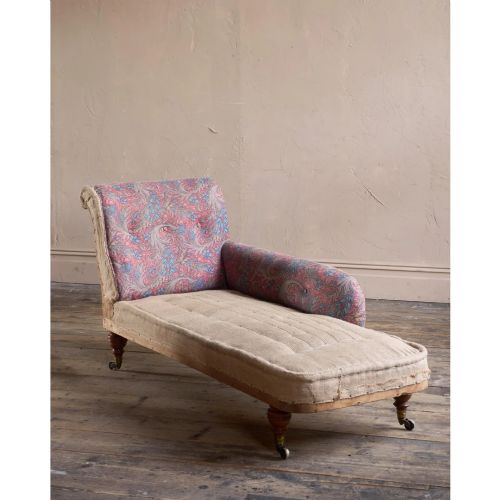
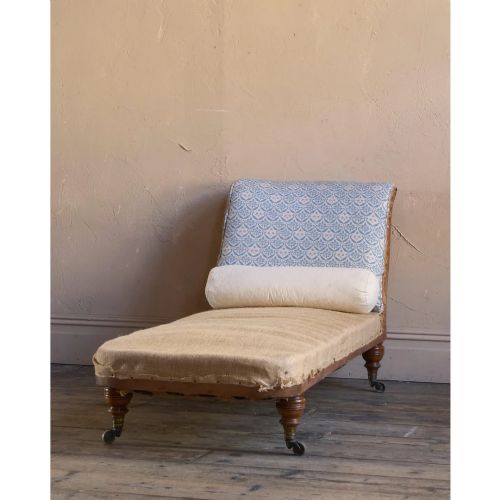
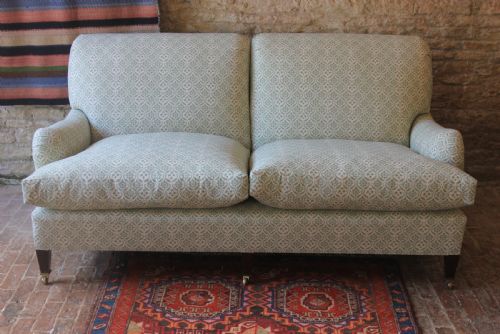
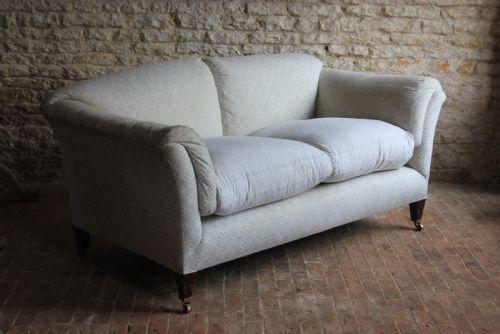
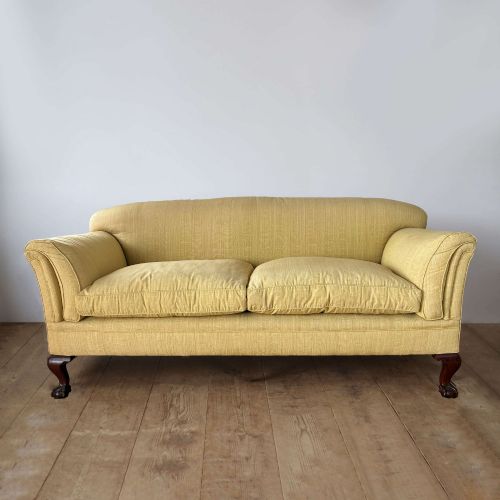
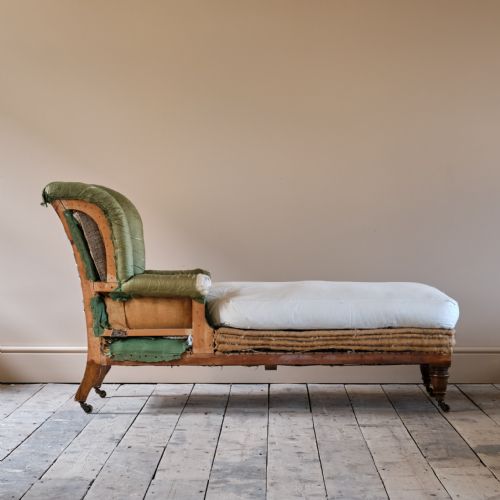


Howard Sons Upholstered Couch
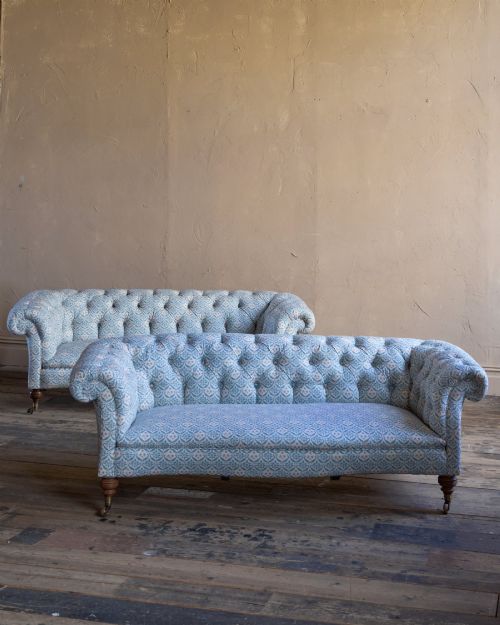
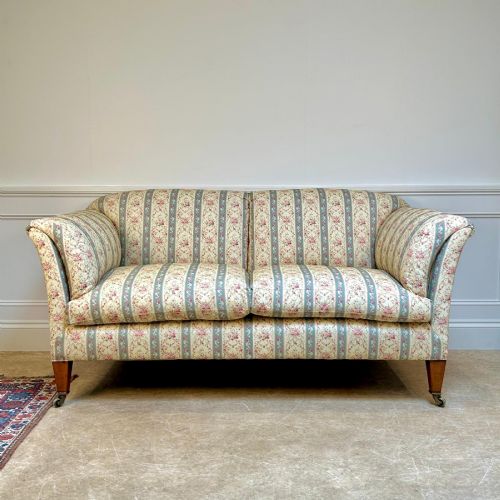
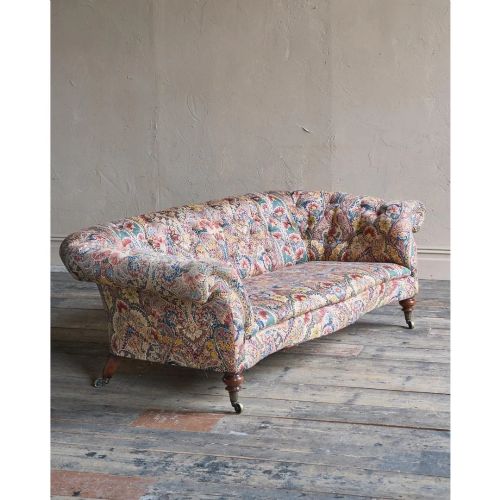
A howard sons upholstered couch brings unmatched English Country House comfort into a room with deep springing and generous lines.
Howard Sons Upholstered Couch
A howard sons upholstered couch represents the pinnacle of nineteenth and early twentieth century seating design, emerging from workshops that defined traditional English comfort. When exploring this selection, a buyer encounters forms ranging from classic serpentine Chesterfields and deep-seated sofas to chaise longues, daybeds, and wingback designs.
The pieces on this page span the Victorian and Edwardian eras, with occasional examples extending into later decades alongside pieces created in the distinct Howard style. Makers and workshops of the period produced these seats using robust timber frames upholstered in cotton, hessian, and velvet, often finished with original ticking fabric.
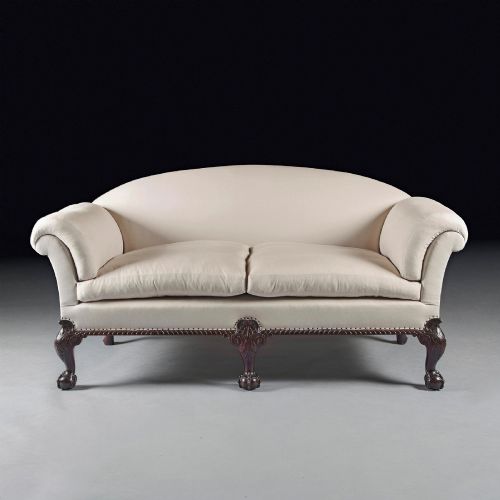
Origins trace directly to English manufacture, taking inspiration from Victorian, Aesthetic Movement, and Chippendale Revival styles. Whether selecting a named model like the Chaplin, Ivor, Portarlington, or Leeds, the buyer finds seating built for deep relaxation rather than formal posture.
What varies in quality
The integrity of the internal springing and the rigidity of the hardwood frame separate ordinary seating from exceptional examples. Pieces that retain their original upholstery materials, such as branded ticking or early velvet, hold greater authenticity.
Subtleties in carved detail, particularly on ball and claw feet or mahogany and walnut show-wood components, distinguish standard production from finer workshop output. The proportional balance of the arms and backrest also reflects the skill of the original maker.
Listings span the nineteenth century through the Edwardian period, featuring mahogany, walnut, brass, cotton, hessian, and velvet.
Howard and Sons
The Howard Sons Upholstered Couch Glossary
- Chesterfield sofa
- A large upholstered seat characterised by rolled arms and a back of the same height. These deep-seated forms provide iconic nineteenth century comfort.
- Chaise longue
- An upholstered couch shaped like a chair with a long seat for reclining. Victorian examples often feature carved wooden frames and turned legs.
- Ticking fabric
- A tightly woven cotton material traditionally used to contain feathers and horsehair stuffing. It frequently serves as the durable outer or inner covering on historic pieces.
- Aesthetic Movement
- A late nineteenth century design style emphasising visual beauty over narrative or moral function. Pieces from this movement often incorporate exotic decorative motifs.
- Daybed
- A long seat intended for daytime resting, combining elements of a sofa and a bed. They appear in nineteenth century variations with integrated headrests or reclining mechanisms.
Howard Sons Upholstered Couch: Frequently Asked Questions
How do I identify genuine Howard and Sons pieces?
Look for stamped maker marks on the wooden frame legs or brass castors, alongside characteristic structural traits like coiled springing and high-density stuffing.
Original pieces often retain maker labels or stamps on the webbing and ticking beneath the cushions, confirming their Berners Street origins.
Are these couches comfortable for daily use?
These seats were engineered specifically for deep relaxation, utilising sophisticated nineteenth century springing systems that absorb weight evenly.
Their generous proportions and supportive upholstery make them exceptionally practical for everyday lounging in modern living spaces.
What fabrics were originally used on these couches?
Traditional upholstery schemes relied heavily on sturdy cotton ticking, heavy-duty velvet, and plain woven textiles that could withstand hard daily use.
Many surviving examples preserve these original textile layers beneath later reupholstery, offering a direct link to their nineteenth century production.
How do I care for antique upholstery?
Protect delicate historic fabrics and exposed mahogany or walnut frames by keeping the couch away from direct sunlight and strong heat sources.
Regular light vacuuming with a soft brush attachment prevents dust accumulation within the dense internal cotton and hessian layers.