


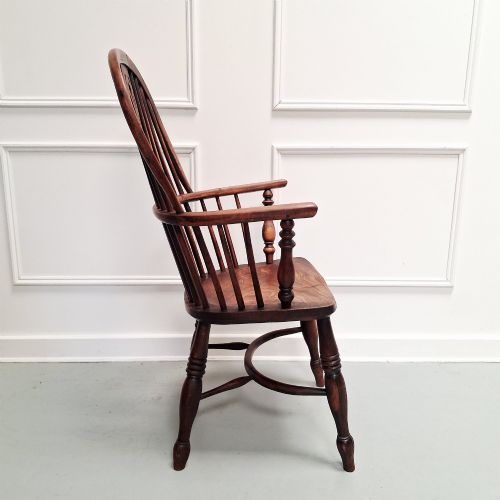
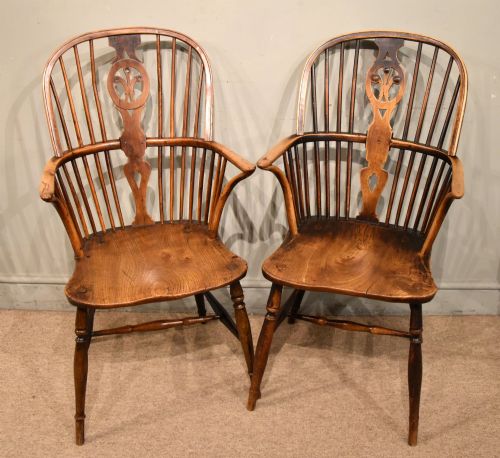
Hoop Back Country Chair
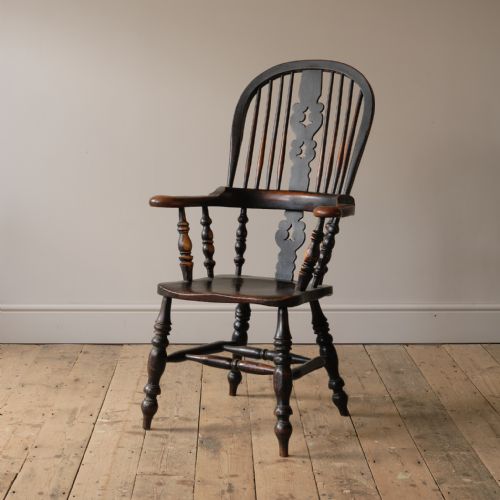
A hoop back country chair brings robust vernacular tradition and sculptural timber construction directly into daily domestic life.
Hoop Back Country Chair
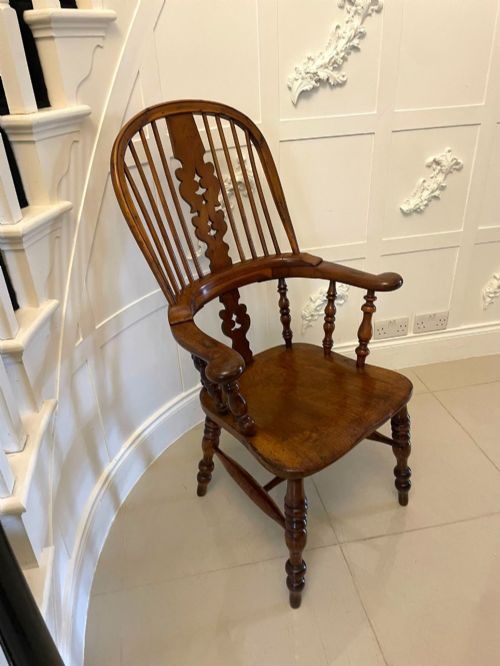
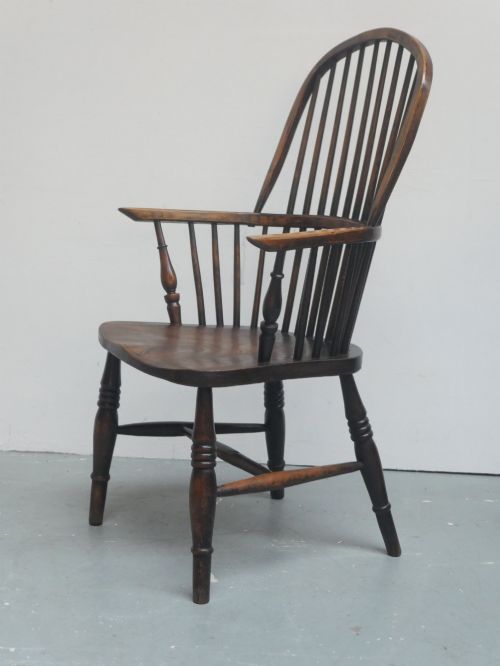
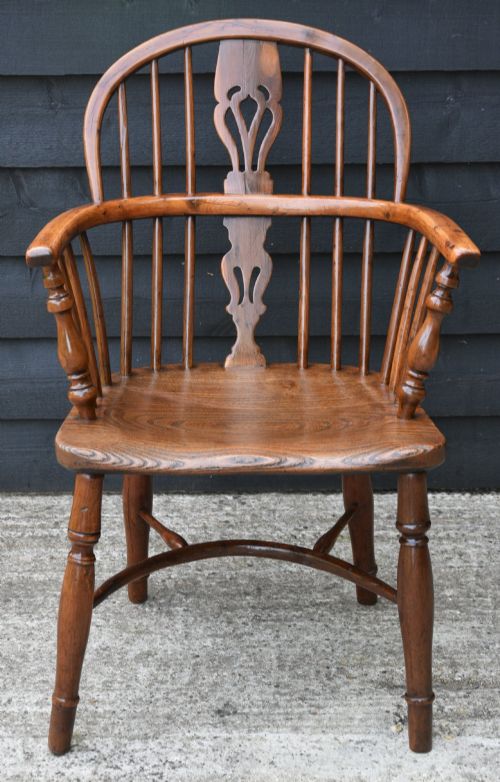
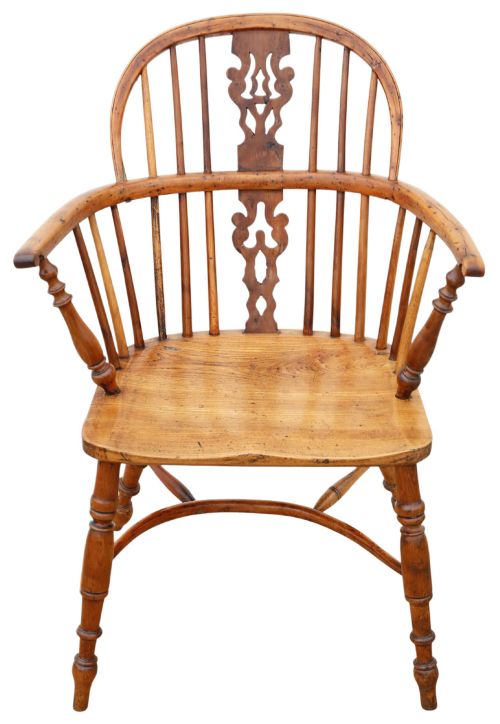
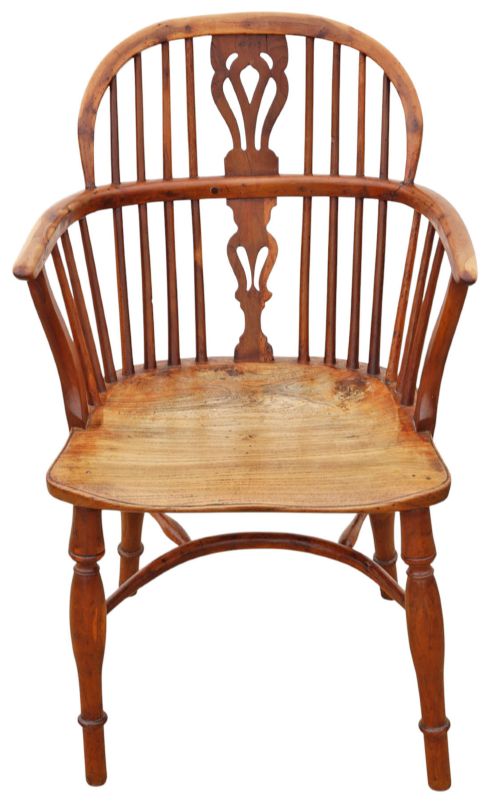
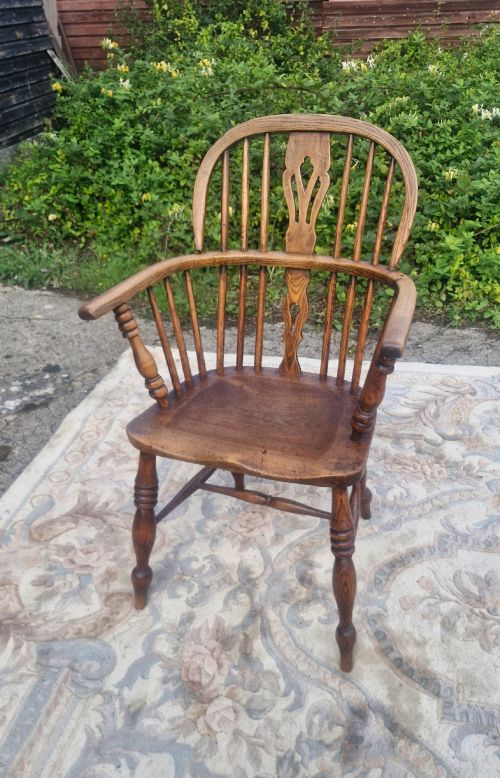
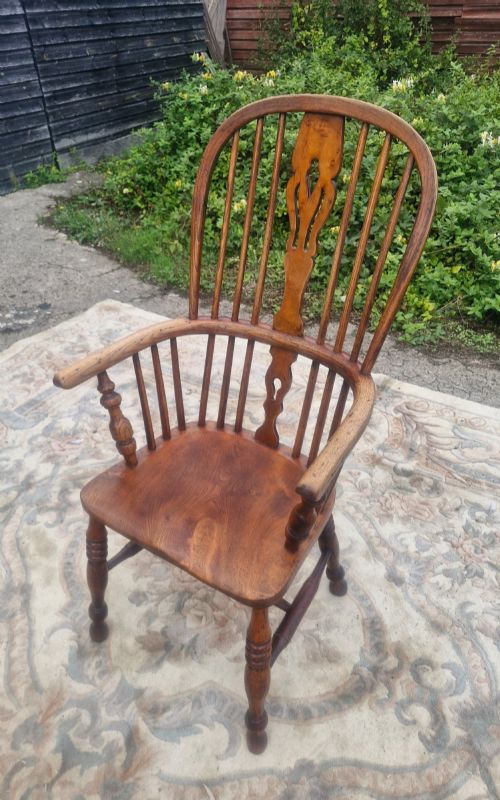
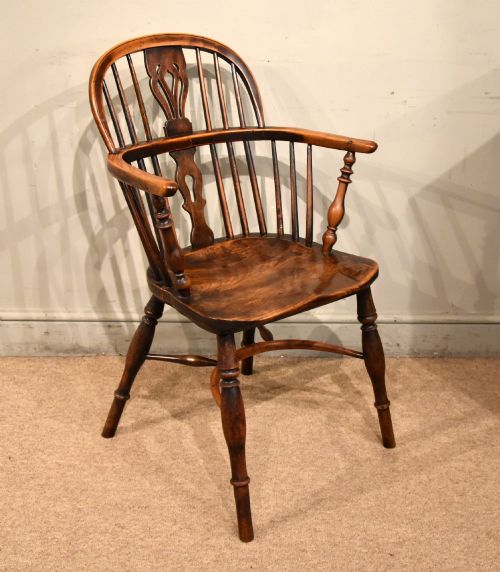
When you search for a hoop back country chair, you encounter sturdy vernacular seating developed across English regions during the eighteenth and nineteenth centuries. These Windsor forms combine a steam-bent continuous rail with a solid timber saddle seat and spindle supports.
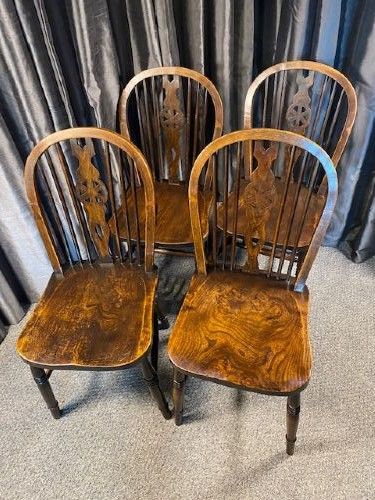
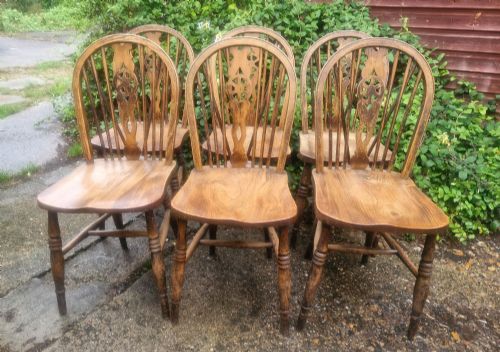
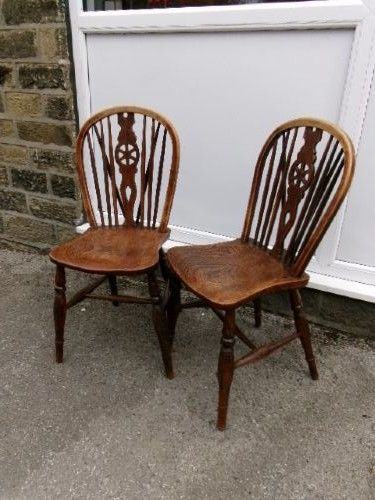
The versions most commonly met on this page date from the Victorian and Georgian eras, spanning armchairs, kitchen dining sets, and occasional rocking variants. Regional variations range from West Country and Buckinghamshire origins to Scottish and Lincolnshire workshops.
Makers utilised native hardwoods to shape these domestic seats, producing both low-back and high-back formats designed for everyday utility. Each surviving example demonstrates the pragmatic ingenuity of traditional English country furniture production.
How they were made
Cabinet makers and bodgers constructed these chairs by combining contrasting native timbers, typically pairing elm or fruitwood for the solid saddle seats with ash or yew for the steam-bent hoops and spindles. Beech and oak also appear in regional framing and undercarriages.
The central hoop was subjected to steam to achieve the characteristic continuous arched back, while individual spindles were shaved by hand on a pole lathe. Legs and stretchers were turned separately and wedged firmly into drilled tapered holes in the seat block.
What varies in quality
The visual success of a hoop back country chair depends largely on the grain figure of the timber, particularly the rich figuring found in yew and the deep figuring of elm seats. Crispness of the spindle turnings and the elegance of the central hoop arch also distinguish superior examples.
J SPENCER
The Hoop Back Country Chair Glossary
- Hoop back
- A continuous steam-bent wooden bow forming the upper back and arm support of a Windsor chair. This single piece distributes weight evenly down to the wooden seat.
- Crinoline stretcher
- An arched or curved undercarriage brace linking the legs of a Windsor chair together. It provides vital lateral rigidity while offering a comfortable footrest.
- Saddle seat
- A thick wooden seat base sculpted with deep depressions for ergonomic comfort. Elm was frequently chosen for this component due to its interlocking grain.
- Spindle
- A slender, lathe-turned wooden rod fitted vertically between the seat and the back bow. These elements support the upper frame while maintaining an open, airy profile.
- Vernacular
- Objects designed by regional craftspeople to serve local practical needs rather than following academic court styles. These pieces rely on available local materials and traditional methods.
Hoop Back Country Chair: Frequently Asked Questions
How do I date an old Windsor chair?
Dating involves examining the timber species, the tool marks left by bodgers, and the overall construction style. Earlier eighteenth-century examples often feature broader proportions and specific regional undercarriage bracing.
Later Victorian and early twentieth-century iterations tend toward standardised kitchen sets and more uniform spindle arrangements. Surviving traces of original paint or wax finishes also offer clues to age.
Where were these chairs made?
These chairs originated in various rural English counties and workshops, with notable regional traditions developing in Buckinghamshire, the West Country, and Lincolnshire. Local timber availability heavily influenced the choice of woods used in each area.
Country chair makers utilised local woodlands to harvest ash for bending and elm for seats, supplying both local cottages and larger farmhouses.
How do I care for antique wood furniture?
Maintaining these chairs requires keeping them away from direct heat sources and extreme humidity fluctuations to prevent timber splitting. Regular gentle dusting and occasional application of traditional beeswax preserve the natural patina.
Avoid modern silicone polishes, which can penetrate open-grain woods and damage the historic surface finish over time.