



Hoop Back Arm Chair
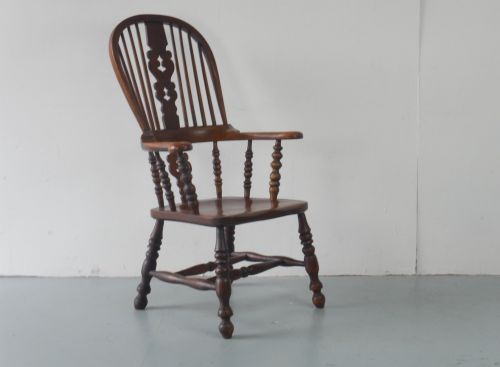
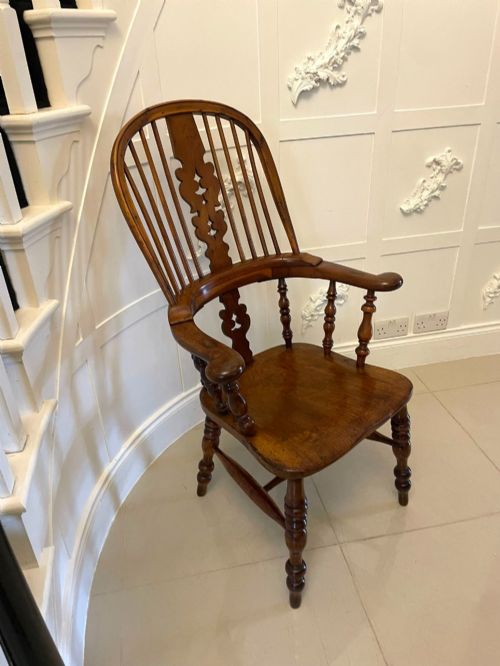
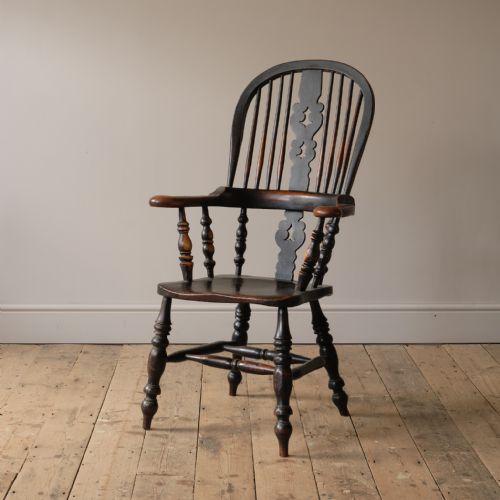
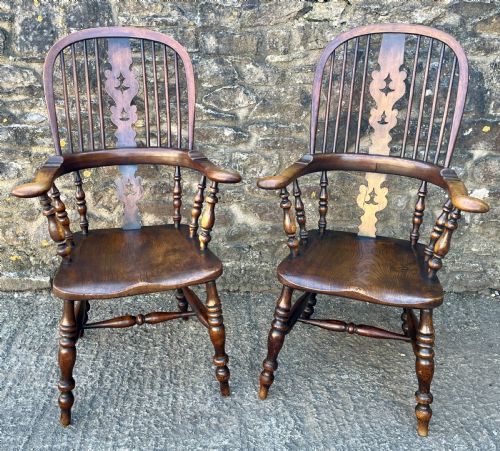
A hoop back arm chair brings solid timber country seating into any room, combining robust vernacular construction with deep comfort.
Hoop Back Arm Chair
A hoop back arm chair is a traditional timber seat where the steam-bent back rail forms a continuous loop down to the seat. The search phrase covers regional English Windsor forms produced across the nineteenth century in various domestic and farmhouse settings.
You will most frequently encounter nineteenth century examples built from a combination of elm for the seats and ash or yew for the framework. These pieces range from standard dining proportions to broad arm writing versions and smaller child sizes.
How they were made
Maker-joiners constructed these chairs by wedging spindle legs and back sticks directly into solid, thick wood seats using traditional bodging techniques. The central hoop was formed by steam-bending timber around a wooden mould until it retained a permanent curved shape.
Woods were selected for specific structural properties, utilising tough ash or yew for bent parts and spindles alongside durable elm for carved saddle seats. Surfaces were often finished with natural wax or oil rather than heavy modern varnishes.
Hoop Back Arm Chair Retail Price Guide 2026
Typical asking prices for hoop back arm chair among the pieces listed under this phrase on Sellingantiques today, from the lower quarter to the upper quarter. They describe what is for sale here now, not the wider market.
What varies in quality
Quality rests upon the selection of timbers and the harmony of the overall proportions. Yew wood examples with strong figuring and generous broad arm rests sit at the upper end of the scale compared to simpler beech or standard ash variants.
The degree of hand-carving in the saddle seat and the elegant taper of the turned undercarriage spindles determine the visual distinction of an individual piece. Original surface patination accumulated through decades of domestic use also defines the desirability of the seating.
Allsop Worksop
The Hoop Back Arm Chair Glossary
- Windsor
- A traditional chair type featuring a solid timber seat into which the legs and back components are tenoned directly. This method creates a rigid and durable frame without requiring a conventional box underframe.
- Broad arm
- A chair design incorporating an enlarged, flattened wooden armrest intended for writing or resting paperwork. These wider rests are frequently found on nineteenth century examples.
- Bodymet
- The combination of native timbers used in vernacular chair making, typically pairing elm seats with ash spindles and bentwood hoops. This multi-wood construction balanced flexibility with strength.
- Saddle seat
- A thick wooden seat base shaped with hollows and scoops to match human contours for comfort. Craftsmen carved these depressions by hand using adzes and scorps.
- Spindle
- A slender turned wooden upright forming part of the back support or undercarriage bracing. These elements distribute weight while maintaining an open silhouette.
Hoop Back Arm Chair: Frequently Asked Questions
How do I identify a hoop back arm chair?
Look for a continuous steam-bent wooden rail that forms the upper back and arm supports in a single flowing curve. This curved element joins directly into a thick wooden seat alongside vertical spindles.
Examine the underside to see if the legs are wedged through the seat plank rather than attached with modern metal brackets or corner blocks.
Where were these chairs made?
Most surviving examples originate from English rural workshops and regional centres such as Yorkshire, the West Country, and Buckinghamshire. Local timber availability dictated whether makers used yew, ash, or elm.
Many country pieces were produced anonymously by regional bodgers and village carpenters rather than recorded urban factories.
How should I care for timber seats?
Keep wooden chairs away from direct heat sources and sudden temperature shifts to prevent the timber from splitting or warping. Natural beeswax applied sparingly will maintain the dry surface sheen without building up heavy residues.
Avoid using harsh modern cleaning sprays that can strip the historic patinated finish accumulated over generations.
Can I use these at a dining table?
Many nineteenth century examples were designed specifically for kitchen and dining use around farmhouse tables. Their sturdy construction and ergonomic saddle seats make them suitable for daily seating.
Check the seat height and arm clearance against your table dimensions to ensure the broad arms slide underneath comfortably.