

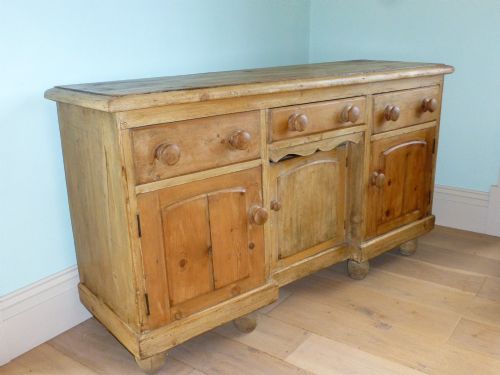
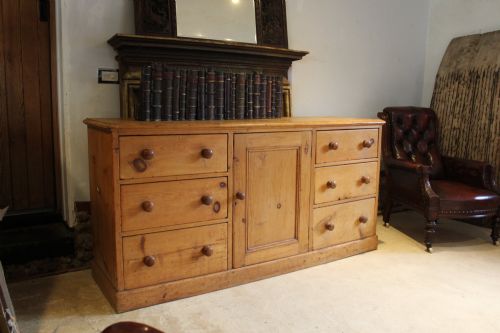
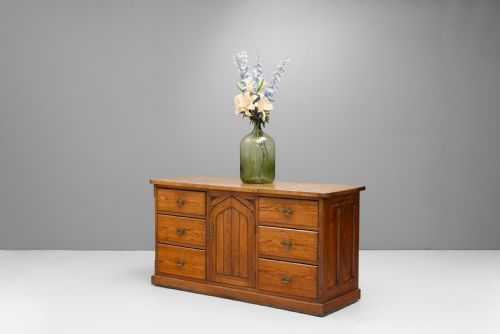
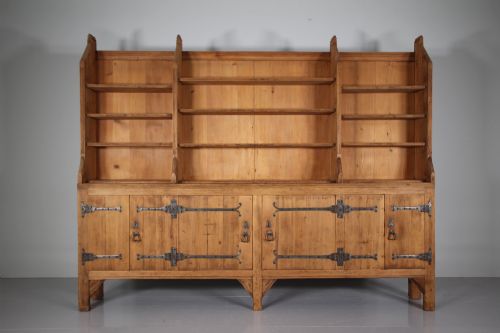
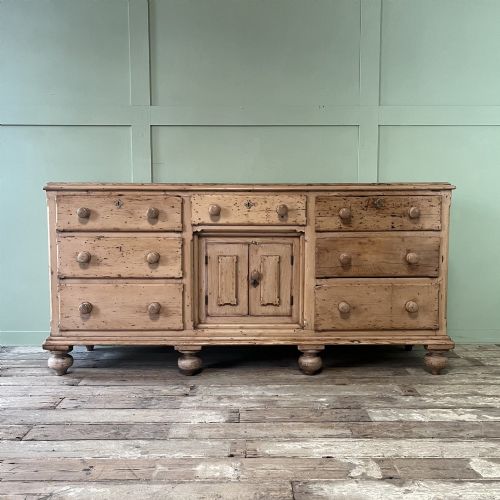
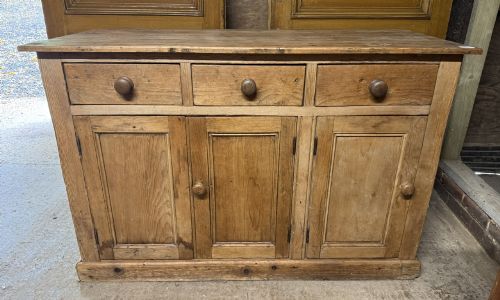
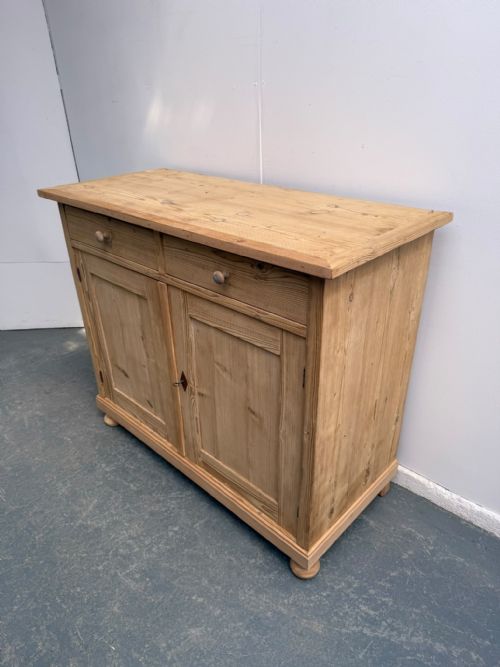
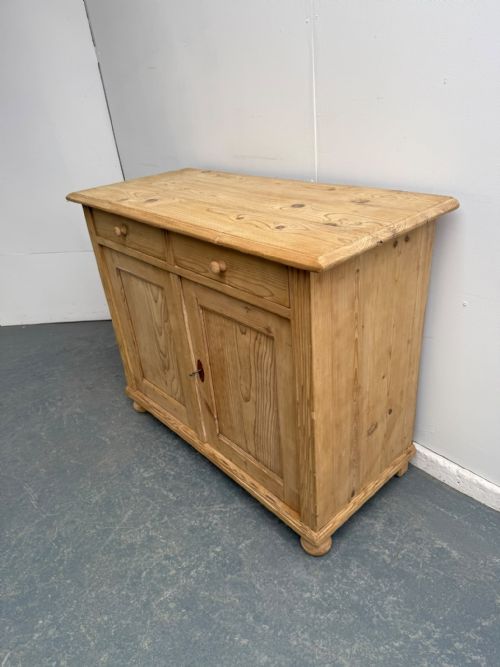


Honey Pine Credenza
A honey pine credenza brings warmth and practical storage to a room, drawing on the honest utility of nineteenth-century country furniture.
Honey Pine Credenza
When you search for a honey pine credenza, you are looking at substantial storage furniture built primarily for farmhouse and domestic use. These pieces take the form of sideboards, dresser bases, and cupboards that provide deep interior space for everyday household goods.
The versions most frequently met on this page date from the Victorian period and the nineteenth century, often sharing proportions with Georgian bowfront designs or rustic farmhouse cabinetry. Their presence ranges from low, wide storage cupboards to tall two-door models with drawers.
Makers of these sturdy items built them to last, utilising timber that has aged to the warm golden tones prized in modern interiors. They serve as functional anchors in a dining room or hallway, offering a surface for display alongside concealed storage.
How they were made
Construction relies heavily on solid pine, occasionally combined with oak, iron, and brass hardware such as drawer pulls and hinges. Wood surfaces were left plain or prepared to take wax and paint finishes depending on the intended domestic setting.
Joinery techniques reflect traditional cabinet-making standards of the 1850s to 1910, prioritising structural rigidity over decorative veneer. Simple panelled doors and fitted drawers demonstrate straightforward carpentry designed for heavy daily use.
Honey Pine Credenza Retail Price Guide 2026
Typical asking prices for honey pine credenza among the pieces listed under this phrase on Sellingantiques today, from the lower quarter to the upper quarter. They describe what is for sale here now, not the wider market.
Listings span the Georgian and Victorian eras up to 1910, featuring pine alongside oak, brass, iron, ceramic, and glass.
What varies in quality
Quality in these timber pieces depends on the integrity of the original construction and the condition of the wood. Items retaining their original brass or iron fittings stand apart from those with later replacements.
Proportion and scale also dictate desirability, with shallow dresser bases and bowfront configurations showing more refined design than standard utilitarian cupboards. The depth of the natural honey patina across the pine surface determines the visual appeal.
The Honey Pine Credenza Glossary
- Credenza
- A sideboard or cabinet used for storing and serving food. On this page, the term aligns closely with traditional sideboards and dresser bases.
- Dresser Base
- The lower section of a kitchen dresser featuring cupboards and drawers without the upper plate rack. These form the bulk of the larger storage units found here.
- Bowfront
- A curved cabinet front that swells outward in the centre. This configuration appears in Georgian examples to soften the profile of the sideboard.
- Patina
- The surface sheen and colour developed by wood over decades of handling and waxing. In honey pine, this represents the golden depth acquired with age.
Honey Pine Credenza: Frequently Asked Questions
What is a honey pine credenza?
A honey pine credenza is a nineteenth-century storage piece, typically a sideboard, dresser base, or cupboard, made from pine that has aged to a warm golden tone.
These items provide deep interior storage and a sturdy top surface, bridging the gap between utilitarian farmhouse furniture and formal dining room cabinetry.
How do I care for antique pine?
Antique pine responds best to natural beeswax applied sparingly to maintain its warm lustre and protect the timber grain. Avoid placing these pieces in direct sunlight or near heat sources to prevent the wood from drying out.
Regular dusting with a soft cloth keeps the surface clean without stripping the historic finish.
How do I tell Victorian pine from Georgian?
Georgian pieces from the early nineteenth century often feature refined shapes like bowfronts and more compact proportions suited to formal rooms. Victorian examples tend to be larger, sturdier, and built for robust farmhouse or domestic utility.
Examining the construction methods and hardware can also help confirm the manufacturing era.
Can I paint a pine sideboard?
Many nineteenth-century pine cupboards and dresser bases were historically painted or prepared for wax and paint finishes. Applying a breathable paint allows you to match the piece to contemporary interior colour schemes.
Preparation involves cleaning the timber thoroughly to ensure the finish adheres properly to the aged grain.