






Historical Portrait Pair
A historical portrait pair brings two figures together on the wall, offering a tangible link to past centuries through matching likenesses.
Historical Portrait Pair
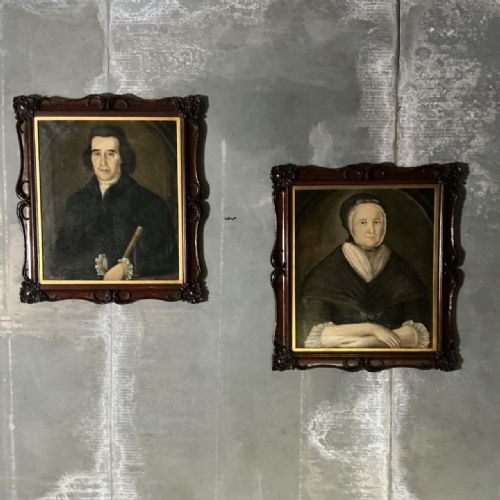
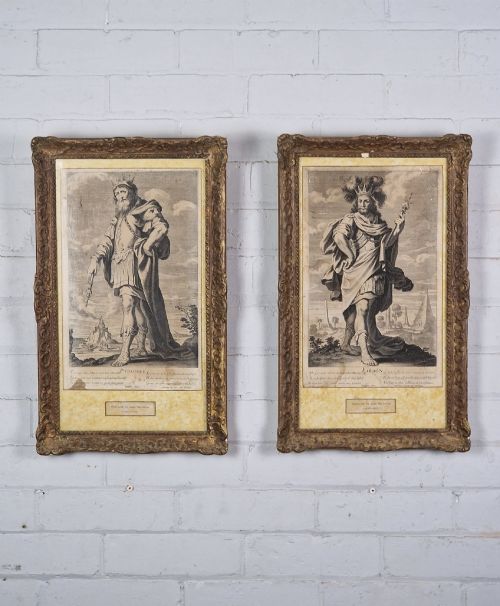
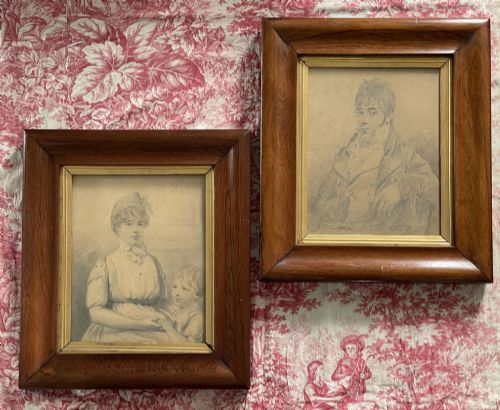
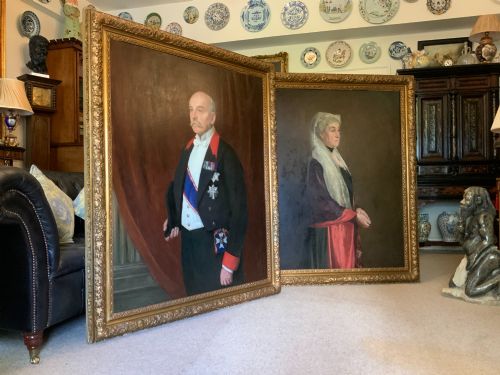
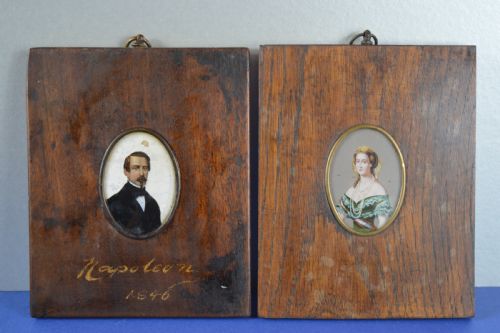
A historical portrait pair consists of two companion pieces depicting individuals, couples, or historical figures, designed to be displayed together. These works span the eighteenth and nineteenth centuries, taking the form of oil paintings, portrait miniatures, framed prints, watercolours, and cast iron wall plaques.
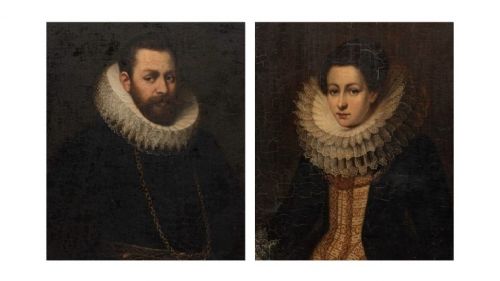
Buyers encounter various regional schools and mediums on this page, ranging from Dutch School nobility and Regency couples to American folk art. The selection includes both intimate miniature portraits on paper or ivory-equivalent mediums and large oil paintings depicting historical militia.
The subjects often pair a gentleman and lady as companions, or represent notable figures such as Napoleon and Empress Eugenie, or Shakespeare and Rubens. These dual representations provide a balanced composition for domestic display.
Materials and Technique
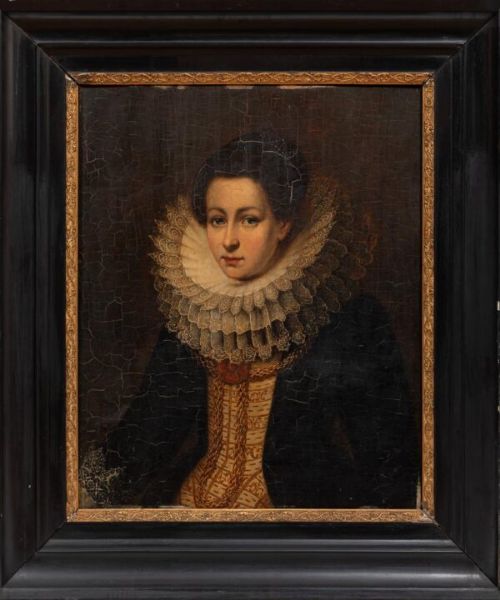
Artists employed oil on canvas for larger scale works, capturing rich detail in garments such as intricate ruff collars and military attire. Smaller formats utilise paper, delicate watercolour, and graphite drawing techniques.
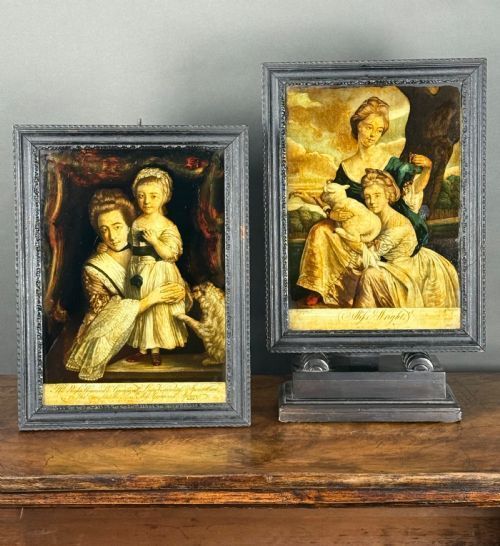
Printmakers utilised line engraving and reverse glass mezzotint methods to produce reproducible companion portraits. Frames incorporate wood and gold leaf or giltwood to house these diverse works.
The selection includes Dutch School portraits, American folk art, and French engravings.
Assessment of Quality
Quality depends upon the precision of the rendering and the expression captured in the faces of the subjects. Masterly brushwork in oil paintings or fine stipple work in engravings elevates the visual impact of the pair.
The integrity of the matching frames significantly influences the overall standard of a pair. Original gold leaf, giltwood, and period glass contribute to the authenticity and preservation of the set.
The provenance and attribution to documented artists or recognised schools provide a measure of distinction. Pairs that remain together with matching dimensions and harmonious condition sit at the higher end of the range.
Jean Mariette·James Sharples·Jacobus Houbraken·George Hargreaves·Thomas Woolnoth
The Historical Portrait Pair Glossary
- Reverse glass mezzotint
- A print transferred onto glass and painted from behind. This technique produces a luminous finish unique to eighteenth-century printmaking.
- Portrait miniature
- A small-scale painting or drawing designed for intimate viewing. These works often measure only a few inches and require exceptional brush control.
- Line engraving
- An intaglio printing process where lines are cut directly into a metal plate with a burin. This allows for precise and enduring detail.
- Companion pair
- Two distinct artworks created as matching counterparts. They share subject matter, scale, and framing style to balance a wall display.
Historical Portrait Pair: Frequently Asked Questions
What is a historical portrait pair?
A historical portrait pair comprises two related artworks depicting individuals or historical figures intended for display side by side. They share common aesthetic traits and historical contexts.
These pairings often represent married couples, literary figures, or rulers, creating a balanced visual narrative on the wall.
How were these pairs displayed?
Historically, companion portraits hung in domestic drawing rooms, libraries, or parlours to anchor the room's decorative scheme. Symmetrical placement flanking a fireplace or piece of furniture was common.
Matching frames ensured the two subjects maintained a unified presence within the interior architecture.
How do I care for framed paper and oil pairs?
Works on paper require protection from direct sunlight to prevent fading of watercolours, graphite, and prints. Maintaining stable indoor humidity prevents warping in wooden frames and paper degradation.
Oil paintings benefit from occasional dusting with a soft, dry brush and should be kept away from extreme temperature fluctuations.
How can I tell the period of a portrait pair?
Costume, hair styling, and framing materials offer primary clues to the era in which the portraits were produced. Ruff collars point to earlier styles, while nineteenth-century attire reflects later Regency and Victorian fashions.
Examining the backing materials, glass type, and signature styles of known printmakers or painters further clarifies the dating.