
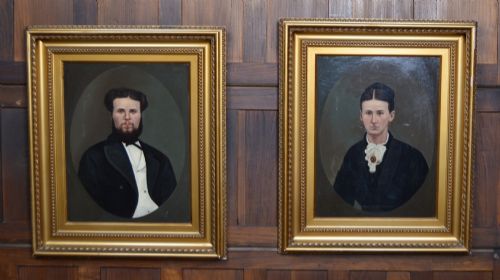
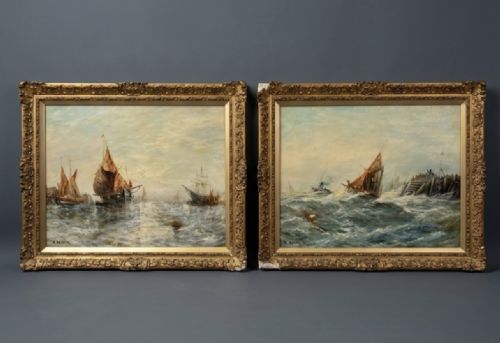
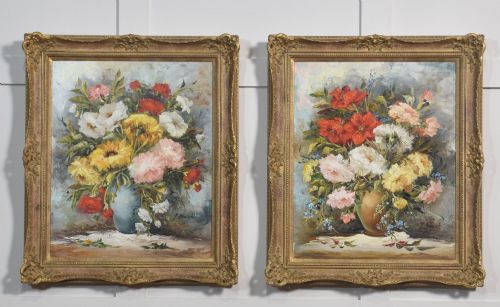
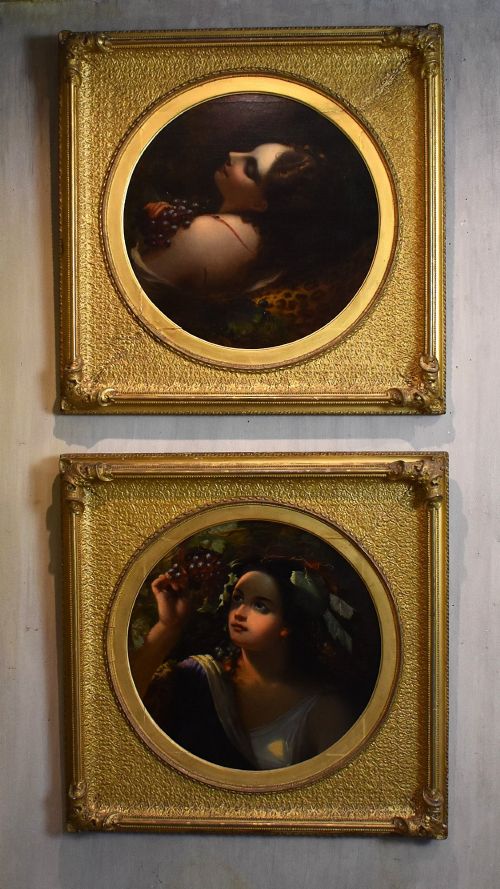
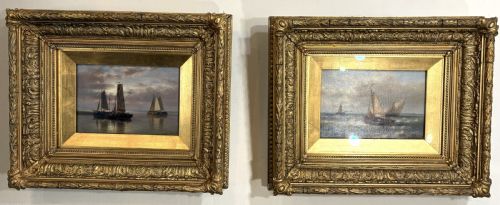


Gilded Oil Painting Pair
When you search for a gilded oil painting pair, you seek matching canvases housed in ornate frames that bring balance and symmetry to a room.
Gilded Oil Painting Pair
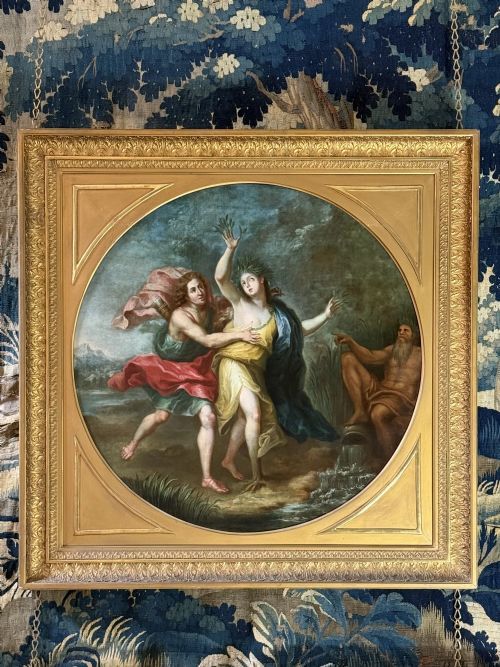
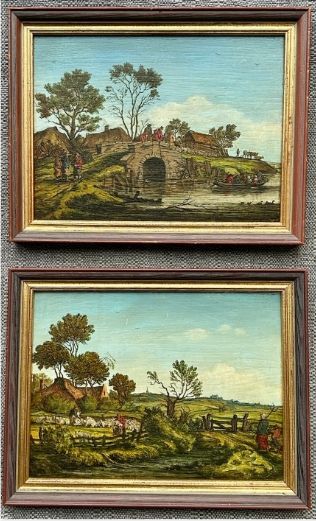
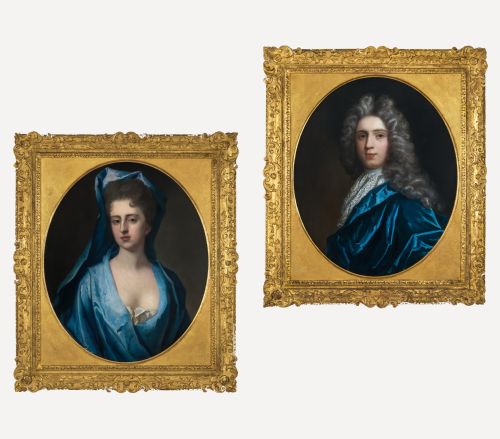
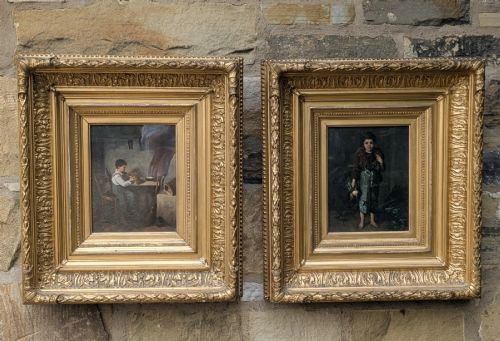
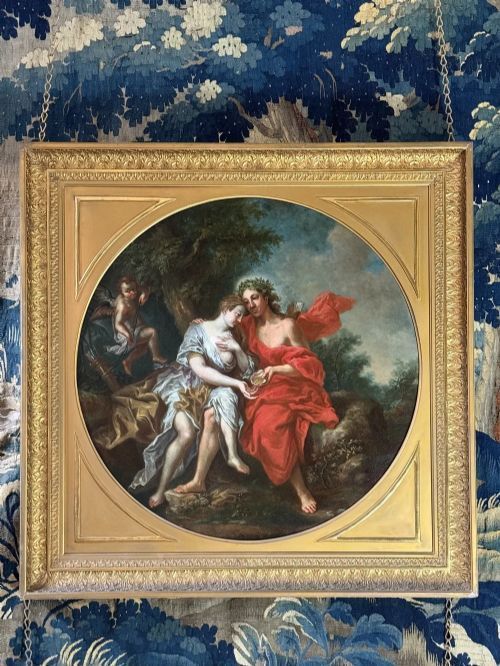
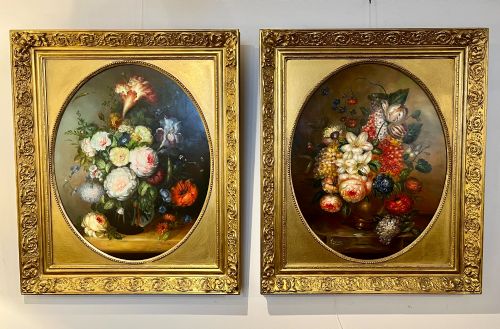
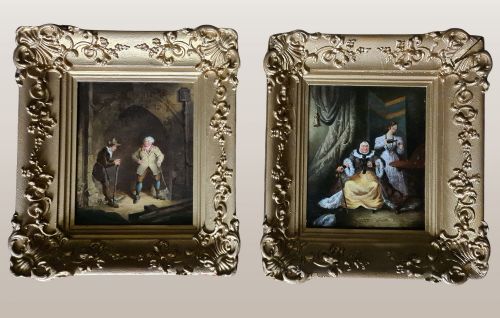
A gilded oil painting pair comprises two related canvases created as companion pieces, frequently depicting matching subjects such as landscapes, portraits, or still lifes. These matched works are almost universally housed within decorative frames finished in gold leaf, gesso, or giltwood.
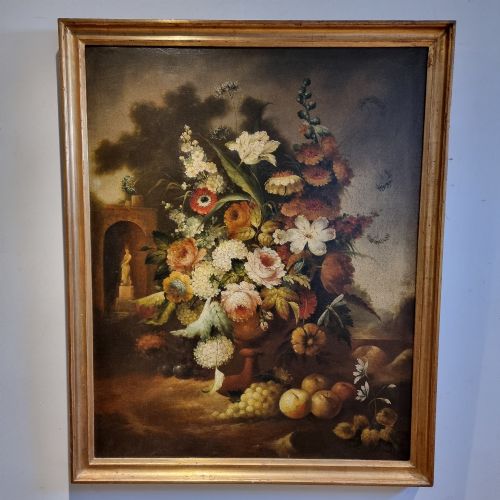
The selections available here span several centuries, with nineteenth-century examples appearing most frequently alongside eighteenth-century classical compositions. Subjects range from maritime scenes and pastoral landscapes to detailed floral still lifes and animal studies.
Companion pieces were traditionally designed to hang symmetrically on either side of a fireplace, doorway, or architectural feature. Buyers today continue this practice to create visual harmony and a sense of proportion within traditional interiors.
Materials and construction methods
The physical objects combine oil paint applied to canvas, wood panels, board, or tin with heavy wooden frames. Canvases are stretched over wooden frames, while boards and panels provide rigid surfaces for finer brushwork.
Frames rely on wood substrates coated with gesso, a plaster-like preparation layer that receives the gold leaf or metallic gilt finish. Gilding techniques involve applying thin sheets of gold leaf or giltwood to create a reflective, luminous surface that complements the painted imagery.
Several artists clearly enjoyed painting animals, with ducks, chickens, and eager terriers peering out from nineteenth-century canvases.
Markers of distinction and craftsmanship
Quality in these matched works rests upon the precision of the brushwork and the anatomical or perspective accuracy within the composition. Master artists demonstrate controlled handling of light and shadow, particularly in complex subjects like maritime scenes or classical figures.
The integrity of the surrounding frame matters equally, as original giltwood or gesso frames retain crisp moulding details and authentic patination. Hand-carved wooden frames showing minimal restoration reflect superior original commissioning compared to later, simpler replacements.
Charles Antoine Coypel·Michael Dahl·Thomas Murray·Abraham Hulk I·Franz van Severdonck·John Frederick Herring Jnr·Giovanni Paolo Panini·Alfred Vickers Senior·Eva Hollyer·John James Wilson
The Gilded Oil Painting Pair Glossary
- Gesso
- A plaster mixture spread over a wooden frame to create a smooth surface for gilding. This foundational layer is often moulded into decorative reliefs before gold leaf is applied.
- Giltwood
- Timber that has been coated with gold leaf or a gold-coloured metallic finish. It provides a durable and reflective border for fine art.
- Tondo
- A circular work of art, whether a painting or a relief. These round formats require careful compositional balance from the artist.
- Grisaille
- A painting executed entirely in shades of grey or neutral monochrome. This technique often mimics the appearance of sculpture or stone reliefs.
- Provenance
- The documented history of ownership surrounding a work of art. Clear provenance helps verify the authenticity and attribution of older pieces.
Gilded Oil Painting Pair: Frequently Asked Questions
Why were oil paintings created in pairs?
Companion pieces were originally commissioned to balance the architectural symmetry of large rooms, often flanking a central fireplace or window.
Artists designed them with matching dimensions, complementary palettes, and linked subjects to tell a visual story across two canvases.
How do I hang a matched pair correctly?
Matched paintings require careful spacing at eye level to maintain the compositional balance intended by the artist. Hanging them symmetrically on either side of a central architectural element achieves the traditional look.
Keep the centre points aligned horizontally so the two frames appear unified even when depicting different scenes.
What surfaces were these paintings created on?
While traditional canvas stretched over wooden bars is most common, many examples utilise wooden panels, heavy board, or even tin. Each support medium affects how the oil paint ages and retains its finish over the centuries.
Rigid supports like wood panels help prevent the cracking sometimes found in older stretched canvases.
How can I tell the period of a frame?
Frames from earlier periods feature hand-carved wooden mouldings beneath the gesso and gold leaf layers, showing subtle irregularities. Later nineteenth-century frames often utilise cast plaster ornaments applied directly to the wooden substrate.
Examining the corner joints and the wear patterns on the gilt surface reveals how the frame has aged alongside the canvas.