


Ancestral Portrait Pair
These ancestral portrait pair works are oil paintings and framed scrolls depicting couples and families, offering instant character and historic depth to any room.
Ancestral Portrait Pair
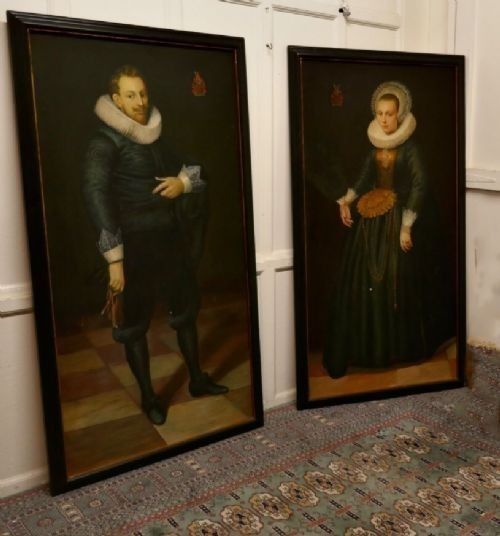
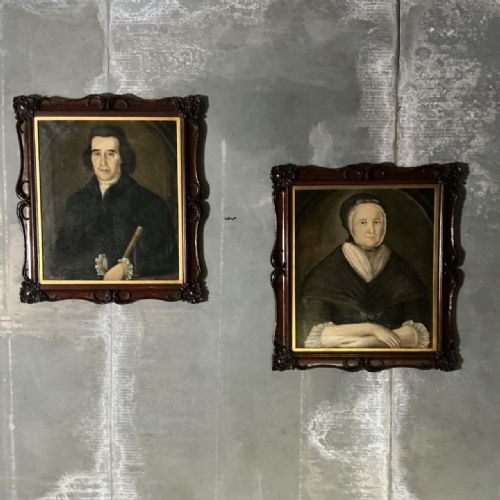
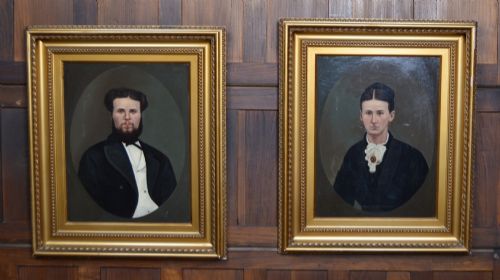
An ancestral portrait pair consists of two companion paintings or scrolls representing matched individuals, most commonly a gentleman and a lady. Buyers searching for an ancestral portrait pair encounter works spanning from the seventeenth century through to the twentieth century, reflecting diverse regional schools and social stations.
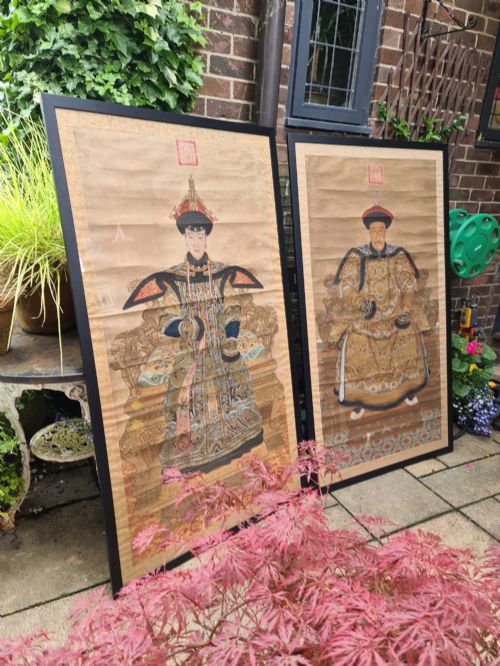
The selections on this page encompass British, Dutch, and Chinese origins, rendered across oils on canvas, vinyl canvas, and hanging scrolls. Frames range from simple wood surrounds to ornate giltwood and gesso designs, reflecting the aesthetic tastes of their respective periods.
How they were made
These works rely primarily on oil paint applied to canvas or wood panels, capturing fine details in costume and facial expression through layered brushwork. Chinese examples utilise painted scrolls, employing traditional pigments on durable fabric or paper supports.
Frames play a crucial role in the construction of these pieces, utilising carved wood, gesso, and gold leafing. Many retain their original giltwood surrounds, which were specifically constructed to house the paired canvases.
Represented periods span from the 17th century through the Regency era, Victorian times, and up to 1920.
What varies in quality
The sophistication of the brushwork and the psychological depth of the subject define the upper tier of these works. Master painters render hands, textiles, and light with precision, whereas lesser examples rely on formulaic repetition and stiffer postures.
The preservation of the original support and frame significantly influences the standing of a pair. Works that retain their untouched seventeenth or eighteenth-century giltwood frames carry greater historical integrity than those with later replacements.
The Ancestral Portrait Pair Glossary
- Oil on canvas
- Pigments suspended in a drying oil medium applied to a woven fabric support. This technique allowed artists to achieve rich colour depths and subtle tonal gradations.
- Giltwood
- Wood that has been coated with a thin layer of gold leaf or powder. It provides a luminous, reflective border that enhances the presence of the artwork.
- Gesso
- A white paint mixture consisting of a binder mixed with chalk, gypsum, or pigment. It serves as a smooth preparation base for wood framing and gilding.
- Circle of
- A designation used when a work is closely associated with a known master's style and studio. It indicates the artist likely worked in direct proximity to the named figure.
Ancestral Portrait Pair: Frequently Asked Questions
Are these portraits usually of real family members?
Most historical pairs depict specific named individuals, such as the Farquharson family or Sir William and Lady Sarah Cowper. Over centuries, however, many lose their precise genealogical documentation.
Some twentieth-century examples reproduce earlier Dutch Golden Age subjects for decorative purposes. Examining the canvas, pigments, and framing usually clarifies whether a set records actual lineage.
How do I hang a matched pair?
Matched pairs traditionally hang side by side at eye level, with the subjects turned slightly inward toward one another. This arrangement creates a visual dialogue between the two canvases.
Ensure both frames share a balanced weight and scale on the wall. Avoid hanging them in direct sunlight to protect the oil paint and giltwood from fading.
What periods do these paintings cover?
The selections span from the seventeenth century through to the Regency era and into the early twentieth century. Each era brings distinct clothing styles, from elaborate English Baroque lace to Regency tailoring.
Materials and frame construction shift accordingly, moving from deep wooden mouldings to ornate nineteenth-century giltwood creations.
What is a Chinese ancestral scroll?
Chinese ancestral scrolls are traditional hanging artworks created to honour lineage and family heritage. They often feature formal seated portraits executed on fabric supports.
Unlike Western oil paintings on rigid stretchers, these scrolls are designed for rolled storage and vertical display. They introduce alternative formats and palettes to traditional European portraiture.