

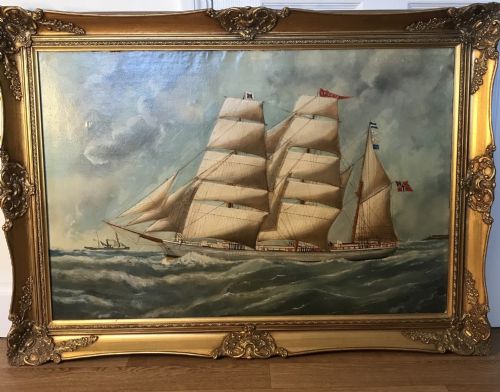
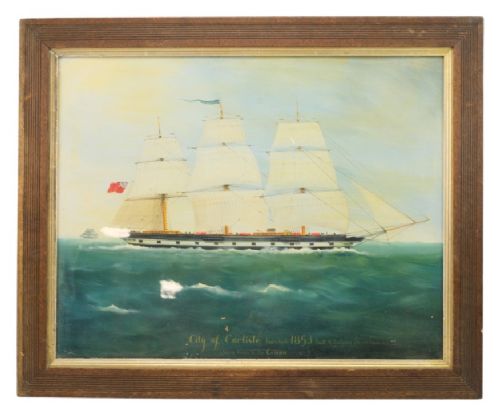
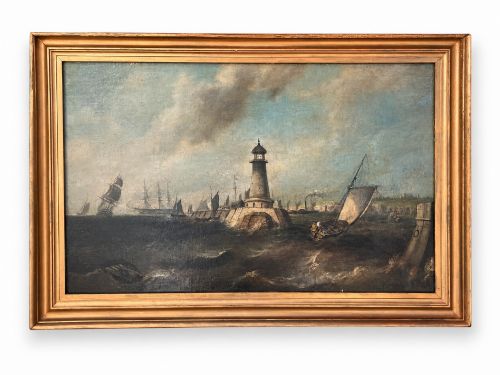


Historical Nautical Oil Artwork
These historical nautical oil artwork pieces capture centuries of maritime life on canvas, offering buyers a genuine window into naval battles, coastal scenes and merchant shipping.
Historical Nautical Oil Artwork
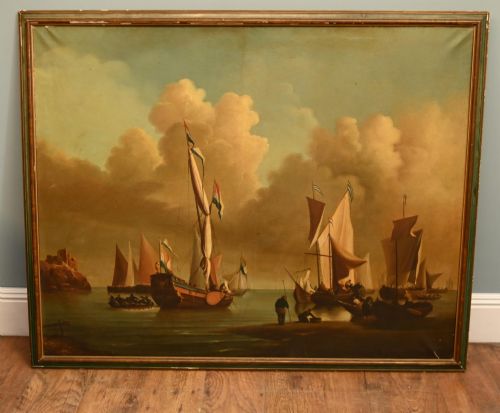
When searching for historical nautical oil artwork, a buyer encounters painted depictions of ships, coastal harbours and sea battles spanning from the nineteenth century into the mid-twentieth century. The selection ranges from named British and European masters working in established marine traditions to accomplished provincial and English school painters.
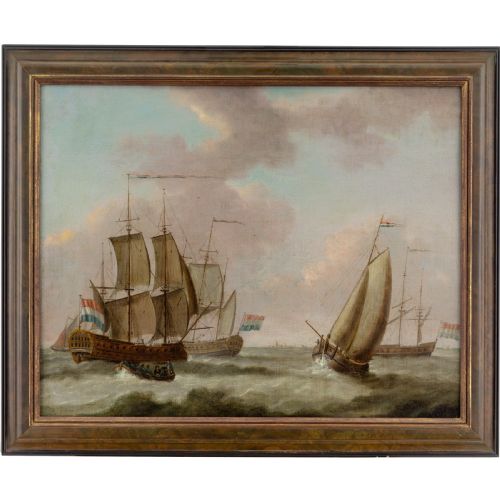
Most pieces on this page are Victorian maritime scenes on canvas, often portraying named vessels, frigates and fishing boats in coastal waters or open sea engagements. These works vary from large, detailed historical narratives of naval conflicts to intimate depictions of local harbour life and polar expeditions.
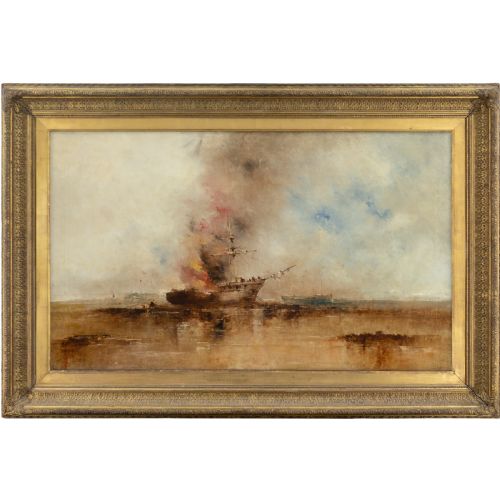
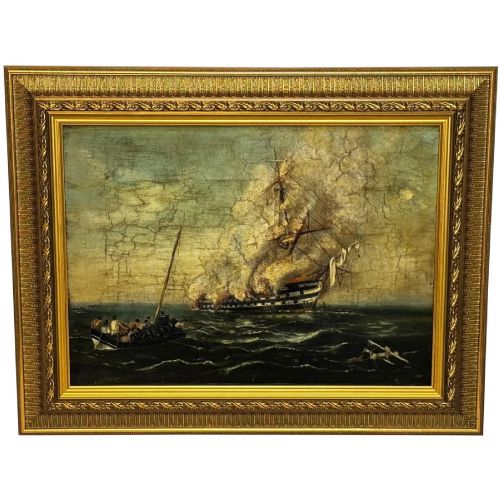
Subjects include specific historical events such as troop movements to the Crimea, polar artic expeditions and dramatic shipboard fires, alongside everyday coastal trading vessels. The geographical scope extends across English, Scottish, Cornish and Belgian waters, reflecting diverse national schools of marine painting.
Assessing Quality
Quality in these marine works rests on the artist's command of maritime architecture, rigging accuracy and the convincing movement of water. Superior examples demonstrate a precise understanding of nautical detail combined with atmospheric control over light and weather conditions.
The sophistication of the composition and the handling of the subject matter distinguish the finer pieces from standard decorative works. Hand-painted canvases by recognised figures in nineteenth and twentieth-century marine art show greater depth in the rendering of coastal light and ship structures than anonymous school output.
Historical Nautical Oil Artwork Retail Price Guide 2026
Typical asking prices for historical nautical oil artwork among the pieces listed under this phrase on Sellingantiques today, from the lower quarter to the upper quarter. They describe what is for sale here now, not the wider market.
The listings on this site feature oil on canvas paintings spanning the nineteenth century through to nineteen sixty.
William McAlpine·Nicholas Condy·Charles Napier Hemy·George Shaw·Richard Brydges Beechey·Paul Jean Clays·Edward Fletcher·John Hayes·Richard Ball Spencer·Hubert Thornley·Bertram Priestman·James Hardy
The Historical Nautical Oil Artwork Glossary
- Marine art
- Artwork that depicts ships, boats, naval engagements and coastal environments as its primary subject matter. This genre encompasses both romanticized seascape painting and precise historical documentation of maritime history.
- Giltwood
- Wood that has been coated with a thin layer of gold leaf or gold paint, commonly used for traditional picture frames. It provides a decorative border that enhances the tones of oil paintings.
- Barque
- A sailing vessel with three or more masts, square-rigged on the fore and main masts and fore-and-aft rigged on the mizzenmast. This configuration appears frequently in nineteenth-century shipping artwork.
- Frigate
- A warship built for speed and manoeuvrability, historically carrying a single continuous gun deck. These vessels feature prominently in naval battle scenes and historical coastal paintings.
Historical Nautical Oil Artwork: Frequently Asked Questions
What is historical nautical oil artwork?
These pieces are oil paintings on canvas that record ships, sea battles, coastal towns and maritime expeditions from the nineteenth and twentieth centuries.
They serve as visual records of naval history, commercial shipping and coastal life before the dominance of photography.
How were these paintings displayed?
Period works were typically housed in substantial giltwood frames designed to project the painting outward into the room.
The heavy gilding complemented the dark blues and greys of the maritime palette while matching formal Victorian interior decoration.
How do I date a marine painting?
Dating relies on the ship types depicted, such as three-masted schooners or early steam vessels, alongside the painter's documented working period.
Clothing styles of any figures on deck and the construction methods of the canvas stretcher also provide clear chronological clues.
Where were these artists active?
The painters worked across British, Scottish and European coastal ports, capturing local shipping lanes and historical events.
Many based their studios near major naval stations, fishing harbours or commercial trading centres like London and Cornwall.