


Historical Military Figure
These historical military figure pieces capture commanders and soldiers in bronze, earthenware and oil paint, offering a direct tangible link to past campaigns.
Historical Military Figure
A historical military figure encompasses sculptural bronzes, oil paintings and ceramic figurines portraying notable commanders and soldiers from past conflicts. These works range from French Empire and Regency interpretations to Victorian Staffordshire portrait figures.
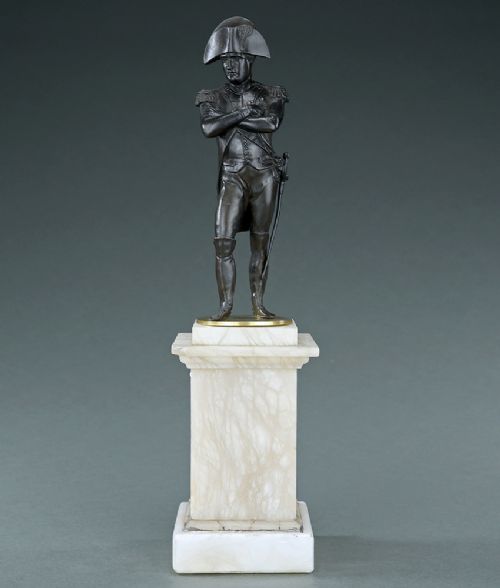
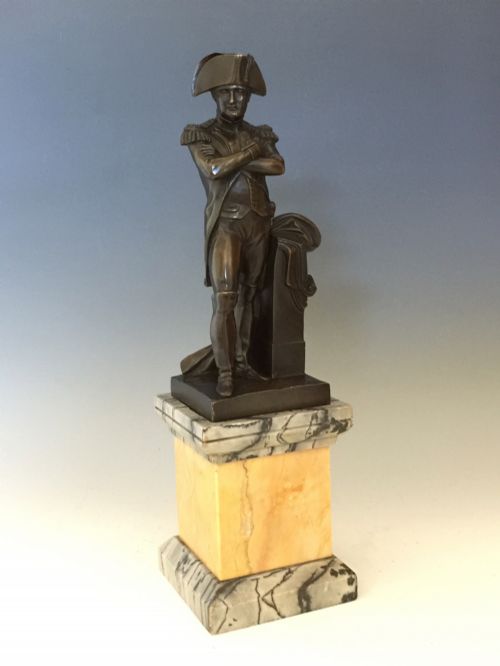
The bronze sculptures most commonly depict figures such as Napoleon Bonaparte, Louis Philippe and various soldiers on horseback or standing at attention. Makers utilise materials including marble bases, gilt wood and enamel alongside patinated bronze.
Oil paintings within this category portray notable leaders like Arthur Wellesley, the 1st Duke of Wellington, and Dutch School cavaliers. Earthenware examples present royal portrait figures with distinct glaze finishes from the nineteenth century.
Materials and Techniques
Bronzes are cast using traditional methods, often finishing the metal with a rich patina and mounting the sculpture upon a marble base. Artists also apply oil paint on canvas to create detailed historical portraits.
Ceramic pieces utilise earthenware shaped into decorative figures, then hand-painted and finished with a protective glaze. Gilt wood frames frequently accompany the oil paintings.
General Gordon stands ready in Staffordshire pottery, keeping watch over the mantelpiece beside French Napoleonic bronze generals.
Factors of Quality
Canvas works rely on the artist's ability to capture likeness and drapery through oil paint, whilst signed bronzes by recorded sculptors hold distinct attribution value.
Emile Guillemin·E.H. Dumaige·John A. Houston·James Pradier·Ramsay Richard Reinagle·C. Anfrie
The Historical Military Figure Glossary
- Patina
- A surface coloration and sheen developed naturally on bronze over time or applied chemically by the foundry. This finish enhances the definition of the sculptural details.
- Earthenware
- A porous type of pottery fired at lower temperatures, commonly used for nineteenth-century Staffordshire portrait figures.
- Gilt Wood
- Wood that has been treated with a thin layer of gold leaf or gilt finish, frequently found on portrait frames.
- French Empire
- A neoclassical design style spanning the early nineteenth century, characterised by military motifs and classical antiquity influences.
Historical Military Figure: Frequently Asked Questions
What periods do these figures cover?
The pieces span the eighteenth and nineteenth centuries, including Regency and Victorian eras.
Most items originate from the 1800s, reflecting Napoleonic and mid-nineteenth-century European history.
How were Staffordshire figures displayed?
Staffordshire pottery figures served as decorative ornaments on mantelpieces and parlour shelves in nineteenth-century homes.
They allowed ordinary households to display loyalties to political and military leaders.
Are all the bronzes signed?
Several bronzes bear the signatures of known nineteenth-century sculptors such as Emile Guillemin and C. Anfrie.
Other library bronzes and mantel clocks remain unsigned while maintaining period casting characteristics.
What subjects appear in the paintings?
The paintings portray military leaders, such as the Duke of Wellington, alongside generic soldiers and cavaliers.
Works range from British portraiture to Dutch School half-length canvases.