
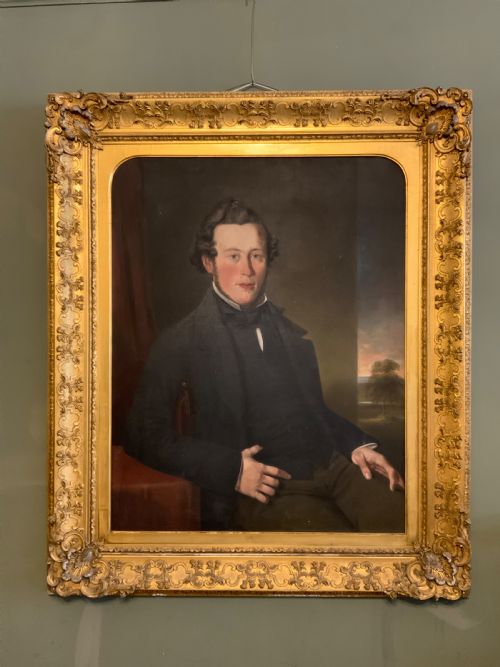
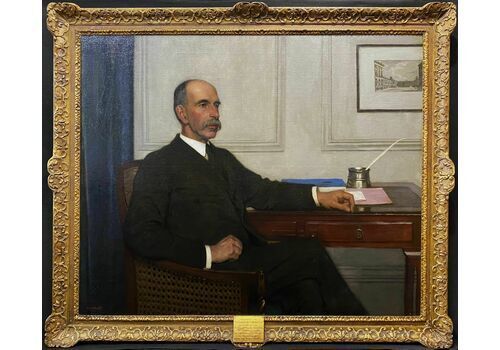

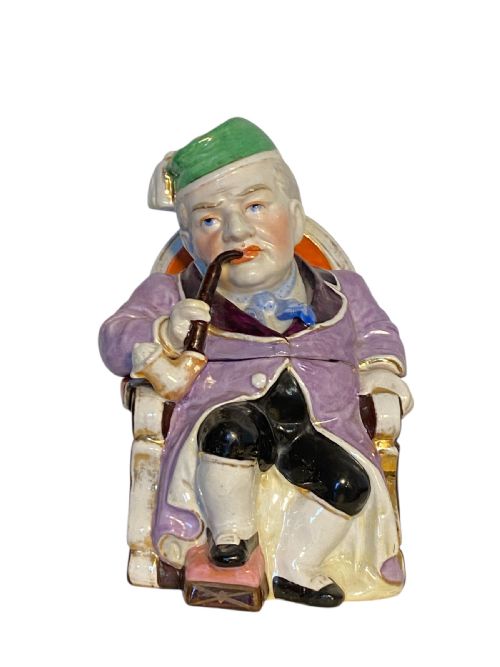


Seated Gentleman Painting
These seated gentleman painting works capture notable figures and everyday sitters in oil on canvas across several centuries.
Seated Gentleman Painting
A seated gentleman painting presents a formal or informal portrait of a male subject positioned in an interior or architectural setting. The pieces range from grand Regency and Georgian compositions to later 20th-century realism works.
Buyers encounter subjects seated at desks, in Chippendale chairs, or beside instruments, executed by regional painters and Royal Academicians alike. The selection draws heavily from 19th-century British schools alongside occasional continental examples.
Most entries utilise traditional canvas supports housed within period wood or gilt frames, reflecting the formal portrait traditions of their respective eras.
Materials and construction
Artists built these works primarily using oil paint applied to woven canvas supports, occasionally utilising wooden boards or paper for watercolours.
Heavier pigments and multiple glazes created depth in the sitter's clothing and background interiors, while solid wood and gilt plaster frames finished the pieces.
Listings feature oil on canvas alongside watercolours and oil on board, housed in wood and gilt plaster frames.
Quality factors in portraiture
Skill in facial rendering and hand articulation distinguishes exceptional academic portraits from more modest provincial school examples.
The sophistication of the background interior, whether a panelled room or a distant landscape, adds context that elevates the overall composition.
Harold Knight·Arthur Spooner·Henry William Pickersgill·Ramsay Richard Reinagle·James Archer·John A A Berrie·Francis Alleyne·Cowan Dobson·Stephen Taylor·Joseph Clover·William Dring·John Dalziel Kenworthy·Neville Stephen Lytton·Frank Samuel Eastman·Benno Fischer·J Moffat·James Bell Anderson
The Seated Gentleman Painting Glossary
- Academic Realism
- A style of painting governed by the rules of formal art academies, emphasising precise anatomical accuracy and smooth brushwork. It produces highly detailed depictions of human subjects.
- Oil on Canvas
- A medium consisting of pigments suspended in a drying oil, applied to a stretched woven fabric support. This combination offers flexibility and longevity for large-scale portraits.
- Gilt Wood
- Timber that has been decorated with a thin leaf of gold or a metallic substitute. It frequently forms the decorative surface of antique picture frames.
- Regency
- A period in British history spanning the early 19th century, known for distinct neoclassical furniture and portraiture styles. Art from this era often balances formal dignity with naturalistic lighting.
Seated Gentleman Painting: Frequently Asked Questions
How do I identify the sitter?
Sitters are frequently identified through inscriptions on the canvas reverse, accompanying exhibition labels, or biographical records matching the artist's active period.
Researching professional titles or civic roles mentioned in the documentation often links the portrait to historical archives.
What periods do these paintings cover?
The works span from the 18th century through the Georgian and Regency eras into the 19th and 20th centuries.
Victorian and Edwardian pieces appear alongside mid-century British realism works.
Are original frames usually included?
Many listings feature period wooden or gilt wood frames that complement the age of the canvas.
Framing styles typically match the artistic movement of the portrait, ranging from heavy moulded gilt to simpler wood profiles.
Where were these portraits typically displayed?
Historical portraits of this scale were commissioned for country houses, civic institutions, professional offices, and private libraries.
They served to commemorate the status, profession, or lineage of the gentleman depicted.