


Historical Marine Art
Historical marine art records naval engagements, coastal harbours and merchant shipping across centuries of maritime heritage on canvas and paper.
Historical Marine Art
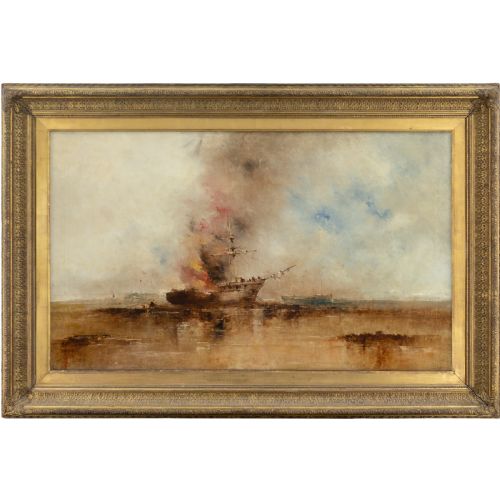
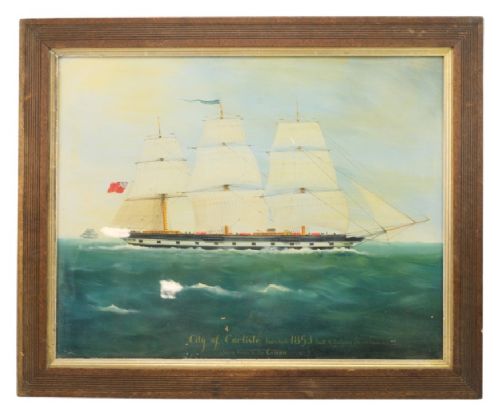
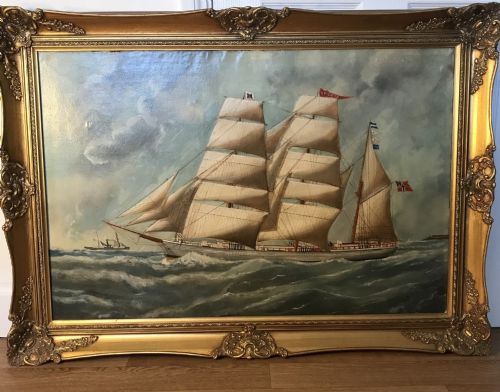
Historical marine art encompasses oil paintings, watercolours and engravings depicting ships, naval battles and coastal scenes from the seventeenth century through to the early twentieth century. Buyers seeking this phrase encounter depictions ranging from majestic three-masted schooners and warships to quiet harbour views and dockyards.
The works originate predominantly from British, Dutch and European schools, reflecting significant national engagement with the sea. Common formats include framed oil paintings on canvas alongside detailed watercolour paintings and period prints.
Materials and Construction
Framing forms an integral part of these pieces, with heavy giltwood mouldings characteristic of eighteenth and nineteenth-century presentations. Support structures rely on traditional wooden stretchers for canvas works and heavy paper stock for watercolours and engravings.
Listings span from the 17th Century to 1910, encompassing oils, watercolours, engravings and lithographs across wood, canvas, paper and giltwood.
Factors of Quality
Quality in these works rests upon the fidelity of maritime detail, the handling of light and atmosphere upon water, and the known provenance of the artist. Superior examples demonstrate accurate rendering of rigging, hull construction and naval architecture alongside accomplished handling of turbulent or calm seas.
The integrity of the canvas and the preservation of the original paint layer determine the desirability of older works. Finely detailed brushwork by named practitioners or established schools commands greater attention than anonymous works of standard execution.
William McAlpine·Nicholas Condy·Alfred George Morgan·Charles Napier Hemy·Vincenzo D’Esposito·Jonathan Couch·Claude Lorrain·George Shaw·George Morland·Samuel Owen·William Wyld·Richard Brydges Beechey·Walter Duncan·Paul Jean Clays·Edward Fletcher·Frank Wasley·Richard Ball Spencer·Arthur David Mccormick·Hubert Thornley·Bertram Priestman·James Hardy·Jacob Knyff·Abraham Storck
The Historical Marine Art Glossary
- Oil on Canvas
- A painting medium where pigments are suspended in drying oils and applied to a woven fabric support. This method allows for rich colour depth and textured brushwork.
- Giltwood
- Wood carved and coated with a thin layer of gold leaf or metallic powder. It is frequently seen on eighteenth and nineteenth-century frames.
- Watercolour Painting
- Artworks created using water-soluble pigments on paper. These pieces offer translucent washes and delicate detail.
- Seascape
- A painting, photograph or other work of art which depicts the sea. Such works form a major subcategory of marine art.
- Lithograph
- A print made from a design drawn on a stone or metal tablet. This technique was widely utilised for reproducing images in the nineteenth century.
Historical Marine Art: Frequently Asked Questions
What periods do these pieces cover?
The works span from the seventeenth century through the eighteenth and nineteenth centuries up to the early twentieth century. This timeline captures major developments in naval architecture and coastal trade.
Examples range from seventeenth-century Dutch sea battles to Edwardian steam and sail compositions.
How were these marine paintings framed?
Many works utilise period frames constructed from wood, frequently enhanced with giltwood and gold leaf. These heavy frames complement the maritime subject matter and protect the edges of the canvas.
Watercolours and works on paper are typically mounted behind glass within wooden or gilt surrounds.
What subjects appear in these works?
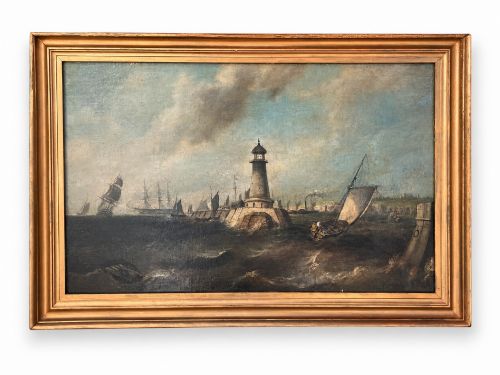
Subjects include naval engagements, warships with raised sails, royal fleets at review and merchant shipping. Coastal scenes feature lighthouses, fishing dockyards and bustling harbours such as Portsmouth and the River Thames.
Natural history illustrations such as historical fish engravings also feature within the category.
How do I distinguish between oils and watercolours?
Oil paintings utilise thick pigments applied to woven canvas, displaying visible brush texture and a richer surface depth. They are usually stretched over wooden frames rather than mounted flat.
Watercolours employ translucent pigments on paper stock, presenting a smoother surface that is typically framed behind glass.