



Highland Cattle Painting
A highland cattle painting captures the dramatic scenery and long-horned beasts of the Scottish landscape across the Victorian and Edwardian periods.
Highland Cattle Painting
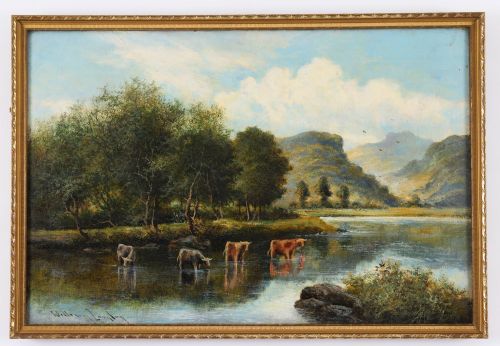
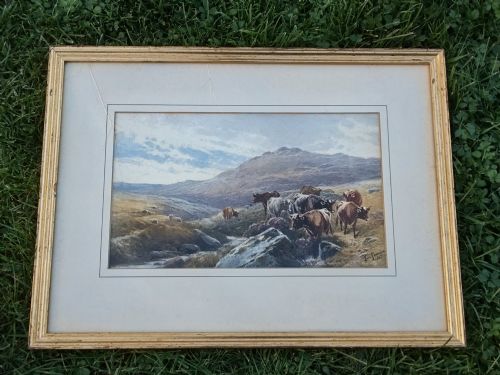
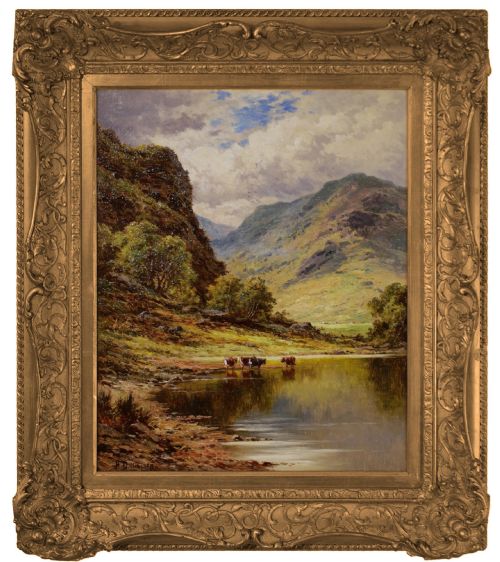
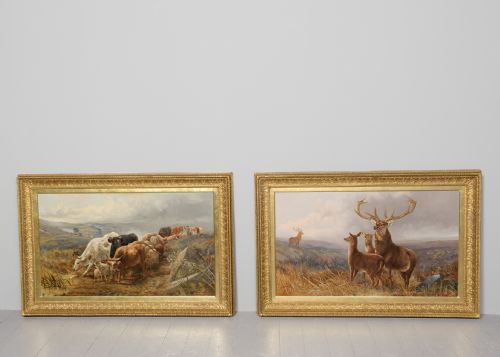
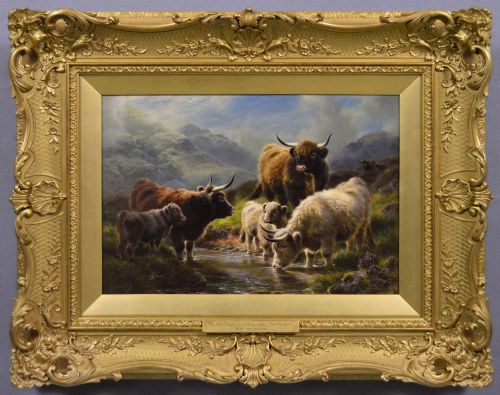
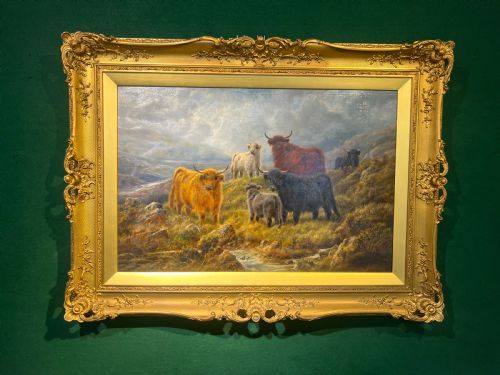
A highland cattle painting typically portrays pastoral or rugged mountainous scenes featuring the distinctive long-horned cattle set against Scottish lochs, glens, and misty weather. These works span from the mid-nineteenth century through the Edwardian era, capturing a romanticized vision of the Scottish highlands.
Buyers will most frequently encounter framed oil on canvas works produced by British artists working during the Victorian and Edwardian periods. Alongside these canvases, porcelain items such as vases, cabinet plates, and ewers decorated with painted cattle scenes appear regularly.
How they were made
Artists created these works primarily using oil paints on stretched canvas or wooden panels, building up layers of pigment to render the rugged textures of the landscape and the thick coats of the animals. Many of these canvases sit within heavy giltwood and gold leaf frames that reflect the decorative tastes of the nineteenth century.
Ceramic pieces utilise fine porcelain surfaces painted with enamel pigments, often signed by specialist artists before undergoing kiln firing to set the glaze. These porcelain forms frequently incorporate gilt detailing around the rims and borders.
Highland Cattle Painting Retail Price Guide 2026
Typical asking prices for highland cattle painting among the pieces listed under this phrase on Sellingantiques today, from the lower quarter to the upper quarter. They describe what is for sale here now, not the wider market.
Listings feature oil on canvas paintings alongside porcelain vases, ewers, and cabinet plates.
What varies in quality
The skill in anatomical rendering and atmospheric lighting separates standard decorative works from superior artistic achievements. Finer pieces successfully capture the play of light across mountain mists and the convincing texture of the cattle hair rather than relying on formulaic compositions.
The execution of the surrounding scenery, from the rendering of water reflections on a loch to the depth of the mountainous background, dictates the overall standard of the painting. On ceramics, the precision of the hand-painted enamel detail and the crispness of the surrounding gilding determine the grade of the piece.
Henry H. Parker·Robert Watson·William Watson Jnr·Robert Cleminson·Henry Robinson Hall·Charles Jones·George Turner·John W Morris·Daniel Sherrin·Alfred de Breanski Snr·Harry Stinton·Henry Birtles·Louis Bosworth Hurt·William Langley·William Henry Pigott·Charles W Oswald
The Highland Cattle Painting Glossary
- Giltwood
- Wood that has been coated with a thin layer of gold leaf or gilt paint. This material is standard for the heavy frames enclosing nineteenth-century canvases.
- Spill vase
- A small ceramic container designed to hold tapers used for lighting fires or candles. Royal Worcester examples frequently feature hand-painted highland scenes.
- Ewer
- A large jug with a wide spout and a handle, used historically for pouring water. Ceramic versions in this category serve primarily as decorative display pieces.
- Cabinet plate
- A decorative ceramic plate intended for display on a wall or in a cabinet rather than for dining. These often bear detailed hand-painted vignettes of animals.
- Gouache
- An opaque water-based paint that dries to a matte finish. Artists used this medium on paper to achieve vibrant tones in landscape works.
Highland Cattle Painting: Frequently Asked Questions
What periods do these paintings come from?
The works mostly date from the Victorian and Edwardian eras, spanning from the mid-nineteenth century up to the early twentieth century. Painters of this time travelled to Scotland to record the romanticized landscape.
Dates on canvases and porcelain generally cluster between eighteen-sixty and nineteen-thirty, reflecting the peak popularity of pastoral realism and Scottish subject matter among collectors.
How do I care for an antique oil painting?
Keep canvases away from direct sunlight and steady fluctuations in temperature and humidity to prevent the paint surface from cracking or warping. Displaying them in rooms with stable conditions protects the integrity of both the canvas and the wooden frame.
Avoid using water or cleaning solutions on the painted surface. Dust the frame gently with a dry, soft cloth, and consult a professional restorer if the canvas requires cleaning.
Are porcelain items signed by the artist?
Many fine ceramic pieces, particularly those from manufacturers like Royal Worcester, bear the signature of the specialist painter on the front or bottom. Artists such as Harry Stinton frequently signed their painted scenes.
Factory backstamps on the underside of the porcelain help determine the date of manufacture, often corresponding to specific dating codes utilised by the pottery.
What subjects accompany the cattle in these scenes?
The cattle generally appear within sweeping Scottish landscapes featuring lochs, mountains, streams, and moorlands. Herdsmen, sheep, and occasionally rustic crofts or figures frequently share the composition.
Artists used these elements to evoke a remote, tranquil wilderness, emphasising the atmospheric weather conditions and the changing light over the Scottish highlands.