


Scottish Highland Picture
A scottish highland picture captures the moody light and rugged terrain of northern landscapes through the eyes of nineteenth and twentieth century artists.
Scottish Highland Picture
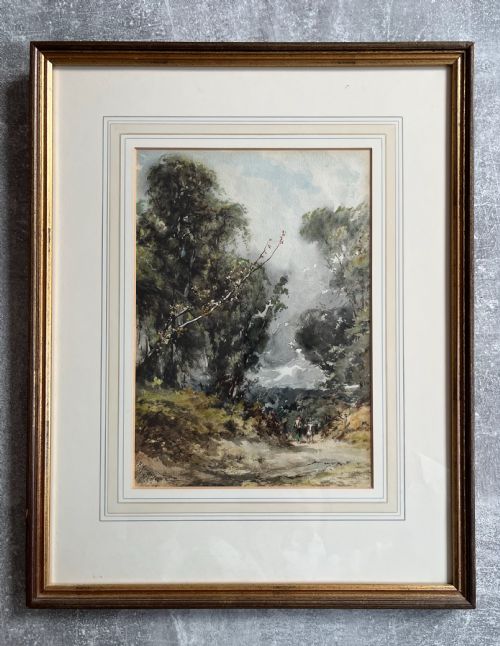
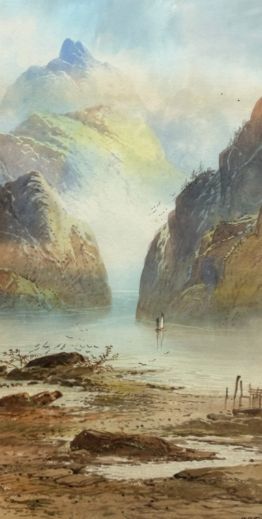
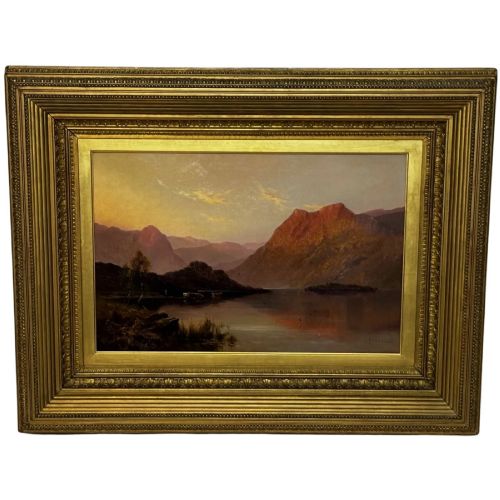
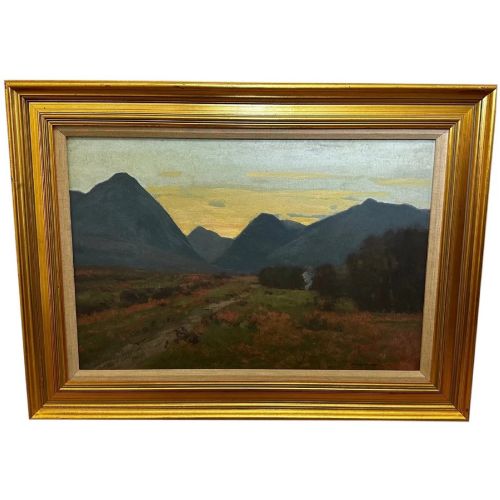
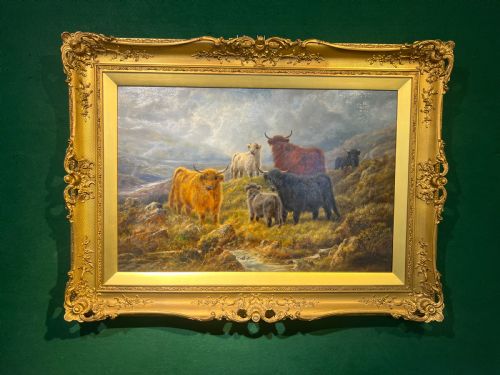
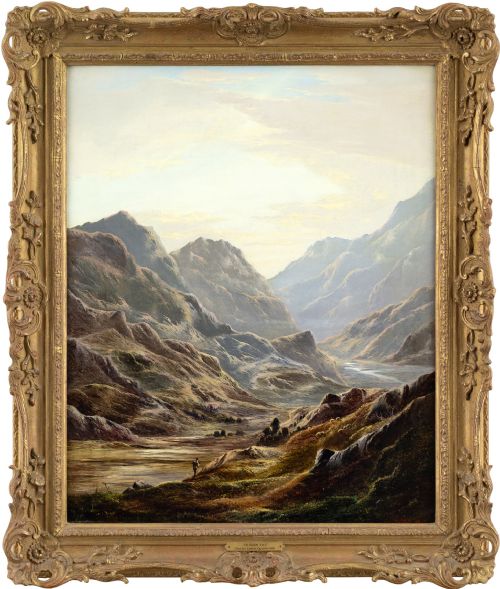
A scottish highland picture typically depicts expansive mountain ranges, tranquil lochs, and cattle grazing by remote streams. These artworks emerge most frequently from the nineteenth century and the Victorian period, reflecting a widespread fascination with wild landscapes.
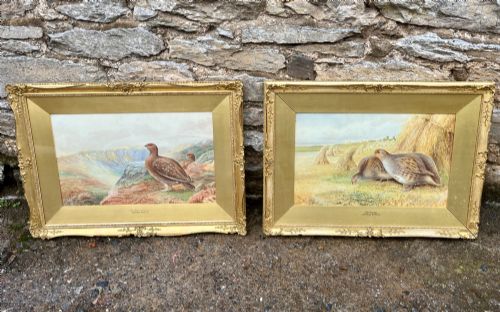
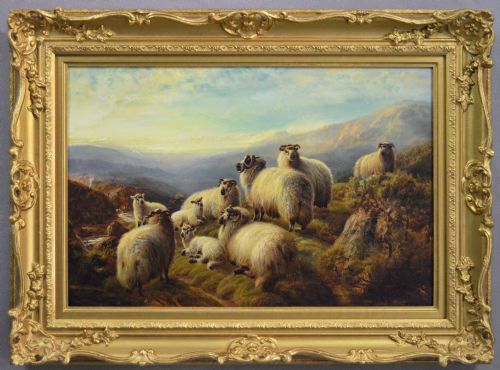
Buyers encounter subjects ranging from quiet pastoral scenes with sheep to dramatic mountain vistas under morning mist. Many examples take the form of oil on canvas or delicate watercolours housed in traditional giltwood frames.
Materials and methods
Artists relied primarily on oil on canvas and watercolour on paper, frequently applying pigment to wood panels or board. Gilt wood frames completed these pieces, providing a formal boundary for the expansive natural scenery within.
Makers utilised traditional brushwork and layering techniques to capture shifting weather conditions over lochs and mountains. Pigments were handled to render both the soft atmospheric haze of distant peaks and the precise detail of Highland cattle or stone bridges.
Mediums range from oil on canvas and wood panel to delicate watercolours and gouache on paper.
Assessing quality and execution
Quality rests upon the artist's ability to render light and atmosphere convincingly across the canvas or paper. Stronger compositions balance the heavy masses of mountains with luminous skies and carefully observed wildlife or figures.
The sensitivity of the brushwork and the depth of the tonal range distinguish superior examples from simpler decorative works. Original frames matching the period of the artwork further influence the overall integrity of the piece.
George Fotherly Hargitt·William Henry Earp·Alfred Fontville de Breanski Jr·George Houston·Robert Watson·George Rankin·Charles Leslie·Henry Robinson Hall·Tom Seymour·James Bell Anderson·Sidney Yates Johnson·Stanley Orchart·John Charles Tunnard·Nasmyth·George Turner·Robert Cleminson·Frederick Richard Lee·Thomas Sidney Cooper·AJ Thornton·Gustave De Brianski·George Cole·Denys Garle·Henry Birtles·Benjamin Williams Leader·Louis Bosworth Hurt
The Scottish Highland Picture Glossary
- Giltwood
- Wood carved and coated with gold leaf or a gold-coloured finish. This material is standard for traditional Victorian picture frames.
- Watercolour
- A paint consisting of water-soluble pigments used on paper. It offers transparent washes of colour suited to capturing atmospheric Highland mists.
- Bothy
- A small stone shelter found in remote mountainous areas. These rural buildings frequently appear in nineteenth century landscape paintings.
- Pastoral
- A genre of art depicting rural life and domesticated animals in a peaceful countryside setting. These scenes often feature herdsmen, sheep, and cattle.
Scottish Highland Picture: Frequently Asked Questions
What subjects appear most often in these paintings?
Artists frequently painted Highland cattle by loch shores, remote stone bridges, and misty mountain ranges like Ben Lawers. Figures such as shepherds, fishermen, and drovers also populate the landscape alongside rustic bothies.
These motifs reflect a romanticised view of Scotland that gained immense popularity during the Victorian era. The scenery emphasises wild, untouched terrain and traditional rural ways of life.
How do I date a nineteenth century landscape?
Signatures, dates written verso, and stylistic clues within the canvas help narrow down the period. Victorian works often display rich giltwood framing and a focus on narrative rural elements.
Later pieces moving into the early twentieth century may show looser brushwork influenced by Scottish impressionism. Comparing the dress of any figures present also provides a reliable chronological anchor.
Are watercolours as durable as oil paintings?
Watercolours on paper require protection behind glass and conservation-grade mounting to prevent fading from light exposure. When kept away from direct sunlight, they remain remarkably stable over centuries.
Oil on canvas offers greater resilience to environmental factors but still benefits from stable room humidity. Both mediums have survived well since the nineteenth century when properly housed.
How should I display a framed artwork at home?
Position the piece away from direct sunlight and heat sources to protect both the painted surface and the original gilt wood frame. Adequate wall space allows heavy traditional frames to sit without crowding.
Pairing these landscapes with neutral walls lets the deep greens, greys, and warm browns of the Scottish terrain stand out. Proper picture lighting enhances the atmospheric depth of nineteenth century oils.