
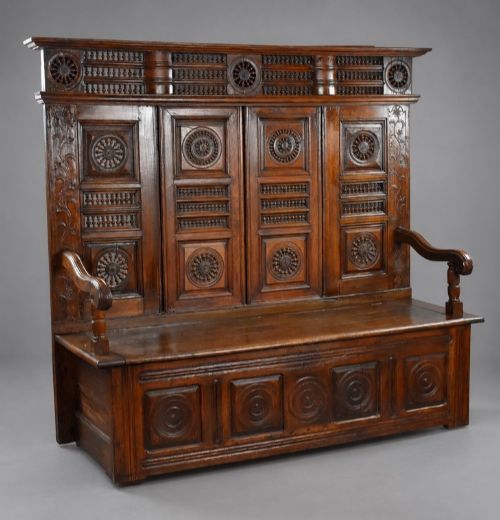
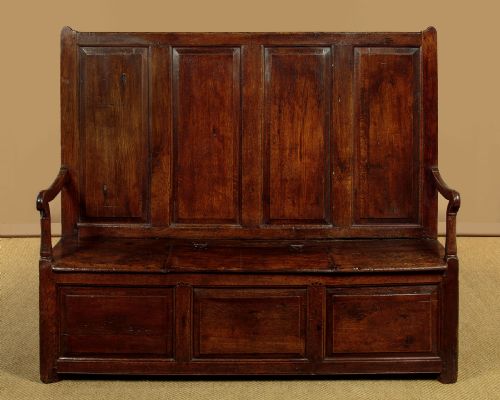
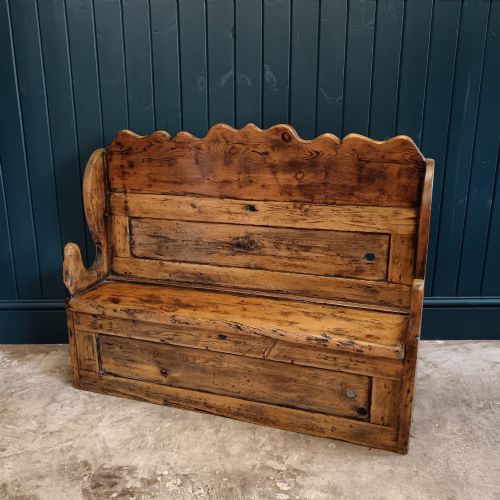
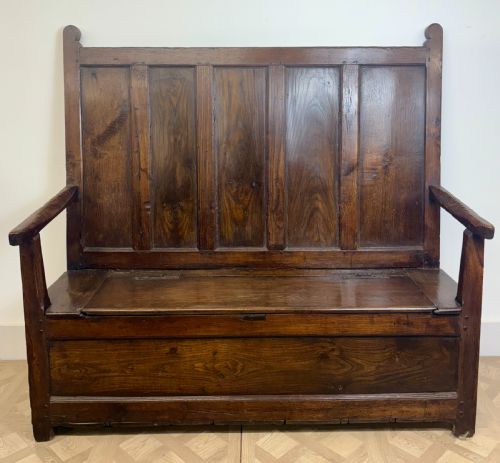


High Backed Entry Bench
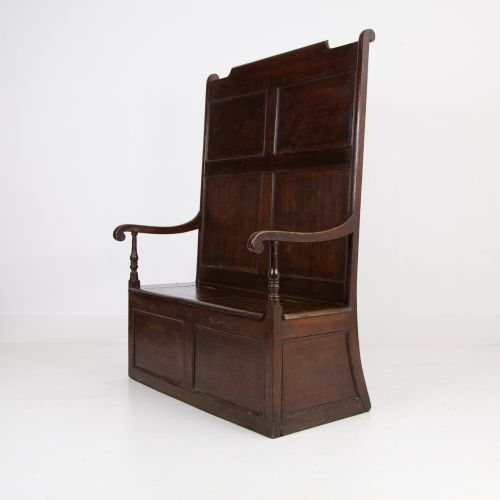
A high backed entry bench is a substantial wooden seat designed to keep out draughts, combining practical hallway storage with commanding period presence.
High Backed Entry Bench
When you search for a high backed entry bench, you encounter historic seating forms commonly catalogued as settles, hall benches, box settles, and tavern benches. These pieces originate from domestic and public interiors across Britain, Italy, Spain, and the Netherlands, spanning the eighteenth century through to the early twentieth century.
The selection here ranges from vernacular country pieces in pine, elm, and ash to formally carved statement furniture in oak, walnut, and painted finishes. Styles stretch from Georgian and Welsh Vernacular traditions to Arts and Crafts, Renaissance Revival, and Jacobean Revival movements.
The tall backrest defines the typology, originally conceived to shield the sitter from cold hallway draughts while offering a secure place to store boots, woollens, or household provisions inside an integrated box base.
Materials and construction methods
Construction relies heavily on sturdy native hardwoods and softwoods such as oak, pine, elm, and ash, frequently joined using traditional pegged mortise and tenon framing. Box settles integrate deep storage chests beneath the seat squab, requiring robust panel construction to bear the weight of daily seating.
Surface treatments vary from deep wax-polished patinas on plain timber to original painted finishes and elaborate hand-carving. Panel decoration often incorporates linenfold, geometric strapwork, or figurative relief, executed by regional carpenters or specialised workshops using chisels and gouges.
Evaluating period quality
Quality rests on the integrity of the timber selection and the ambition of the joinery, distinguishing straightforward utilitarian seating from high-status architectural commissions. Superior examples retain their original structural timber without excessive replacement of floorboards, hinges, or base panels.
Carving depth and sharpness separate standard regional output from exceptional pieces, particularly in Renaissance and Jacobean revival work where crisp relief work indicates skilled hand execution. The presence of untouched surface patination or original historic paint layers elevates the archaeological and visual merit of a piece.
Hampton & Son's
The High Backed Entry Bench Glossary
- Settle
- A wooden bench with a high back, solid arms, and often a closed box base designed to block cold air. This form served as a primary seat near the hearth in historic homes.
- Box Settle
- A variant featuring a hinged seat opening to a storage compartment beneath. It kept blankets, firewood, or dry goods close at hand.
- Vernacular
- Regional furniture built by local carpenters using available local woods and traditional methods rather than adhering to metropolitan design manuals. These pieces reflect distinct geographic building habits.
- Parnelled
- Construction using thin panels of wood fitted into grooved framing members to allow for natural wood expansion and contraction. This technique prevents splitting in large backrests.
- Bacon Settle
- A specialised tall wooden seat historically used in farmhouse kitchens for curing and storing salted meats across the top rails. They offer exceptionally high protective backrests.
High Backed Entry Bench: Frequently Asked Questions
How do I use a high backed entry bench today?
These tall seats provide an immediate architectural anchor in a hallway, offering a place to sit while removing footwear.
Utilise the integrated storage beneath the seat for hiding shoes, bags, and daily clutter out of sight.
Are these benches comfortable to sit on?
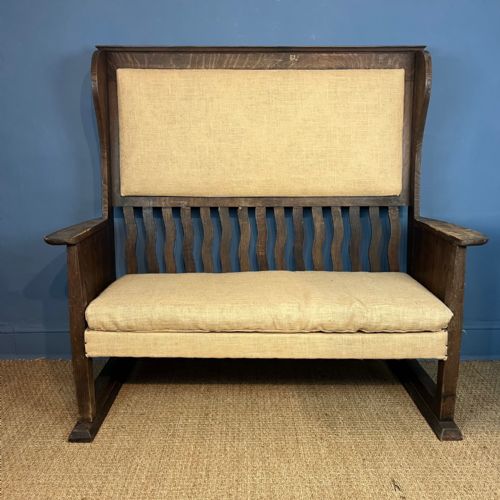
Historic wooden benches were designed for upright posture rather than deep lounging. Many owners add a custom fabric cushion or sheepskin to soften the seat.
The high wooden backrest offers excellent support and blocks lingering hallway draughts.
How do I tell an 18th-century settle from a later revival piece?
Eighteenth-century examples show natural timber wear, hand-cut joinery marks, and authentic pegged construction that has settled over centuries. Revival pieces from the Victorian era or Arts and Crafts movement often employ sharper machine assistance or distinct stylistic revivals.
Examine the underside and interior boards for tool marks and consistency in the ageing of the wood.
Will a high backed bench fit in a modern hallway?
Measure your ceiling height and hallway width carefully, as these pieces possess a commanding vertical presence and deep footprints. Their tall backs require adequate clearance against a blank wall rather than a tight corner.
Ensure your entryway allows enough turning space for moving a rigid, heavy wooden frame into position.