




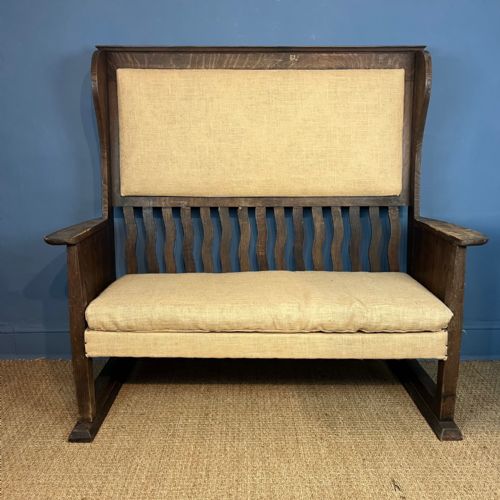


Arts Crafts High Seat
These arts crafts high seat pieces bring honest timber and traditional forms into a room, offering both sturdy comfort and striking vertical presence.
Arts Crafts High Seat
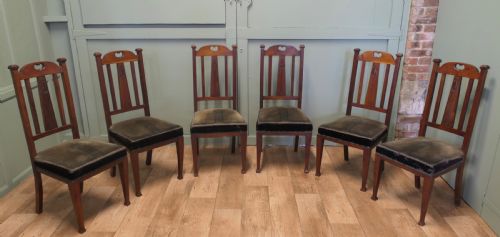
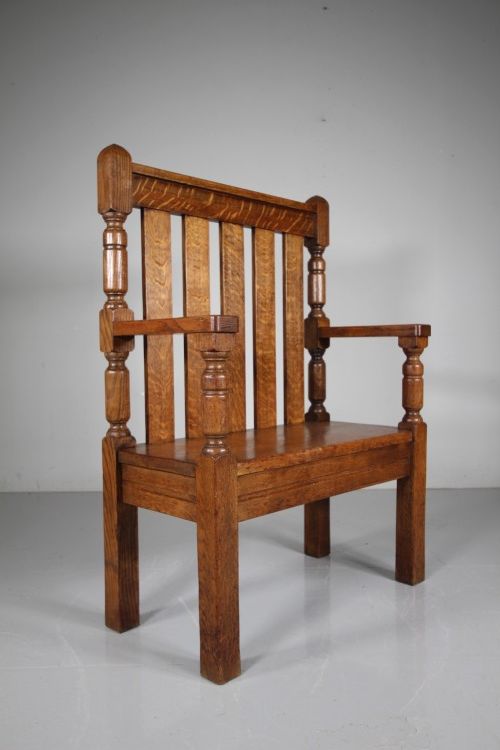
An arts crafts high seat brings together upright proportions and vernacular design, appearing here mostly as oak dining chairs, settles, and fireside armchairs from the late nineteenth and early twentieth centuries. These forms reflect a movement away from industrial excess towards solid construction and functional utility.
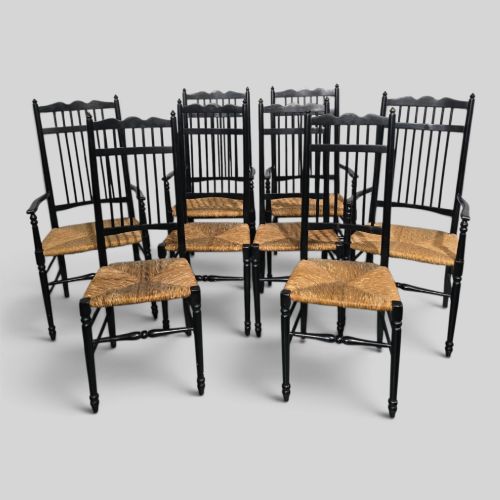
Buyers will encounter single armchairs, fireside chairs, and matched sets of dining chairs alongside substantial settles and hall benches. Oak is the dominant timber, often paired with rush, leather, or woven materials for the seats.
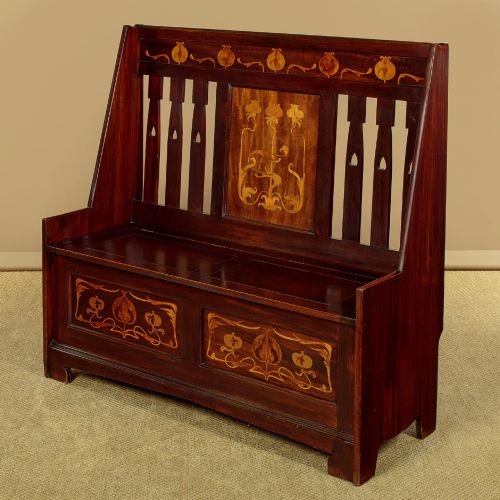
The aesthetic spans strict Arts and Crafts principles, Scottish School designs, and Art Nouveau influences. Pieces range from modest farmhouse seating to ambitious high-back thrones and architectural settles.
How they were made
Makers relied primarily on solid oak, mahogany, walnut, and beech to build frames that prioritized structural integrity. Joinery was often exposed and celebrated rather than concealed, utilising pegged mortise and tenon joints.
Seating surfaces utilised natural materials such as woven rush, supple leather, and textured fabrics including velvet. Brass fittings and detailed carved panels frequently provided subtle decoration on higher status pieces.
Some tall chairs were built so high they required a small step to reach the cushion.
What varies in quality
The distinction between standard workshop production and superior studio output lies in the ambition of the design and the handling of the timber. Selected quartersawn oak showing prominent medullary rays indicates careful wood selection by the maker.
Execution of carved details and the tightness of structural joints separate utilitarian seating from exceptional artistic examples. Original upholstery materials and branded maker stamps elevate the standing of individual items.
James Shoolbred and Co·Liberty and Co·Morris and Co·Dryad of Leicester
The Arts Crafts High Seat Glossary
- Settle
- A wooden bench with a high back, solid arms, and often a storage box beneath the seat. This form provided protection from draughts in traditional interiors.
- Rush
- A wetland plant material twisted into cords and woven into durable seating surfaces. It appears frequently on vernacular chairs.
- Medullary rays
- Flakes or ribbons visible in quartersawn oak timber. Their presence indicates radial sawing from the tree trunk.
- Ladderback
- A chair back featuring horizontal slats between the vertical rear posts. This traditional construction method allowed for lightweight yet strong framing.
- Fireside chair
- A low or winged armchair designed to sit close to a hearth. These pieces prioritize comfort and protection from room drafts.
Arts Crafts High Seat: Frequently Asked Questions
How do I care for an antique oak high seat?
Feed the timber periodically with a traditional wax polish to prevent the wood from drying out. Keep these pieces away from direct heat sources and strong sunlight to protect the finish.
Inspect the joints gently over time to ensure the frame remains stable during daily use. Avoid placing heavy moisture directly onto the wood or rush seating areas.
Are these chairs comfortable for daily use?
Many high-backed designs provide firm vertical support, making them well-suited for dining or reading. Upholstered fireside models offer deeper cushioning suited to relaxation.
Consider adding a loose cushion if you prefer a softer seat on wooden or rush surfaces. The upright posture encouraged by these forms suits traditional dining environments.
How can I tell an Edwardian piece from nineteenth century work?
Nineteenth century examples often display heavier Gothic Revival influences and darker finishes. Edwardian pieces tend to show lighter oak tones and simpler structural lines.
Examine the tool marks and construction methods underneath the seat for clues about period manufacture. Catalogues and documented maker stamps can also confirm the timeline.
What is a Scottish School design?
Scottish School pieces originate from designers influenced by the Glasgow movement around nineteen hundred. They feature exaggerated vertical lines and restrained decorative carving.
These items often utilise stained beech or oak to achieve a distinct regional aesthetic. Their sparse ornamentation highlights structural form over surface decoration.