




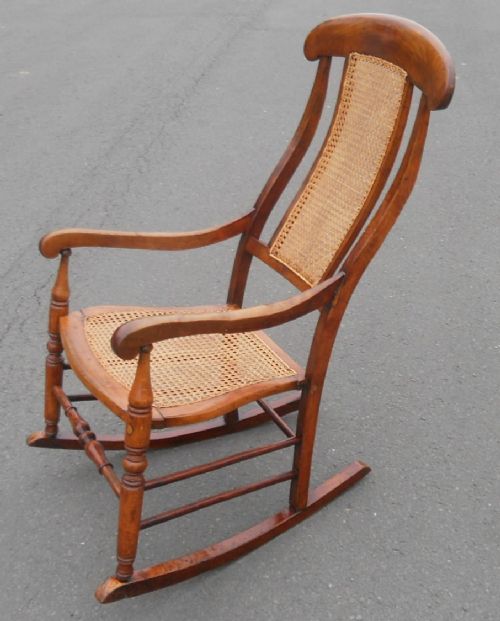

High Back Wooden Rocker
A high back wooden rocker brings genuine regional character and centuries of seating tradition straight into your living room.
High Back Wooden Rocker
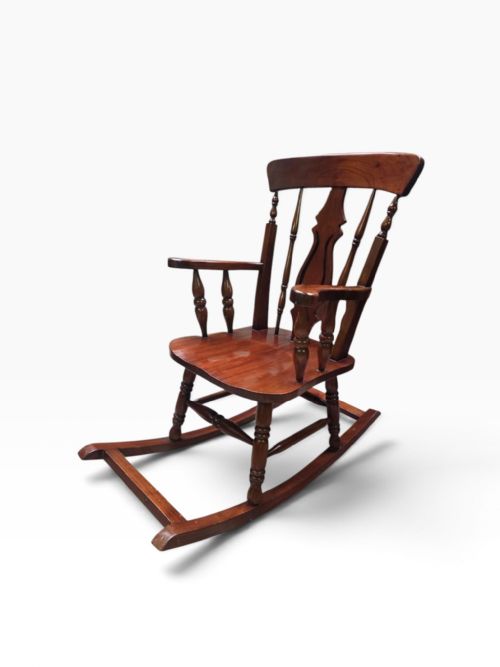
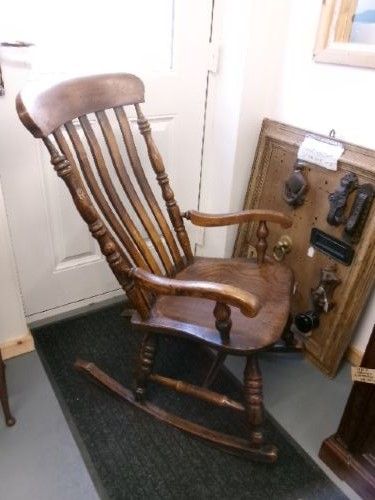
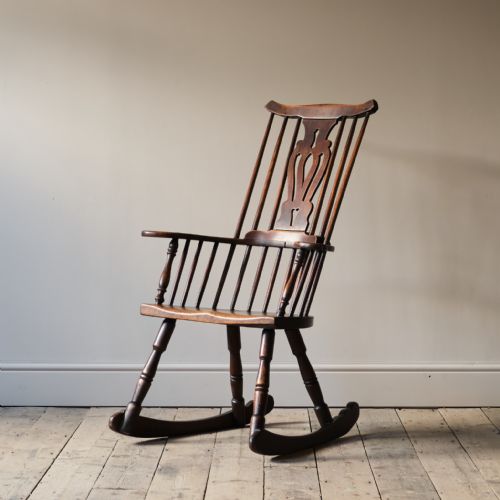
A high back wooden rocker represents a diverse group of nineteenth-century seating designed for comfort and movement, spanning formal parlour models and robust vernacular farmhouse chairs. These chairs combine timber frames with tall backrests, often featuring traditional spindle arrangements or solid central splats to support the sitter.
The versions most commonly met on this page belong to the Windsor and vernacular country traditions, shaped by regional makers across England during the Victorian period and earlier. Examples range from elm and beech farmhouse seats to mahogany and inlaid Edwardian variations, reflecting the changing tastes in domestic seating over a century.
Materials and construction
Makers built these rockers using traditional timber combinations suited to strength and flexibility, frequently pairing elm seats with ash or beech spindles and bending frames. The timber was often turned on a lathe to create slender spindles and uprights before being assembled using traditional joinery methods.
Seating surfaces vary from solid carved wooden saddles to woven cane and sea grass inserts, depending on the regional workshop and the period of manufacture. Frame construction relies heavily on pegged joints and steam-bent components to withstand the continuous motion of rocking.
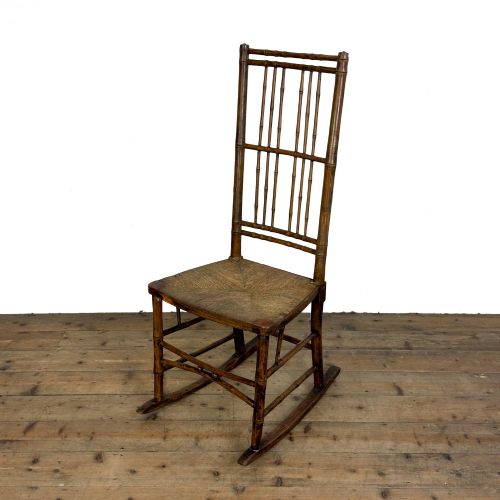
Several chairs on this page mimic exotic bamboo using entirely domestic British hardwoods turned on a workshop lathe.
Assessing quality and character
Quality in these chairs rests upon the integrity of the timber, the balance of the rocker runners, and the crispness of the original turnings. Superior examples maintain tight joints and retain their original surface patination without excessive replacement parts.
Regional variations and stylistic details, such as faux bamboo detailing or subtle mahogany inlay, separate standard utility seating from more considered workshop pieces. The harmony of proportions between the high backrest and the curved rockers dictates the visual success of the chair.
The High Back Wooden Rocker Glossary
- Windsor
- A chair built with a solid wooden saddle seat into which the legs, back spindles, and bow are separately dowelled. This construction method provides exceptional structural rigidity while allowing for sculptural forms.
- Spindle back
- A chair back filled with numerous thin, turned wooden uprights rather than a solid wooden splat. These members distribute support evenly across the sitter's back.
- Faux bamboo
- Wood turned and painted to imitate the segmented stalks of natural bamboo. This decorative technique enjoyed popularity during the nineteenth century under Asian design influences.
- Sea grass
- A twisted natural cord material woven to form flexible seating surfaces. It provides a durable and slightly yielding base within wooden frames.
High Back Wooden Rocker: Frequently Asked Questions
How do I date a wooden rocking chair?
Dating relies on identifying the timber species, construction methods, and stylistic cues such as spindle profiles or inlay work.
Earlier examples from around 1800 often show Thames Valley or rural vernacular characteristics, while later Victorian and Edwardian pieces incorporate machine-turned components.
Where were these rocking chairs made?
They were produced across various English regions, including Yorkshire and the Thames Valley, by local chair bodgers and cabinetmakers.
Regional preferences heavily influenced the choice of timbers like elm, beech, and ash for local workshops.
How do I care for an antique rocker?
Keep the wood nourished with appropriate wax and protect the timber from direct heat sources and dramatic humidity fluctuations.
Regularly check the stability of the joints and the lower rocker runners to ensure they remain secure during use.