


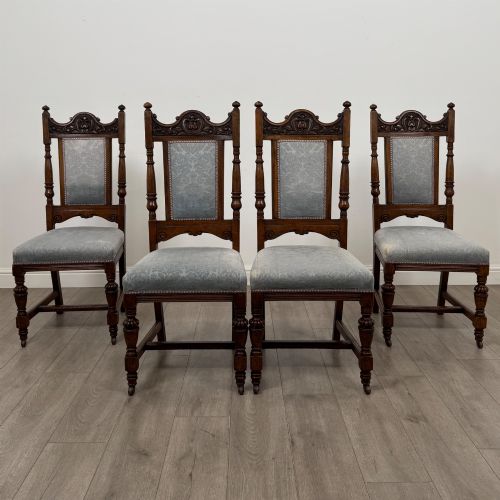
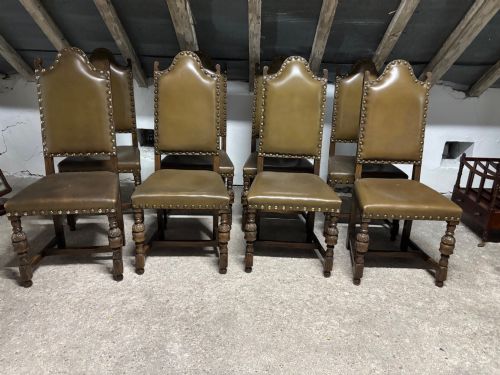
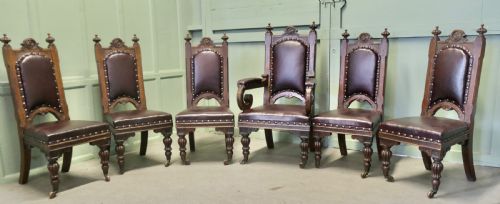
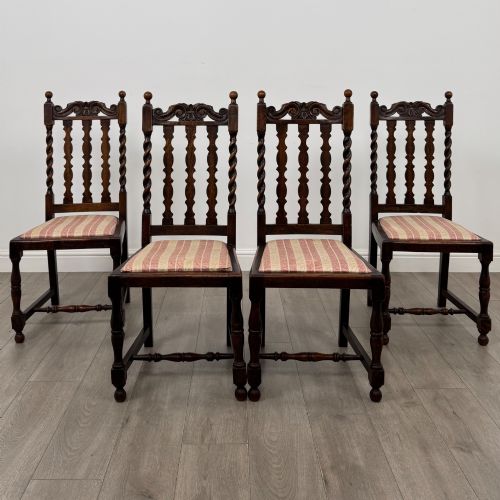

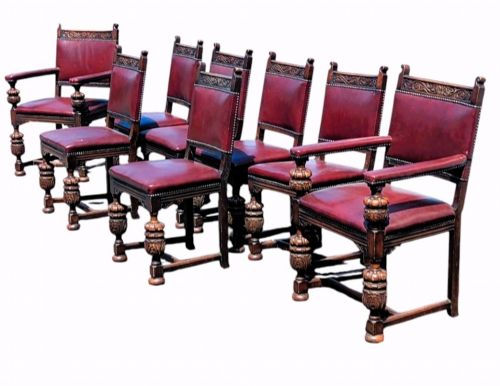
High Back Oak Side Chairs
High back oak side chairs bring upright vertical presence and solid timber grain to a room.
High Back Oak Side Chairs
High back oak side chairs combine tall proportions with sturdy construction, designed to stand without arms alongside a dining table or against a wall. The search phrase covers pieces originating from the nineteenth century up to the nineteen-twenties, incorporating revival aesthetics that look back to seventeenth-century forms.
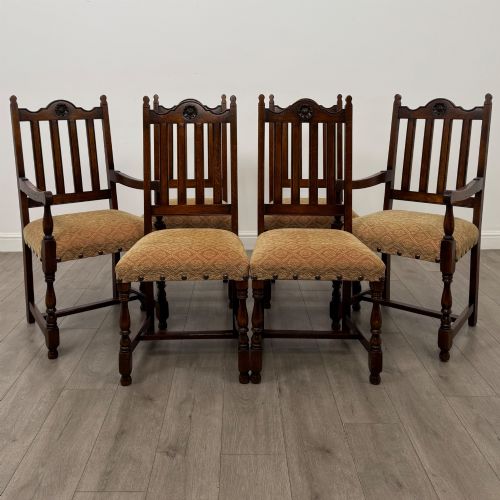
You will encounter sets intended for dining tables as well as individual hall chairs or occasional seating. The taller backrest provides architectural impact, often decorated with carved crest rails, panel backings, or slender splats that draw the eye upward.
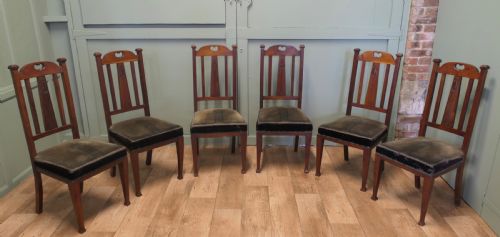
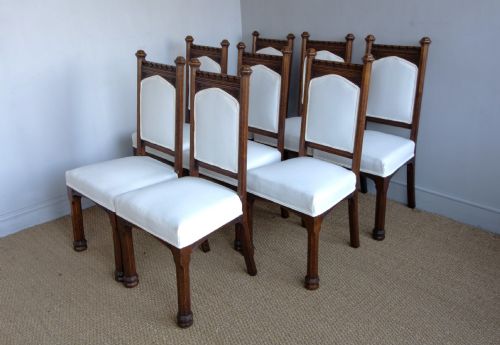
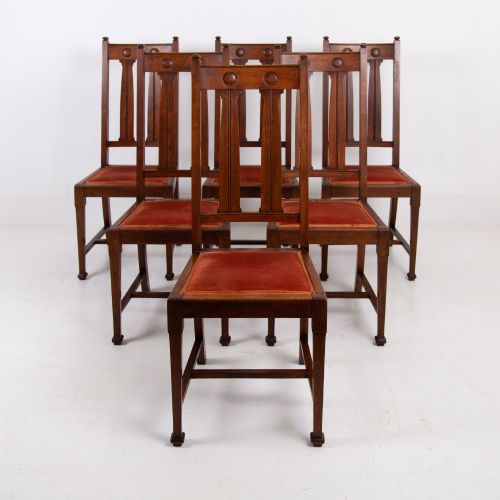
Origins span English workshops, Scottish makers, and continental European output. Revival movements dominate the selection, channelling Jacobean, Carolean, Gothic, and Arts and Crafts principles through heavy timber frames.
How they were made
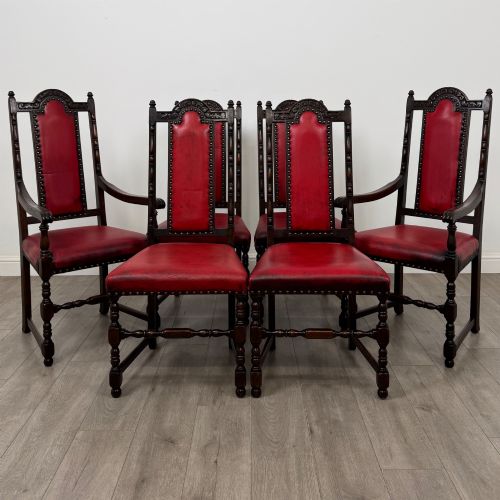
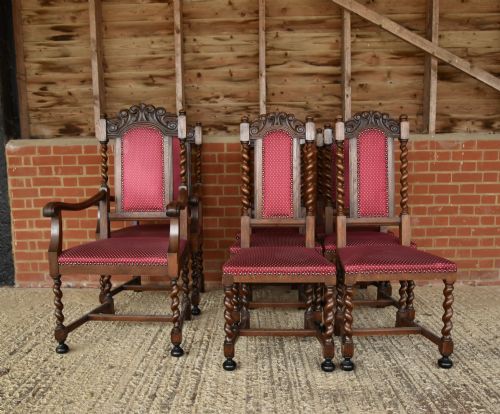
Construction relies heavily on solid oak, shaped through sawing, turning, and joinery techniques such as mortise and tenon. Barley twist legs and columns appear frequently, formed on a lathe to create spiralling wooden ridges.
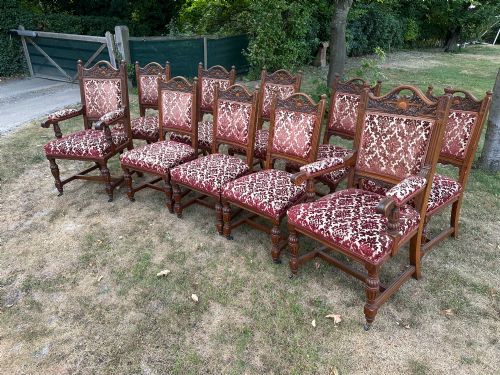
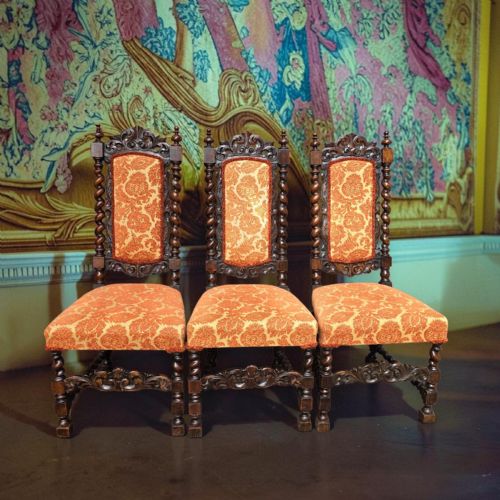
Surface ornamentation depends on hand carving, utilising chisels to render floral motifs, strapwork, and crests into the timber. Back panels and seats integrate secondary materials like cane, leather, brass studs, and woven upholstery fabric.
Some chairs served as silent prayer partners in quiet Victorian corners.
What varies in quality
Depth and crispness of the hand carving separate mass-produced revival seating from superior workshop output. Crisp undercutting in floral scrolls and deep relief work indicate skilled execution by the maker.
Timber selection dictates the visual weight and stability of the frame, with quartersawn oak displaying distinctive medullary rays. The integrity of the original joints and the tightness of turned stretchers determine long-term structural resilience.
Liberty and Co·Shapland and Petter
The High Back Oak Side Chairs Glossary
- Jacobean Revival
- A nineteenth and early twentieth-century style imitating the heavy, rectilinear furniture of the early seventeenth century. It employs dark finishes, geometric paneling, and turned supports.
- Barley Twist
- A turned wooden furniture leg or stretcher resembling a spiral ribbon. This form became popular during the seventeenth century and saw extensive revival use in Victorian and Edwardian seating.
- Cane
- Woven rattan material used for chair backs and seats. It offers flexible support and a lighter visual texture against heavy timber frames.
- Splat
- The vertical central strip of wood in the middle of a chair back. It connects the seat to the top rail and often receives carved or pierced decoration.
High Back Oak Side Chairs: Frequently Asked Questions
How do I spot a revival piece?
Revival pieces exhibit machine-assisted cuts alongside hand finishing, utilising timber conditioning and construction methods typical of the nineteenth and twentieth centuries.
Examining the underside and joint construction reveals modern screw types or glue blocks that distinguish these interpretations from seventeenth-century originals.
Were these used at dining tables?
Many high back oak side chairs functioned as dining seating, particularly in sets designed for large Victorian and Edwardian households.
Their tall profiles served to frame diners and project formality within the dining room interior.
How do I care for oak frames?
Solid oak benefits from application of appropriate wax polish to maintain moisture balance in the timber grain. Avoiding direct sunlight and sudden temperature shifts prevents wood splitting.
Cane and upholstery elements require gentle dusting and careful handling to preserve natural fibres over time.
What styles influence these chairs?
Design influences draw primarily from seventeenth-century English aesthetics including Carolean, Jacobean, and William and Mary periods.
Later nineteenth-century movements like Arts and Crafts and Gothic Revival also shape the structural motifs and decorative carvings.