


Seventeenth Century Style Chairs
Seventeenth century style chairs are substantial seating pieces built from oak or walnut that bring historic gravity and rich carved detail into a room.
Seventeenth Century Style Chairs
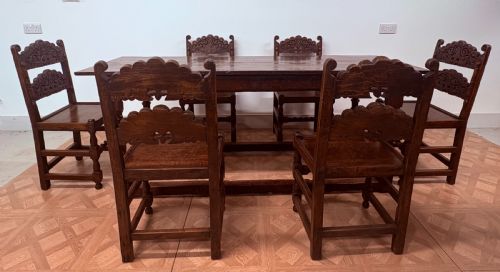
Seventeenth century style chairs encompass heavy oak wainscot forms, high-backed walnut designs, and lighter side seating drawing on Jacobean, Charles II, and William and Mary aesthetics. A buyer searching for seventeenth century style chairs encounters period examples alongside nineteenth and early twentieth century revivals originating from Victorian, Edwardian, and 1920s workshops.
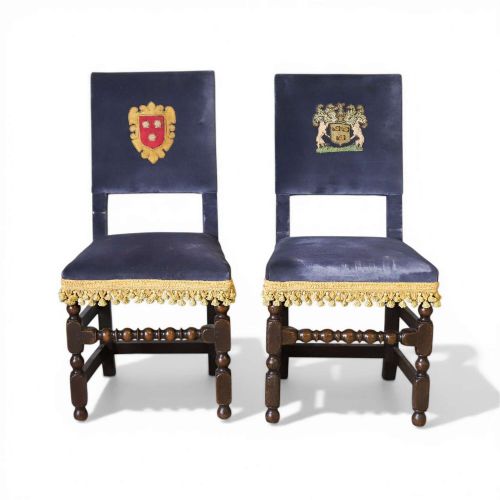
The selection ranges from sturdy farmhouse armchairs featuring cane weaving and carved crests to upholstered library chairs and matched dining sets. Many pieces reflect regional British variations such as Scottish armorial seating or English oak backstools designed for utilitarian domestic use.
How they were made
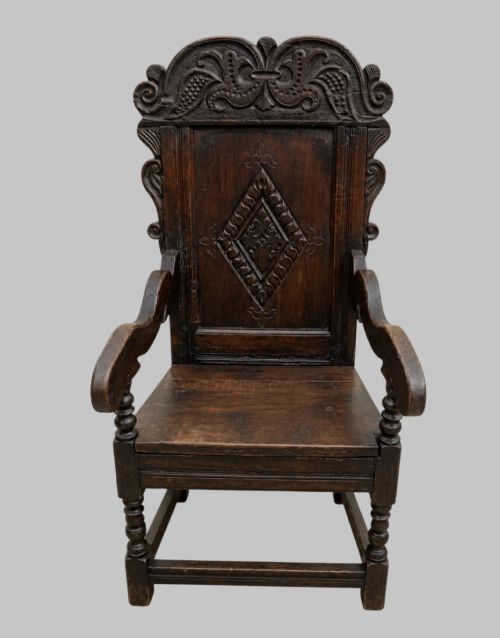
Makers built seventeenth century style chairs predominantly from solid oak and walnut, utilising traditional joinery methods like mortise and tenon to ensure structural endurance. Surfaces frequently display deep hand-carving, turned stretchers, and bobbin-turning details executed with manual woodworking tools.
Upholstery materials include heavy velvet, leather, tapestry fabric, and cane weaving, often finished with metallic fringe or heraldic crest embroidery to denote status.
Listings feature materials such as oak, walnut, cane, velvet, leather, metallic fringe, metal, and tapestry fabric across multiple revival periods.
What varies in quality
Quality in seventeenth century style chairs rests upon the crispness of the wood carving, the integrity of the timber selection, and the authenticity of the period construction methods. Early seventeenth century originals and faithful nineteenth century revival pieces display superior density in the oak and walnut compared to later mass-produced interpretations.
The sophistication of the upholstery work, the survival of original cane weave, and the structural stability of the frame differentiate fine workshop production from simpler domestic seating.
Waring & Gillow
The Seventeenth Century Style Chairs Glossary
- Wainscot chair
- A heavy wooden armchair with a solid panelled back, constructed primarily from oak during the sixteenth and seventeenth centuries. These pieces were symbols of authority in domestic interiors.
- Backstool
- An early form of chair without arms, featuring an upright upholstered or wooden back and a seat supported on four legs. They were precursors to the modern dining chair.
- Jacobean Revival
- A nineteenth and early twentieth century design movement that reinterprets the heavy carved ornamentation and dark oak tones of the early seventeenth century. Workshops used these styles to satisfy demand for historic interiors.
- Cromwellian
- A style of plain, sturdy seating produced during the mid-seventeenth century featuring leather or cloth attached with brass nails. The aesthetic prioritizes function and austerity over elaborate decoration.
Seventeenth Century Style Chairs: Frequently Asked Questions
How do I spot a reproduction?
Examine the timber shrinkage, tool marks, and joinery methods to distinguish period originals from nineteenth or twentieth century revival pieces. Revival makers often used machine-cut elements and different wood ageing patterns.
Check underneath the seat and along the stretcher joints for hand-cut pegs and natural wear consistent with centuries of use rather than artificial distressing.
Are these chairs comfortable for daily use?
Seventeenth century style chairs with wooden panel backs offer an upright, firm sit rather than deep cushioning. Armchairs and upholstered library variants provide more supportive seating for prolonged periods.
Adding appropriate cushions can adjust the height and comfort for modern dining or working environments without altering the historic frame.
How do I care for antique oak furniture?
Maintain oak and walnut frames by applying natural beeswax periodically to nourish the dry wood and preserve the rich patina. Avoid placing pieces near direct heat sources or in fluctuating humidity.
Protect upholstered velvet, leather, and tapestry elements from direct sunlight to prevent fabric fading and degradation over time.