


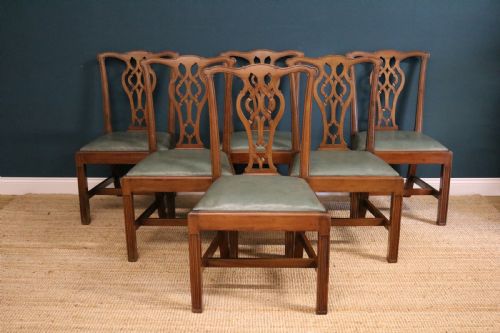


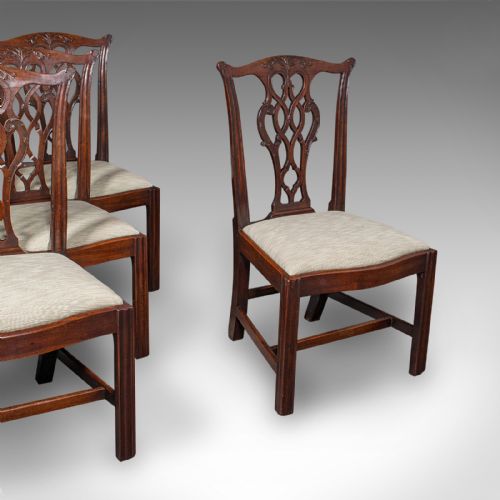


Carved Fretwork Back Chairs
Carved fretwork back chairs combine architectural pierced splats with solid timber construction, offering both structural strength and striking design.
Carved Fretwork Back Chairs
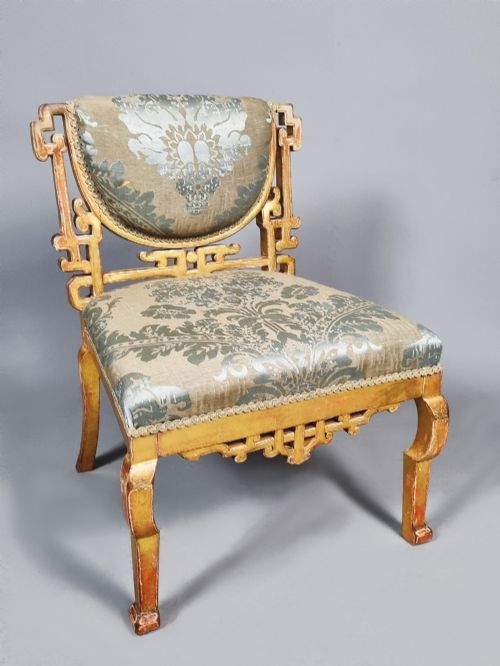
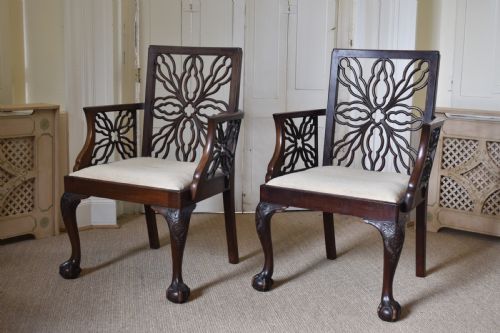
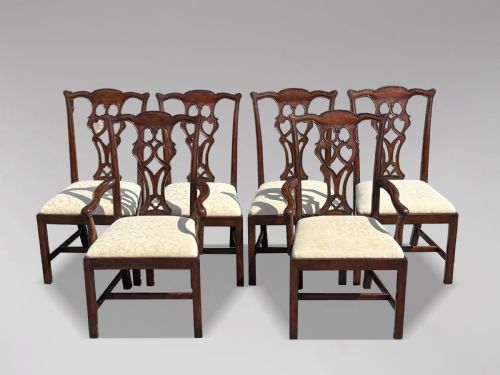
Carved fretwork back chairs are seating pieces defined by openwork wooden splats, frequently found in dining sets, open armchairs, and side chairs. These items draw heavily on eighteenth-century design traditions, particularly the Chinese Chippendale and George III styles.
The versions met most often on this page span the nineteenth and early twentieth centuries, including Edwardian interpretations and revival suites in mahogany and walnut. Forms range from single nursing chairs and cockpen chairs to large sets of dining chairs.
Makers adapted classical patterns across various decades, producing open armchairs, Gainsborough armchairs, and occasional seating that retain the signature pierced back design.
How they were made
Cabinetmakers utilised solid mahogany, walnut, and Chinese hardwood to withstand the intricate piercing required for openwork splats. Timber selection ensured the grain ran correctly to prevent snapping along the delicate fretwork cuts.
Upholstered elements used materials such as leather, fabric, velvet, cane, and damask, secured over webbed or stuffed frames often finished with brass tacks.
Listings feature mahogany, walnut, and Chinese hardwood frames upholstered in leather, velvet, damask, cane, and fabric.
What varies in quality
The depth and crispness of the hand carving dictate the visual standard of the back splat, separating standard production from superior work. Sharp interior corners in the fretwork require patient hand tool use rather than basic machine routing.
The integrity of the timber joints and the weight of the primary wood determine the longevity of the frame. Heavier, denser mahogany assemblies hold structural rigidity far better than lighter, derivative revival pieces.
Thomas Chippendale·Waugh And Son
The Carved Fretwork Back Chairs Glossary
- Fretwork
- Openwork ornamentation carved or pierced from a flat board. It creates intricate geometric or Chinese-inspired patterns along the chair back.
- Splat
- The vertical central strip of wood in the back of a chair. In these pieces, it is pierced and carved to form the fretwork design.
- Cockpen chair
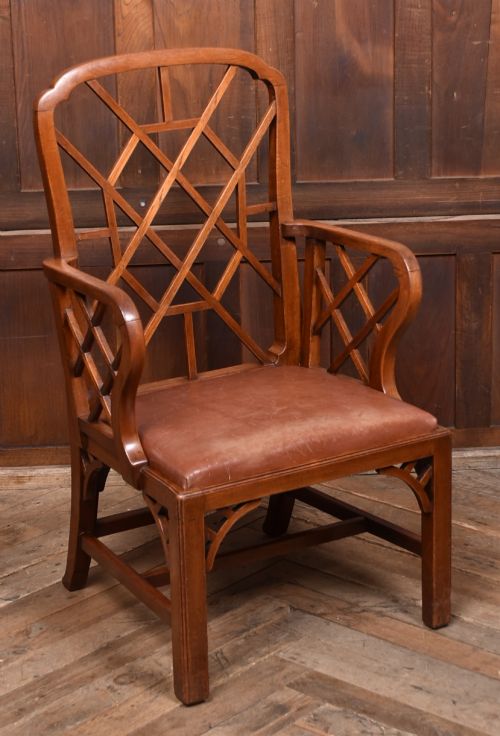
- A form of Chinese Chippendale seating featuring a square lattice back and straight legs. This style gained popularity during the eighteenth century and saw revival production later.
- Bergere
- An enclosed upholstered armchair with wooden frames. Examples often incorporate cane panels alongside upholstered seats.
Carved Fretwork Back Chairs: Frequently Asked Questions
What defines carved fretwork back chairs?
These pieces feature wooden back splats pierced with geometric, ribbon, or Chinese-inspired lattice patterns. The technique lightens the visual weight of the timber while showcasing cabinetmaking skill.
Most examples employ mahogany or walnut frames, linking them directly to Georgian and revival design periods.
How do I spot a Chippendale revival chair?
Revival pieces mimic eighteenth-century proportions and fretwork details but often display nineteenth or twentieth-century timber patination and machine assistance in secondary woods. Examine the crispness of the pierced splat and the joinery underneath.
Later sets from the Edwardian era or the early nineteen-hundreds usually present uniform wear across all pieces compared to eighteenth-century originals.
Were these chairs used only for dining?
While dining chairs form the majority of surviving sets, the category also includes open armchairs, Gainsborough chairs, nursing chairs, and porters chairs. Different forms served specific domestic functions.
Lower nursing chairs featured upholstered buttoned backs, whereas heavier armchairs sat in libraries or halls.
How should I care for upholstered seats?
Maintain the fabric, velvet, leather, or damask surfaces by gentle vacuuming and avoiding direct sunlight that fades natural dyes. Leather benefits from periodic conditioning to prevent cracking.
Check the stability of the brass tacks and frame joints regularly to ensure the antique webbing remains secure.