
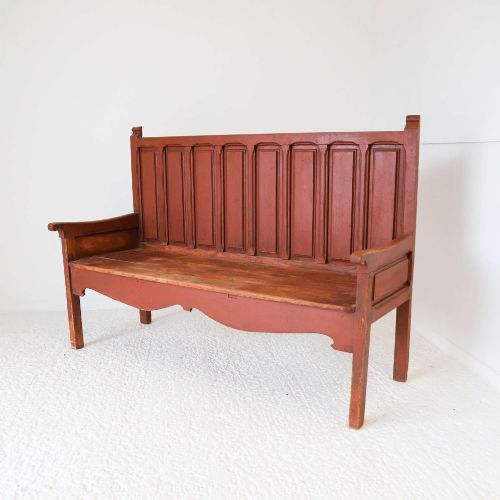
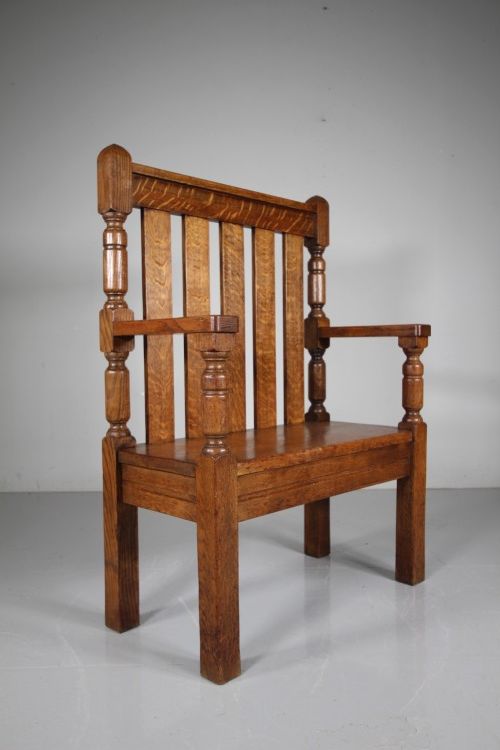


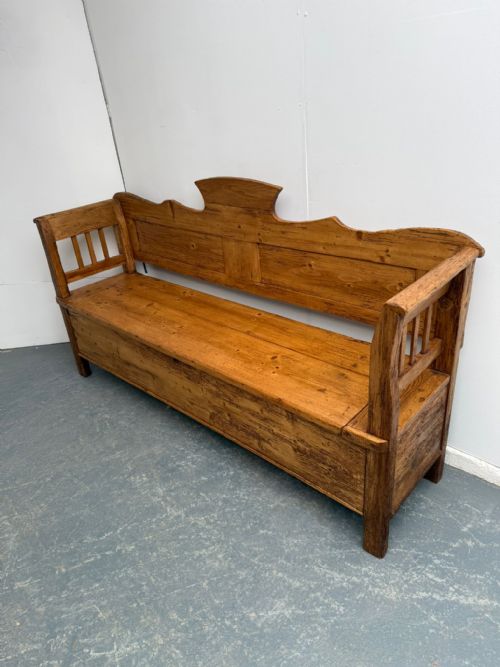


High Back Entryway Bench
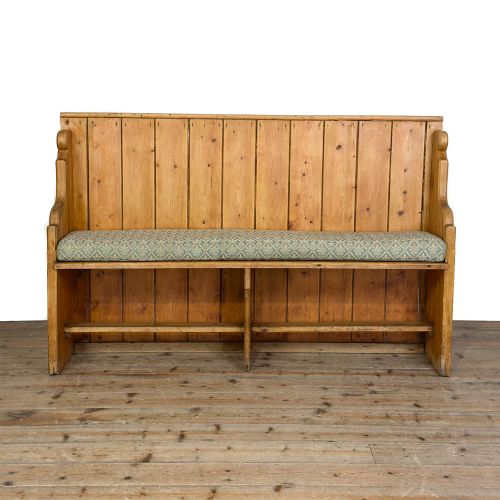
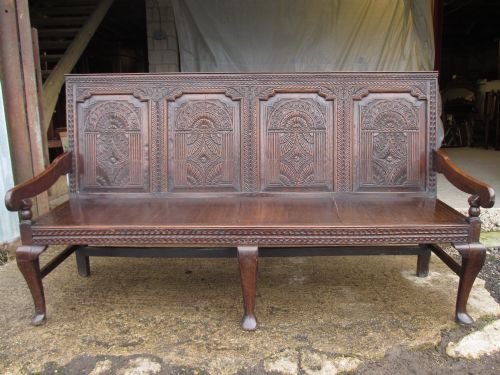
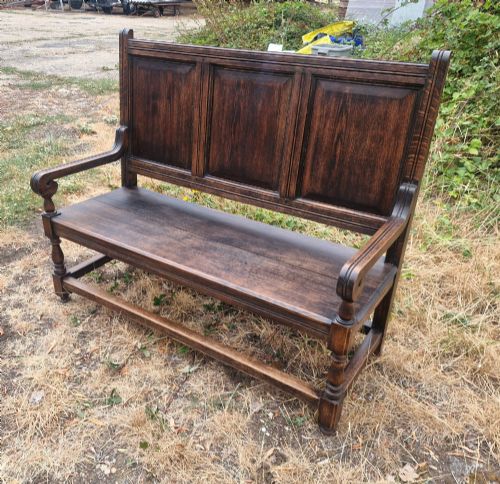
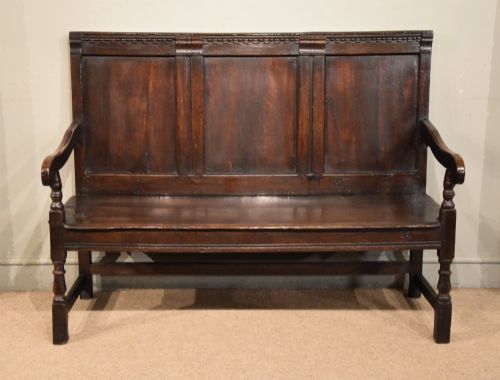
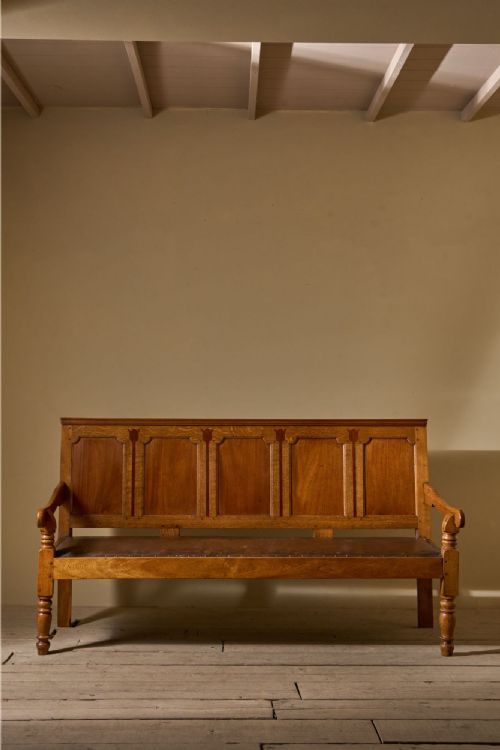
A high back entryway bench offers tall timber panels and sturdy seats, creating an imposing threshold piece that shelters against draughts.
High Back Entryway Bench
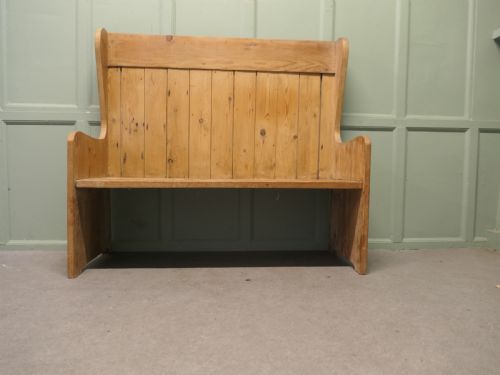
A high back entryway bench brings robust seating and enclosed tall backs to corridors and halls, often appearing as oak or pine settles from the eighteenth and nineteenth centuries. These sturdy seats provide both hallway furniture and historical utility, drawing on country pub, church pew and farmhouse traditions.
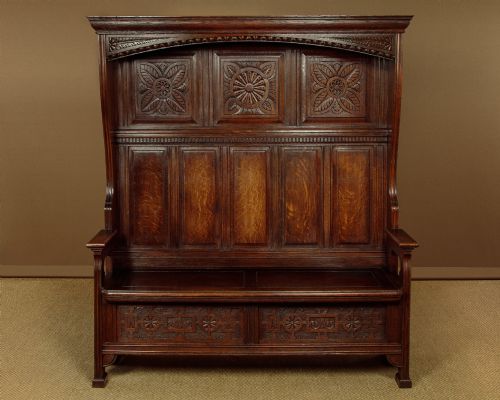
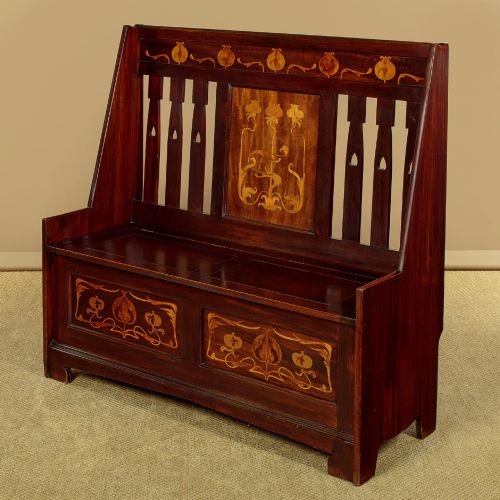
Buyers meet variations spanning Georgian panelled oak, Victorian country pine, and Arts and Crafts workshop designs. Forms range from simple straight-backed settles to canopy tops, box seats with storage drawers, and barrel-backed tavern benches.
Origins stretch across English, Spanish and Italian regional workshops, featuring stylistic revivals like Jacobean details alongside rustic country surfaces. These pieces serve practical entryway needs while displaying centuries of regional woodworking craft.
What varies in quality
Integrity of timber construction and the survival of original surface finishes determine the standing of each piece. Examples retaining authentic early paint, scumble or aged wax coatings command greater regard than stripped or heavily restored alternatives.
The sophistication of joinery, from simple board assembly to complex panelled oak carving and canopy work, separates standard utility furniture from finer workshop output.
Some country pubs utilised hooded settles so tightly curved they effectively created a private micro-climate by the hearth.
James Shoolbred & Co.·Liberty
The High Back Entryway Bench Glossary
- Settle
- A wooden bench with a high back, solid arms, and often a storage box beneath the seat. This form protected sitters from cold draughts in historical halls and farmhouses.
- Box settle
- A settle featuring a concealed compartment or drawers beneath the seat for storage. This dual-purpose design maximised utility in smaller rooms.
- Canopy top
- An architectural overhanging hood built into the top of the bench back. It directed heat from fires down towards the sitter.
- Scumble paint
- A decorative surface technique where a translucent glaze is dragged or combed over a base coat to imitate finer grain. Makers utilised this method to elevate cheaper pine timbers.
High Back Entryway Bench: Frequently Asked Questions
Where did these benches stand originally?
Historical households placed these tall seats in draughty entrance halls, corridors, and farmhouse kitchens to block cold air.
Public houses and churches also utilised them as settles and pews to seat patrons and congregations comfortably.
How do I maintain a waxed pine settle?
Apply a traditional beeswax polish sparingly with a soft cloth and buff gently to maintain the timber's natural lustre.
Keep the wood away from direct heat sources and sudden temperature shifts to prevent the pine from splitting.
How can I tell eighteenth century oak from later revivals?
Examine the timber joints for hand-cut pegging, irregular board widths, and tool marks left by early pit saws.
Jacobean revival pieces from later decades often display machine-tooled regularity and cleaner, uniform internal construction.
What is the purpose of the high back?
The tall wooden panel acts as a physical barrier against cold hallway draughts before central heating existed.
It also provides privacy and structural support for the heavy framework of the seat.