



Hexagonal Plant Stand
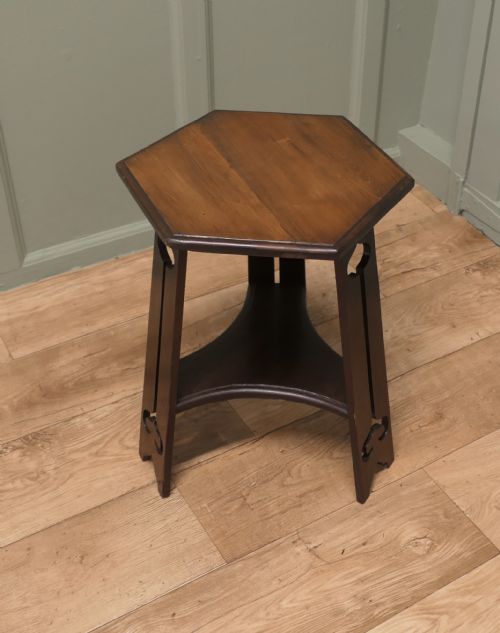
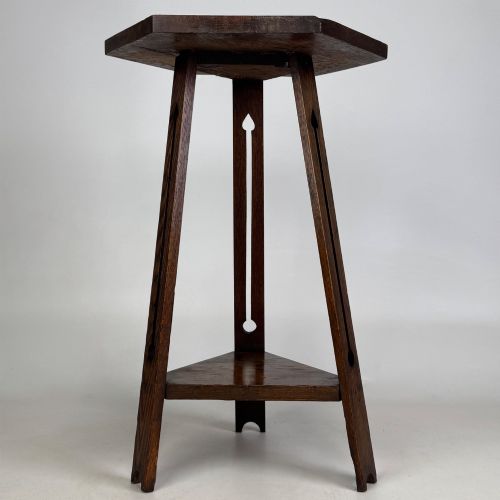
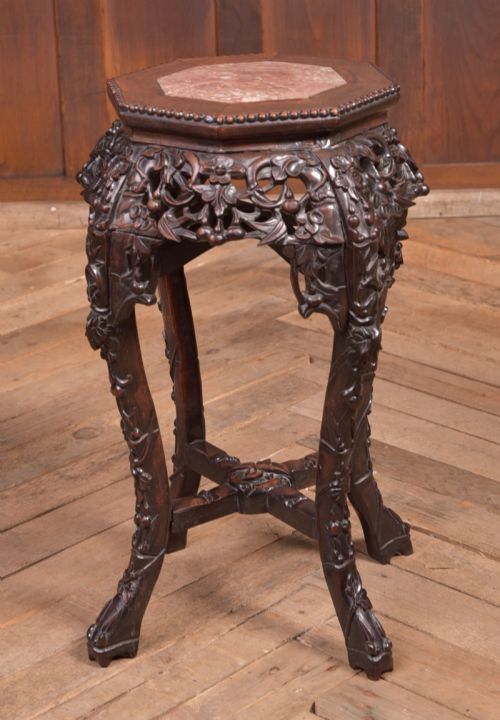
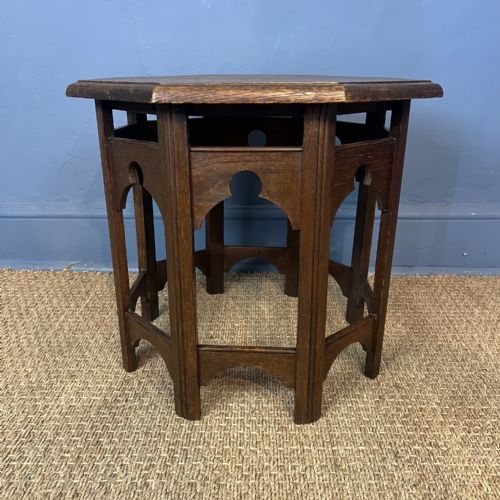
These hexagonal plant stand examples range from solid oak Arts and Crafts designs to inlaid Oriental pieces, bringing architectural form to any room.
How they were made
Cabinetmakers constructed these stands using solid hardwoods like oak, mahogany, and walnut, alongside exotic timbers such as kingwood, rosewood, and padouk. Joinery techniques varied from sturdy pegged joints in Arts and Crafts pieces to intricate hand-carving found on oriental and Anglo-Indian imports.
Decorative surface treatments define many examples, incorporating mother-of-pearl inlay, brass mounts, and contrasting veneers. Some variations integrate inset marble tops or raised wooden galleries to secure objects placed upon the hexagonal surface.
What varies in quality
Quality rests upon the selection of timber and the precision of the joinery, distinguishing robust furniture from lighter decorative items. Dense, figured hardwoods and solid construction signal superior workshop standards across both British and imported pieces.
The execution of decorative elements dictates distinction, from crisp hand-carving and secure pearl inlay to the integration of cast brass details. Superior examples maintain structural integrity across their multi-tiered frames or complex pedestal bases.
The selection includes styles from Arts and Crafts and Gothic revivals to Moorish and Anglo-Indian traditions.
Liberty & Co
The Hexagonal Plant Stand Glossary
- Torchere
- A tall, slender stand designed specifically to support a lamp or decorative urn. These pieces frequently feature elevated platforms and slender legs.
- Padouk
- A heavy, durable tropical hardwood with a reddish tint, utilised in fine nineteenth-century Chinese and oriental furniture stands.
- Galleried
- A small raised wooden edge surrounding the perimeter of a tabletop to prevent items from sliding off. This detail appears frequently on occasional tables.
- Inlay
- A decorative technique where contrasting materials such as mother-of-pearl or exotic woods are embedded into the primary surface of the furniture.
- Pedestal
- A structural support column or base that elevates a display surface, often seen in pairs within nineteenth-century interior arrangements.
Hexagonal Plant Stand: Frequently Asked Questions
What is a hexagonal plant stand used for?
These stands serve primarily to elevate potted plants, floral arrangements, or decorative ceramics to enhance room proportions.
They also function as compact side tables or lamp stands in tighter spaces.
How do I identify an Arts and Crafts stand?
Arts and Crafts pieces typically feature solid oak construction, exposed pegged joinery, and straightforward geometric forms.
They emphasise the natural grain of the wood over heavy surface ornamentation.
Where were inlaid Syrian tables made?
Syrian and Moorish tables originated from Middle Eastern workshops renowned for intricate geometric woodworking.
Artisans embedded mother-of-pearl and bone into dark hardwoods to create elaborate surface patterns.
Are these stands suitable for heavy pots?
Solid hardwood versions in oak or mahogany provide robust support for substantial ceramic planters.
Lighter occasional tables or multi-tiered stands function better with smaller decorative items.