



Hexagonal Glass Light
A hexagonal glass light brings functional elegance to an entrance, spanning styles from Edwardian brass to Art Deco nickel.
Hexagonal Glass Light
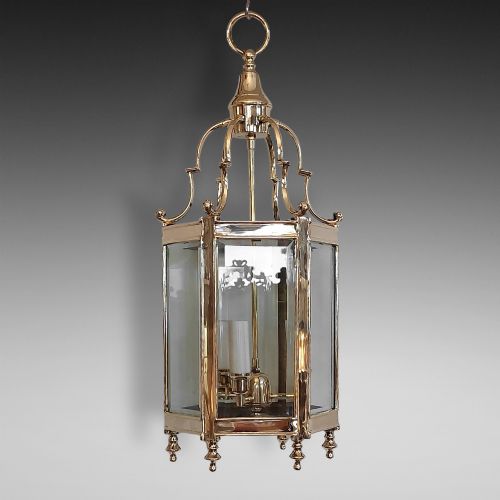
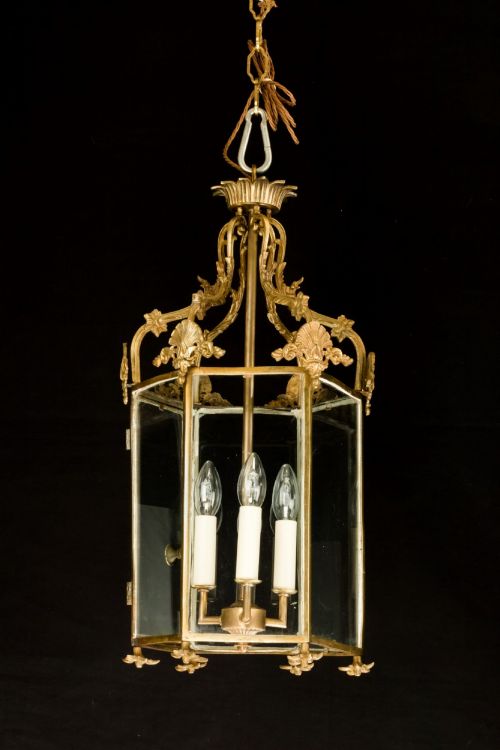
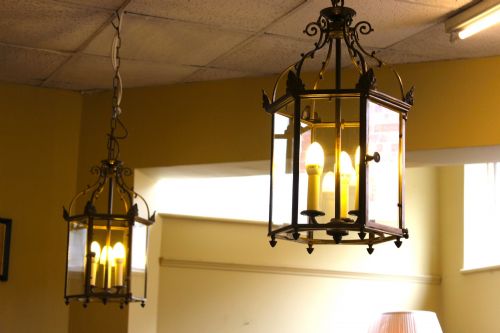
A hexagonal glass light serves primarily as a ceiling-hung hall lantern or pendant, designed to illuminate entranceways and corridors. The form relies on a six-sided geometric frame that holds glazed panels, projecting light evenly across a space.
You are most likely to encounter Edwardian and early twentieth-century examples on this page, alongside various nineteenth-century and Art Deco interpretations. These pieces appear most frequently as hanging lanterns and ceiling lights rather than table lamps.
The design spans multiple aesthetic movements, including Gothic Revival, Neo-Classical, Arts and Crafts, and French Classical traditions. Each period brings distinct metalwork details to the six-sided frame while maintaining the characteristic geometric profile.
How they were made
Makers constructed the structural frames using cast metal, brass, bronze, wrought iron, and steel, joining the components to support multiple glass panes. Gilded bronze and nickel finishes appear on select pieces, adding a reflective surface to the metal armature.
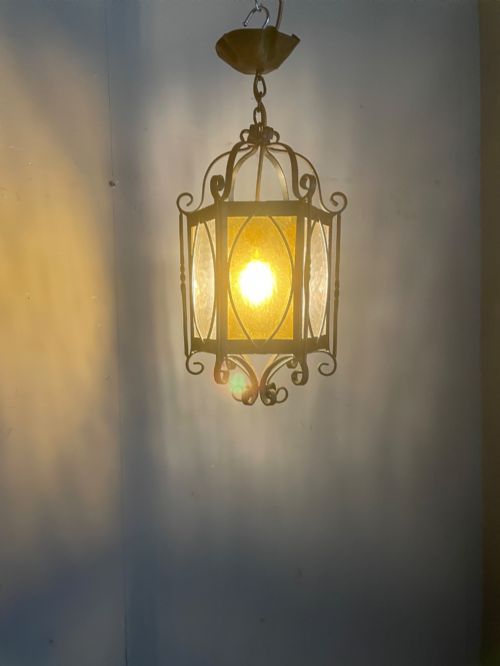
The glazing involves clear, frosted, cut, amber, stained, or opaque glass fitted carefully into the six-sided metal rebates. Bevelled edges frequently feature on the glass panels of finer lanterns, catching and refracting the interior illumination.
Hexagonal Glass Light Retail Price Guide 2026
Typical asking prices for hexagonal glass light among the pieces listed under this phrase on Sellingantiques today, from the lower quarter to the upper quarter. They describe what is for sale here now, not the wider market.
Even copper lanterns occasionally acquire a green man motif, watching silently over the hallway.
What varies in quality
The distinction between standard production and superior craftsmanship lies in the weight and detailing of the metal frame. Heavier castings, intricate chased decoration, and substantial mounting brackets mark out the better examples.
Glass selection also dictates the grade of the piece, with thick bevelled panes or specialised treatments like amber and stained glass demonstrating higher ambition. The precision of the joinery where the six glass panels meet the metal skeleton defines the overall execution.
Muller Bros
The Hexagonal Glass Light Glossary
- Hall lantern
- A ceiling-hung lighting fixture specifically designed for entrance halls and corridors, typically enclosed with glass panels. These fixtures provide ambient illumination from a central bulb enclosed within a decorative frame.
- Bevelled glass
- Glass panes featuring an angled edge ground and polished to a specific slope. This technique refracts light attractively and adds depth to the six-sided profile.
- Gilded bronze
- Bronze metal treated with a thin layer of gold leaf or gold paint. This finish offers durability alongside a warm, reflective lustre.
- Frosted glass
- Glass treated by acid-etching or sandblasting to create a diffused, opaque surface. It softens the light output and obscures the interior bulb from direct view.
Hexagonal Glass Light: Frequently Asked Questions
Where should a hexagonal glass light be hung?
These lanterns suit entrance halls, vestibules, and stairwells where their six-sided shape can be appreciated from multiple angles. They provide welcoming illumination in transitional spaces with adequate ceiling height.
Ensure you allow sufficient clearance beneath the fixture for foot traffic, particularly in compact hallways or period properties with lower ceilings.
How do I identify an Edwardian lantern?
Edwardian examples often feature bright brass frames, clean lines, and restrained decorative motifs influenced by late Victorian traditions. They frequently utilise clear or lightly frosted glass panels.
Look closely at the construction methods and metal patination, which typically display the lighter, more refined proportions characteristic of the early twentieth century.
Are these lights rewired for modern use?
Many surviving examples have been adapted or rewired for contemporary electrical standards while preserving their original frames and glass shades. This ensures safety during installation in modern domestic settings.
Check individual listings to confirm the current wiring status and compatibility with standard household bulb fittings.
What metal finishes are available?
The frames appear in brass, bronze, wrought iron, steel, and gilded bronze, depending on the period and style. Each metal offers a distinct visual weight and patination developed over decades.
Neo-Classical and French designs tend to favour brass and gilded bronze, whereas Arts and Crafts pieces often utilise wrought iron or copper.