



Hexagonal Pendant Light
A hexagonal pendant light brings structured architectural form and warm illumination to hallways and high-ceilinged rooms alike.
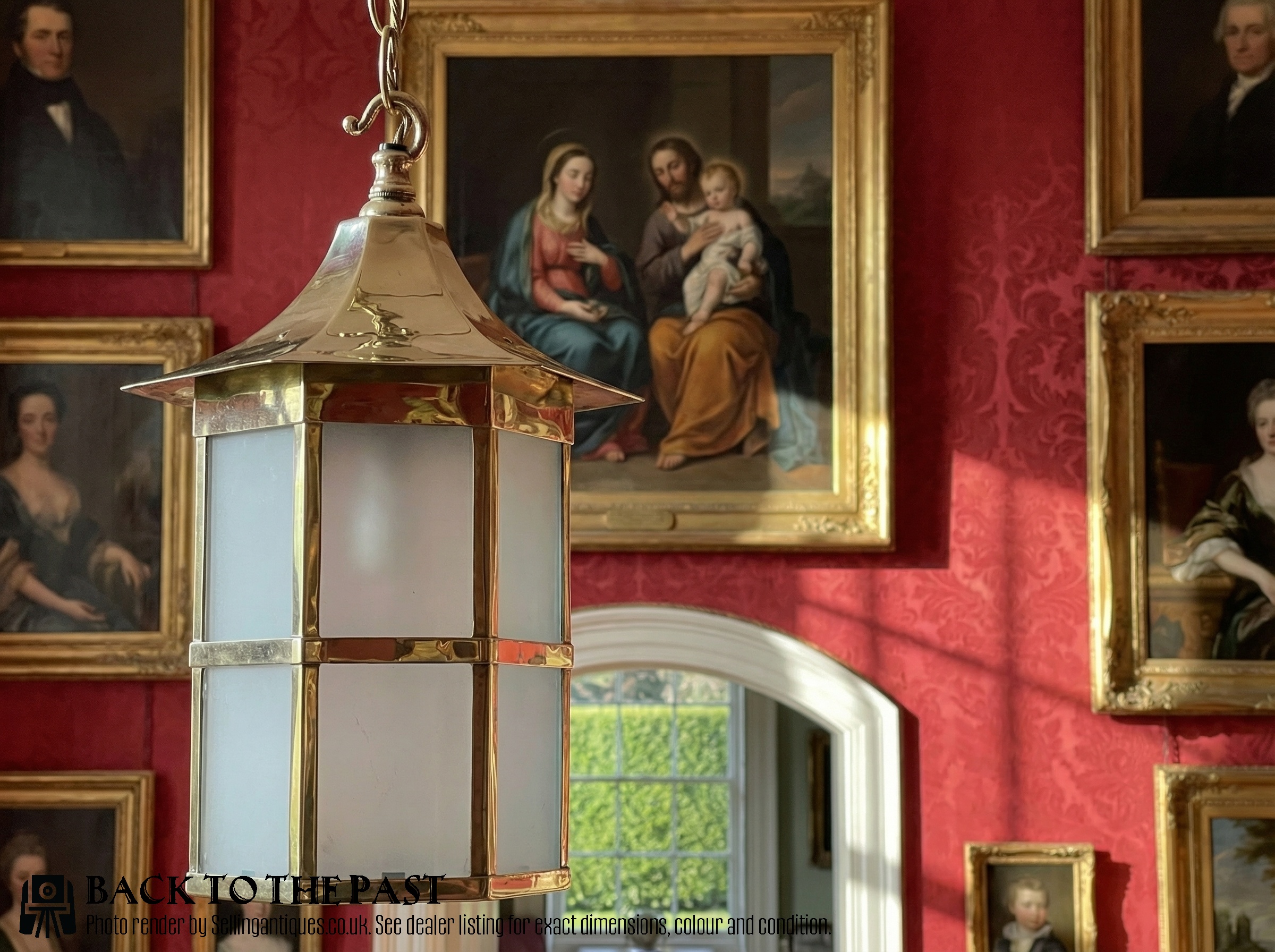
Hexagonal Pendant Light
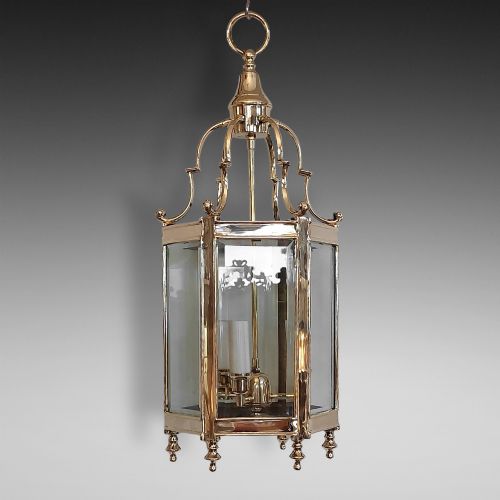
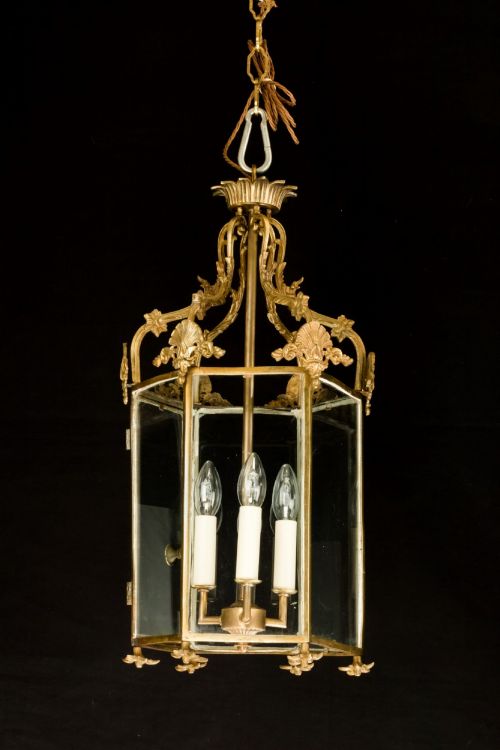
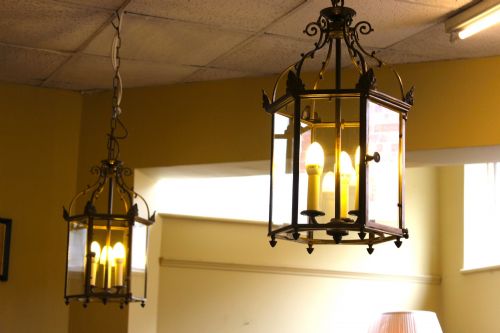
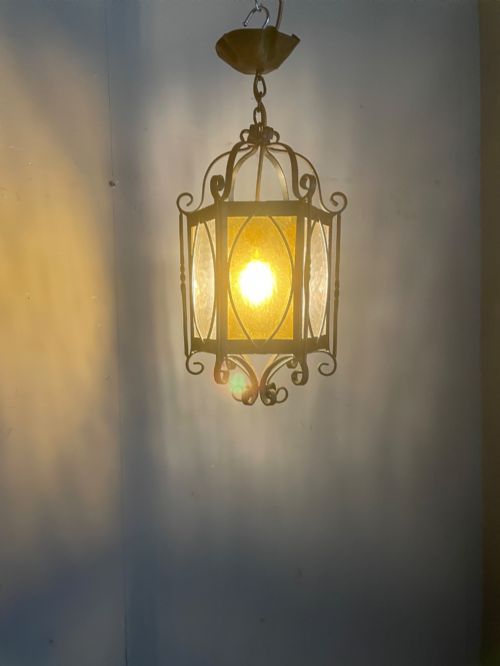
A hexagonal pendant light is a ceiling-hung fixture defined by its six-sided geometry, most commonly seen on this page as brass, bronze, or wrought iron hall lanterns and hanging lanterns. These pieces span from the Victorian and Edwardian eras into the early twentieth century, reflecting styles from Gothic Revival to Neo-Classical and Arts and Crafts. You will frequently encounter brass frames paired with glazed panels, suspended simply from chains or hooks for interior illumination.
The objects listed range from sturdy wrought iron and steel frames to decorative gilded bronze and ormolu designs modelled after French palace lanterns. Many pieces serve functionally as hall lanterns, designed to cast clear light through bevelled or clear glass panels in entranceways and corridors. Their enduring appeal lies in this combination of geometric precision and period metalwork.
Materials and construction
Makers constructed these lanterns using rigid metal frameworks of brass, bronze, copper, or wrought iron, often shaped through casting or hand-forging. Gilded bronze and ormolu finishes appear alongside patinated brass and blackened iron, reflecting the dominant metalworking techniques of the nineteenth and early twentieth centuries.
Glass panels are fitted securely into the six-sided frames, occasionally featuring bevelled edges that catch and refract the internal light. The structural components are joined with visible screws, soldered joints, or decorative riveted brackets appropriate to each period style.
The listings on this site feature brass, bronze, copper, and wrought iron frameworks paired with clear or bevelled glass panels.
Assessing quality and execution
Quality in these lanterns rests upon the crispness of the metal casting and the thickness of the brass, bronze, or iron frame. Finer examples display meticulous hand-chasing on gilded mounts and robust structural joints that maintain the rigid geometry of the six sides over time.
The integration of the glass is another indicator of standard, with bevelled plates and tightly fitted panes showing greater care than simple flat glass held by basic clips. Decorative elements such as cast brass cresting or intricate suspension loops distinguish standard utilitarian hall lights from ambitious stylistic interpretations.
The Hexagonal Pendant Light Glossary
- Bevelled glass
- Glass panes with angled edges ground and polished to a specific slope. This technique refracts light decoratively and adds depth to the lantern panels.
- Ormolu
- Finely ground high-carat gold-bronze alloy applied to an object of bronze. It provides a bright, durable metallic finish seen on decorative revival pieces.
- Hall lantern
- A ceiling-hung lighting fixture designed specifically for corridors, vestibules, and entrance halls. These pieces often feature enclosed glass sides to protect the flame or bulb from drafts.
- Gilded bronze
- Bronze metal treated with a thin layer of gold leaf or gold paint. This finish offers a rich, reflective surface favoured in formal nineteenth-century interiors.
- Wrought iron
- Iron that is heated and hammered into shape by hand. It yields a sturdy, textured metal framework with visible hammer marks.
Hexagonal Pendant Light: Frequently Asked Questions
Where should I hang a hexagonal pendant light?
These fixtures suit entrance halls, stairwells, and high ceilings where their vertical proportions and multi-sided glass panels can project light evenly across the space.
Ensure you measure the drop height carefully to allow adequate clearance beneath the lowest point of the hanging chain.
How do I clean the glass panels?
Carefully remove the panels if the frame design permits, or clean them in situ using a mild glass cleaner and a soft cloth to avoid disturbing the surrounding metal.
Take care around aged brass, bronze, or gilded surfaces so that cleaning solutions do not strip the historic patina.
Can these antique lanterns take modern bulbs?
Most period lanterns can accommodate modern low-heat LED bulbs, provided the internal electrical fitting has been safely updated to current standards.
Consult a qualified electrician to inspect the vintage wiring and ensure the lamp holder matches your lighting requirements.
How do I identify an Edwardian lantern?
Edwardian examples often feature lighter brass construction, simpler geometric lines, and restrained ornamentation compared to heavily carved Victorian Gothic or French revival designs.
Look at the overall proportions and mounting hardware to help determine the manufacturing period.