

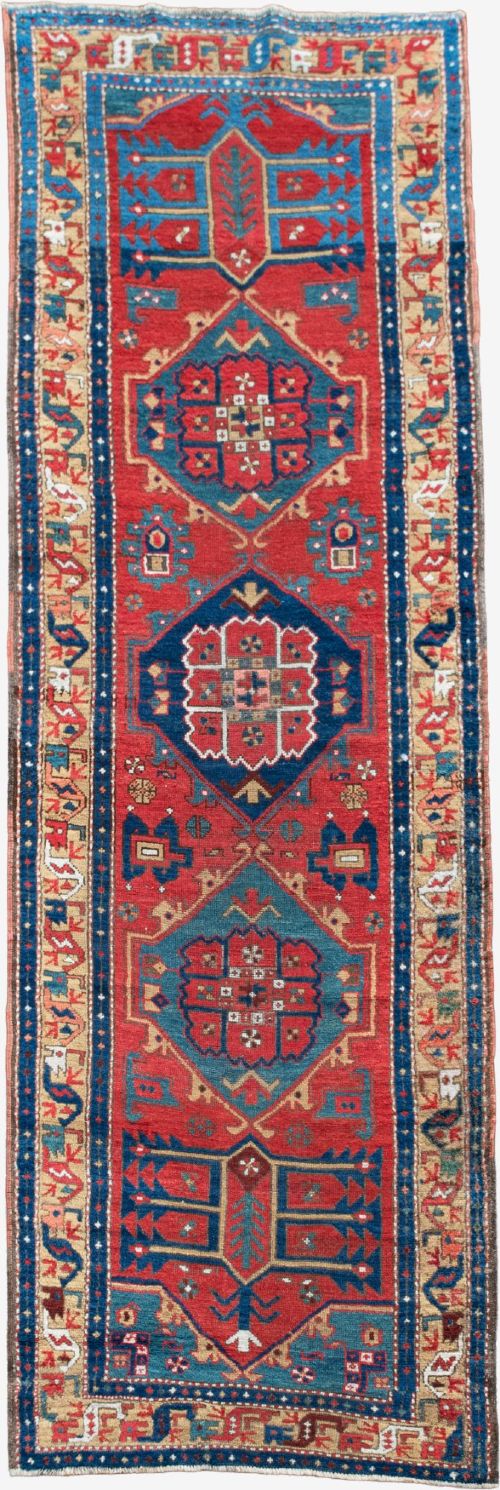
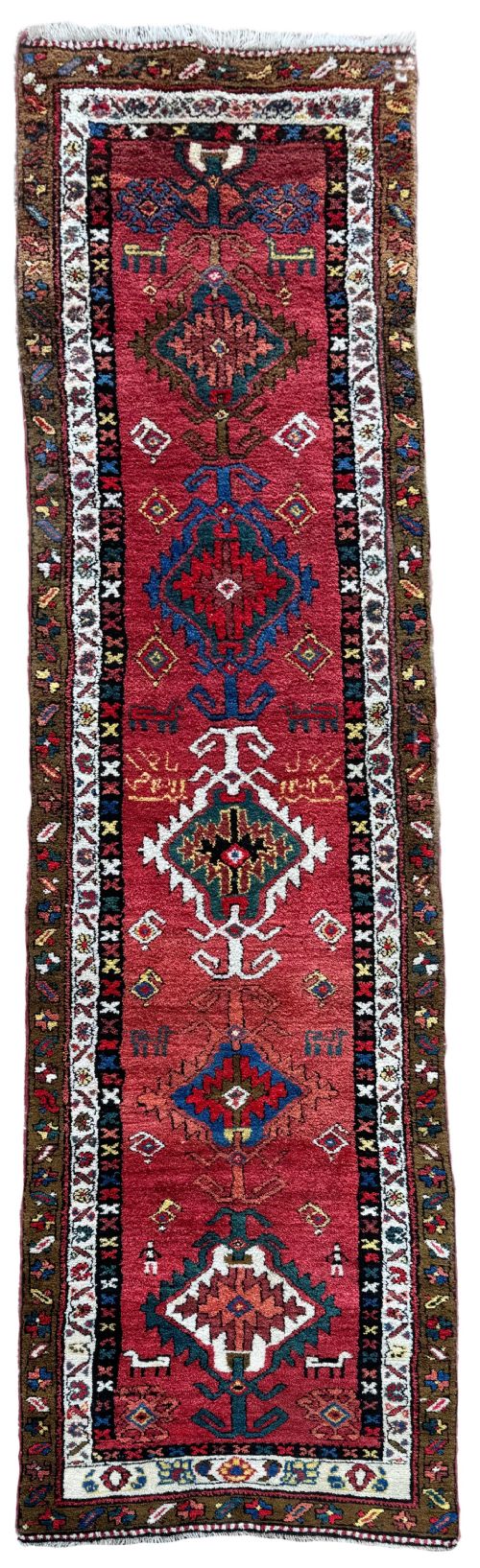


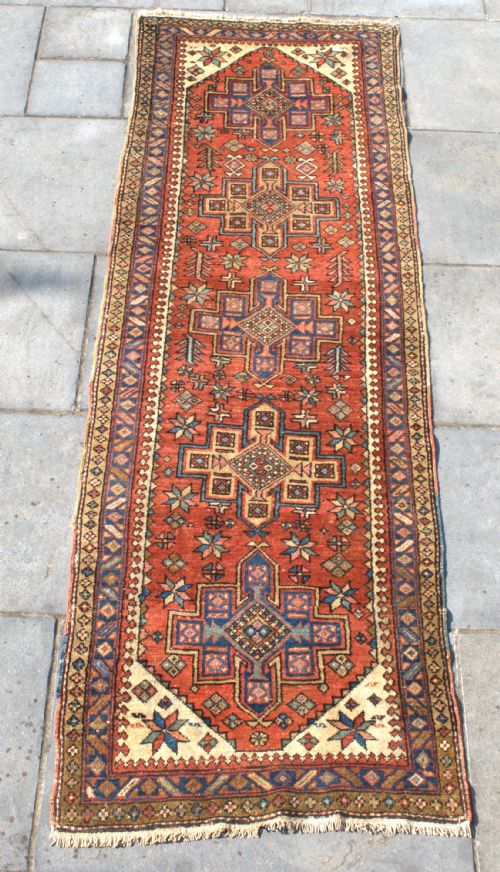
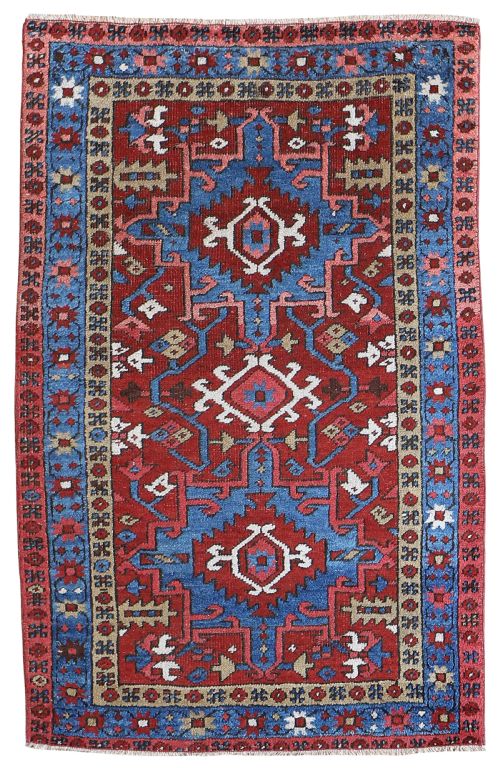


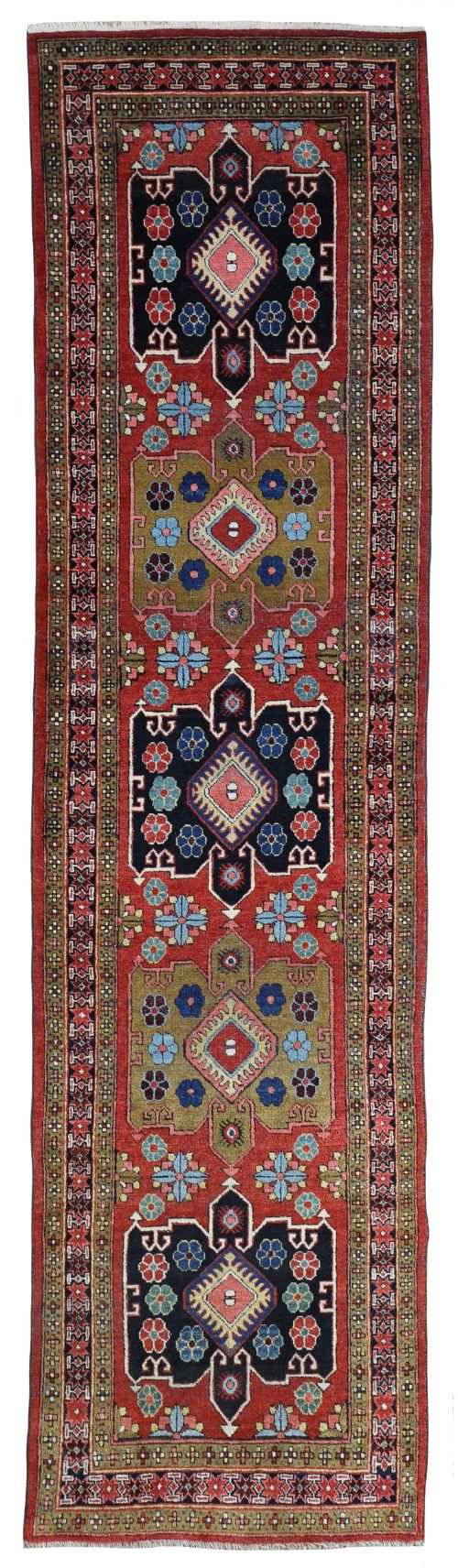


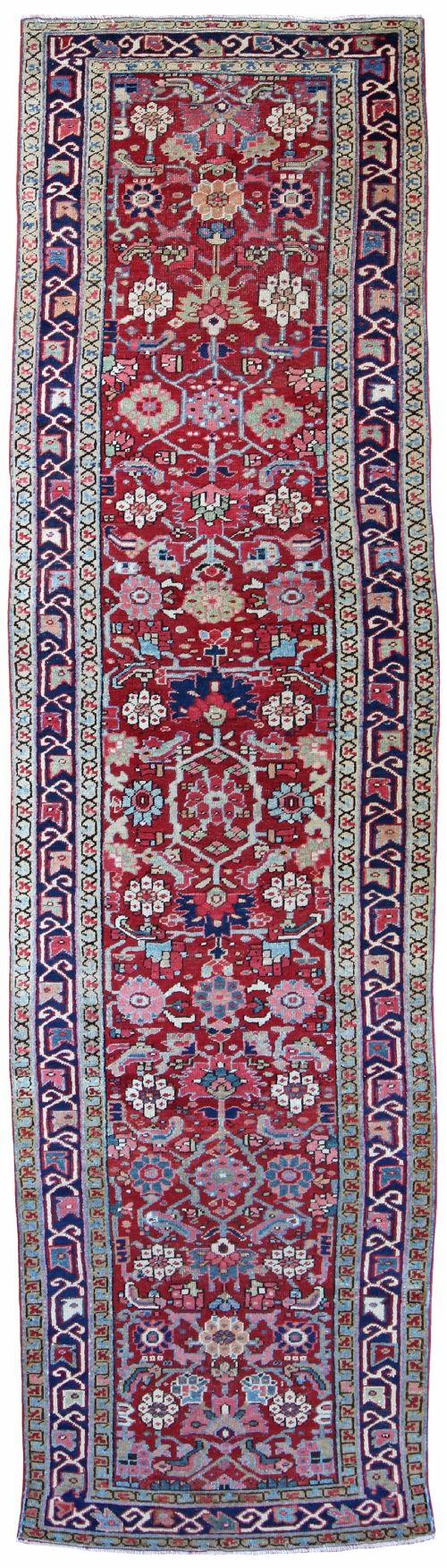
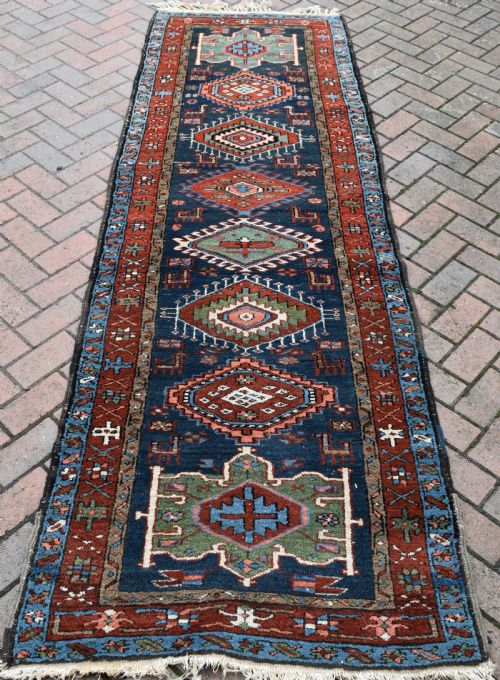
Heriz Serapi Runner
A heriz serapi runner brings bold geometry and rich village wool to a long hallway, offering enduring floor art built for heavy footsteps.
Heriz Serapi Runner
A heriz serapi runner is a long, narrow floor covering originating from northwest Persia, prized for monumental geometric medallions and spacious fields. When you search for this phrase, you are looking at hand-knotted village carpets produced across the late nineteenth and early twentieth centuries, spanning periods from eighteen seventy through to nineteen twenty.
The pieces on this page lean heavily towards generous hallway runners and long gallery formats alongside occasional square or rectangular rugs. They reflect the traditional Persian weaving traditions of the Heriz and Serapi districts, where robust proportions suit demanding domestic thoroughfares.
Most examples you will encounter date from nineteen hundred to nineteen twenty, displaying the characteristic large-scale corner spandrels and bold central anchors that define the regional aesthetic. These textiles combine utilitarian strength with the artistic confidence of village weavers working without rigid urban cartoons.
Materials and construction
These runners are built on sturdy cotton foundations that provide the structural tension necessary for long, narrow formats. The dense pile is knotted from hand-spun wool, yielding a heavy handle that lies flat and withstands decades of daily transit.
Weavers utilised strong natural dyes within traditional Persian knotting techniques to lock the thick wool pile securely around the cotton warps and wefts. This combination of resilient materials accounts for the exceptional survival rate of these nineteenth and early twentieth century carpets.
Heriz Serapi Runner Retail Price Guide 2026
Typical asking prices for heriz serapi runner among the pieces listed under this phrase on Sellingantiques today, from the lower quarter to the upper quarter. They describe what is for sale here now, not the wider market.
Every piece recorded here employs traditional combinations of wool pile on cotton foundations, built specifically for long hallway runner and gallery carpet formats.
Assessing quality and proportion
Quality in a heriz serapi runner rests upon the clarity of the geometric design and the balance between the central medallion and the surrounding field. Stronger pieces display crisp drawing in the spandrels and harmonious colour saturation across the wool pile.
The handling of the wool and the integrity of the original selvedges also separate standard examples from finer works. A superior runner maintains straight parallel borders and an even pile density down its entire length without awkward compression of the motifs.
The Heriz Serapi Runner Glossary
- Serapi
- A sub-type of Heriz carpet recognised by a more open, spacious geometric design and softer, muted palette. These earlier pieces often date to the nineteenth century.
- Medallion
- The prominent central ornamentation anchored in the middle of the rug field. It forms the primary focal point of the traditional Persian layout.
- Spandrel
- The triangular corner motifs situated in the four angles of the field outside the central medallion. They frame the composition and draw the eye inward.
- Runner
- A long, narrow carpet format specifically proportioned for hallways, corridors, and staircases. Their linear dimensions require distinct weaving geometry.
- Warp
- The lengthwise foundation threads stretched vertically on the loom before knotting begins. Cotton warps provide the rigid skeleton for these heavy wool carpets.
Heriz Serapi Runner: Frequently Asked Questions
Where do these runners work best?
These narrow formats suit long hallways, grand corridors, and entrance spaces where linear proportions command attention. Their robust wool pile absorbs heavy footsteps while adding distinct architectural character to transit areas.
Placing one in a high-traffic zone allows the traditional Persian geometry to anchor the room's design scheme. Ensure you use an appropriate underlay to prevent slipping on smooth wooden or tiled floors.
How do I clean my runner?
Gentle regular vacuuming without a rotating brush roll keeps surface dust from settling deep into the wool pile. Professional specialist cleaning remains essential for removing embedded grit safely without damaging the natural dyes.
Avoid soaking the cotton foundation or using harsh chemical detergents that strip natural oils from the wool. Promptly blot liquid spills with a clean, dry cloth rather than rubbing the fibres.
How do I date a piece?
Dating relies on observing structural clues, wool quality, and the specific nuances of the geometric drawing style. Pieces from eighteen seventy to eighteen eighty often show Serapi characteristics with open fields and subtle vegetable dye palettes.
Later examples from nineteen hundred onwards tend towards slightly denser Heriz knotting and bolder primary colours. Comparing edge finishes and dye saturation helps narrow the period of origin.
Are these runners durable?
The combination of hand-spun wool and sturdy cotton foundations makes these carpets exceptionally resilient. Village weavers constructed them to endure generations of heavy domestic use in active households.
Regular rotation distributes wear evenly across the length of the runner. With mindful placement and basic care, they continue to serve as practical floor coverings for decades.