

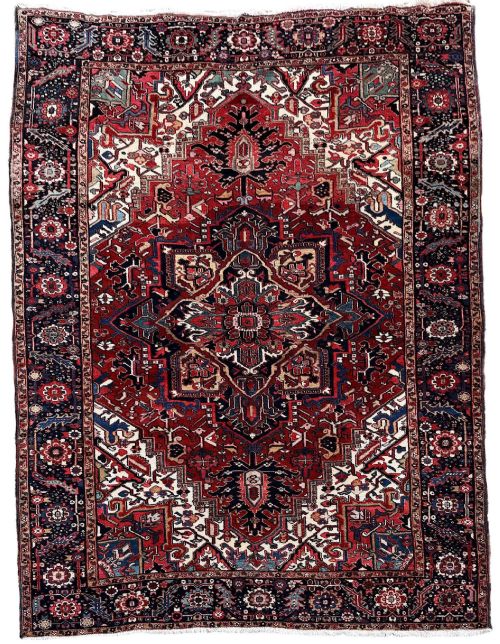
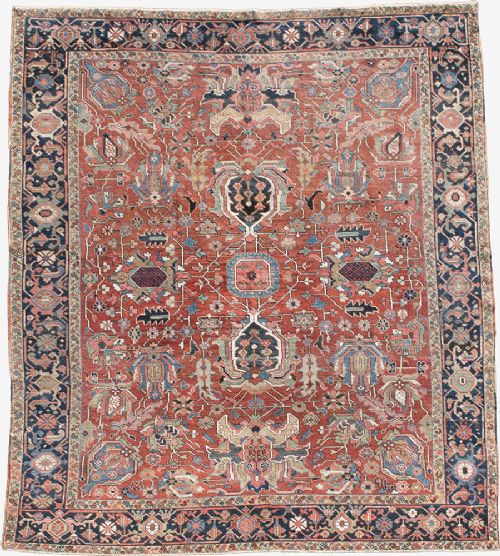
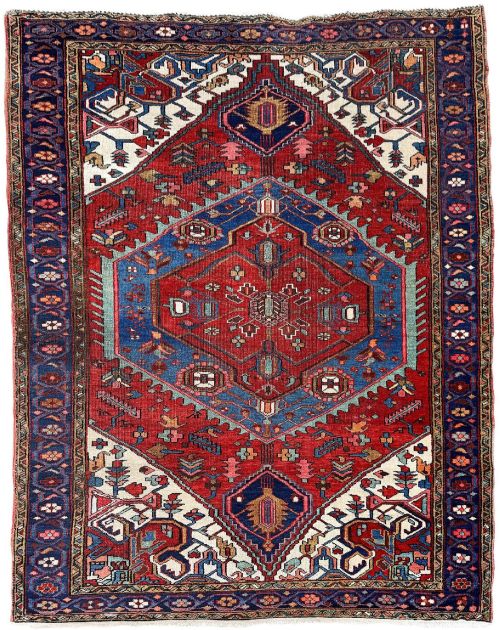
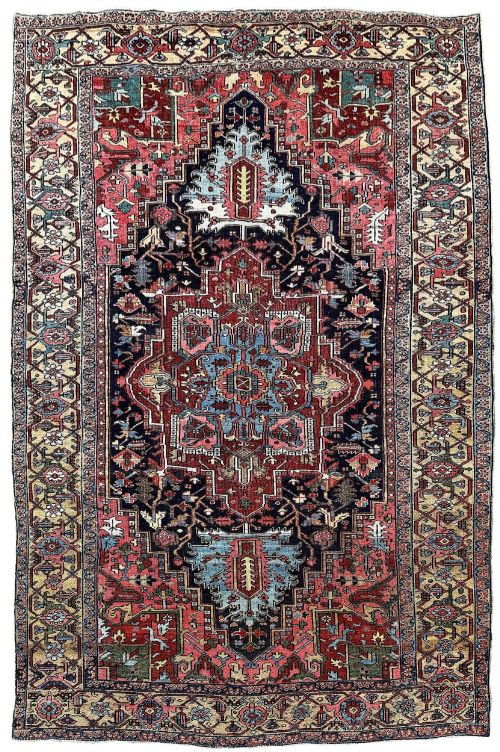

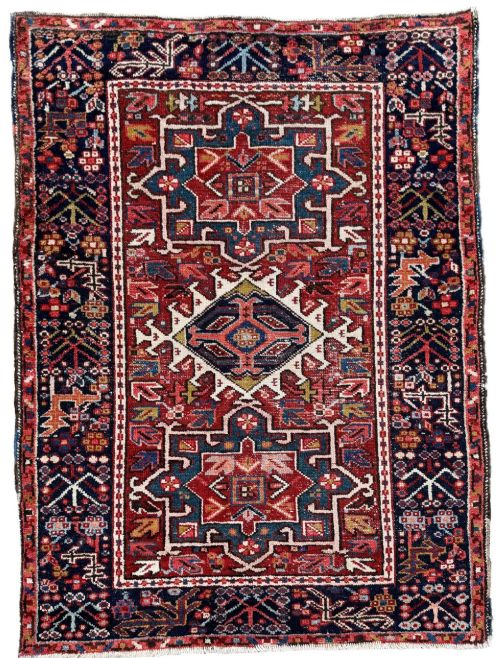

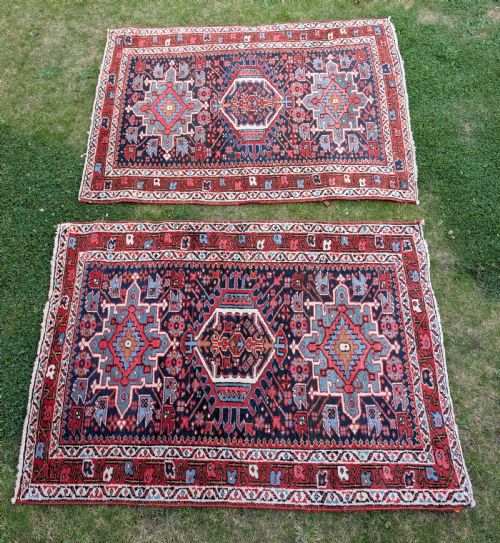
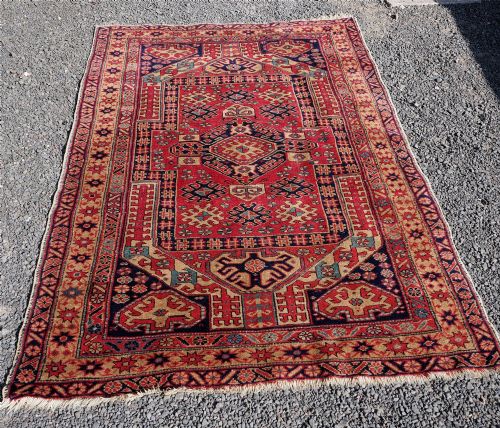
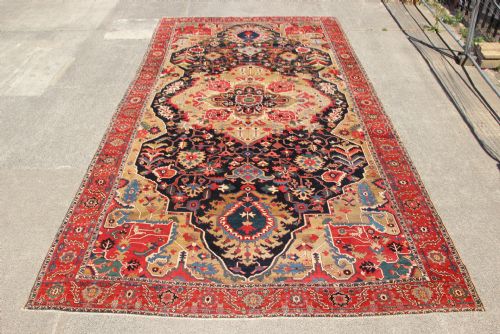


Heriz Area Rug
A heriz area rug brings solid geometric wool tradition into a room, offering durability and distinct North-West Persian character.
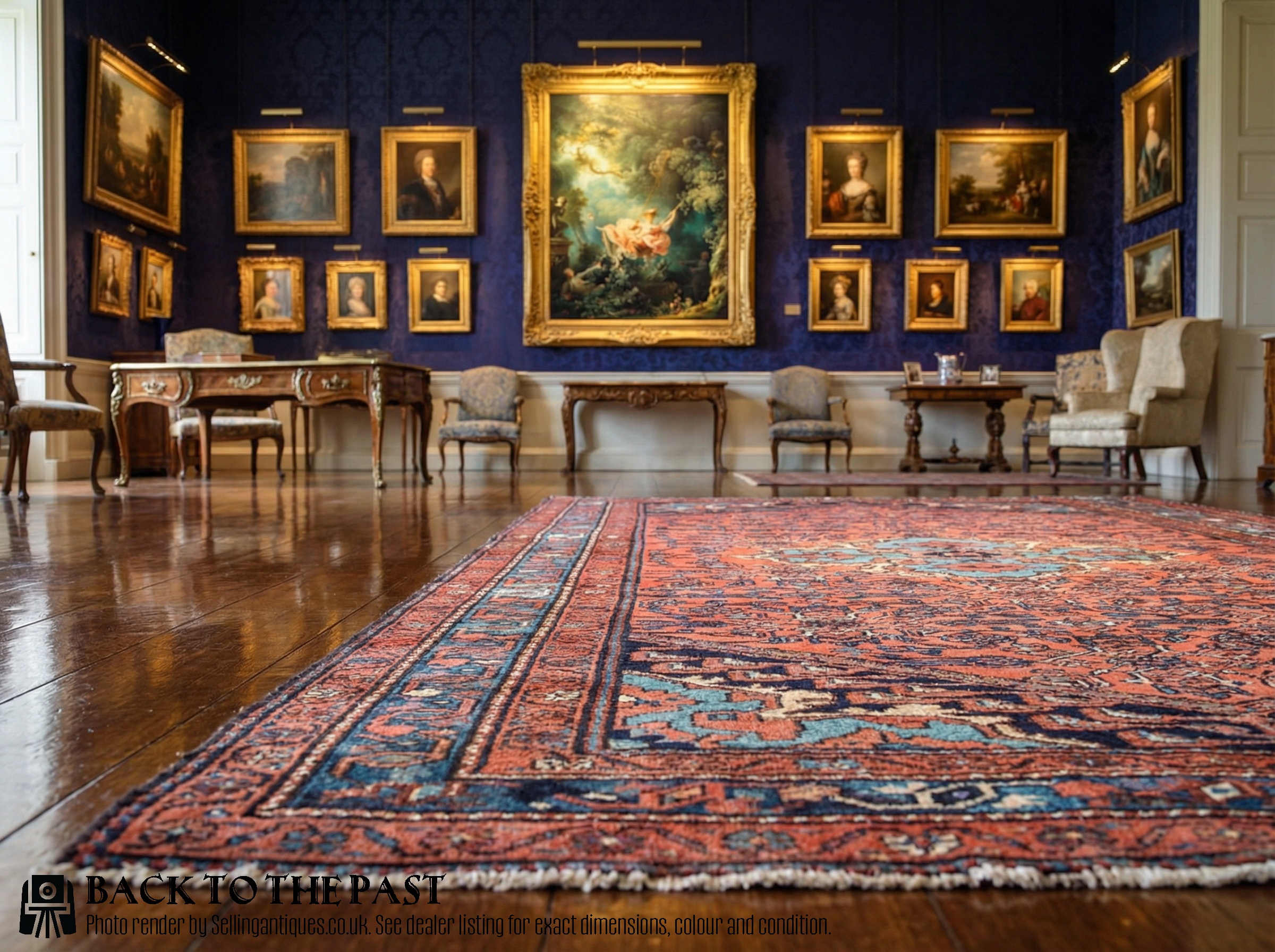
Heriz Area Rug
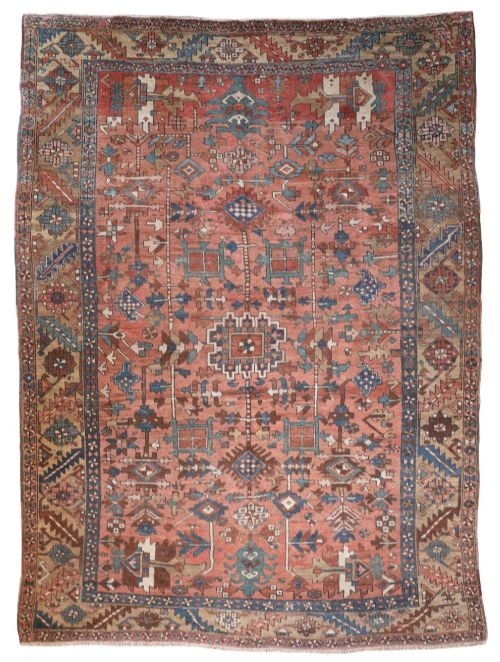
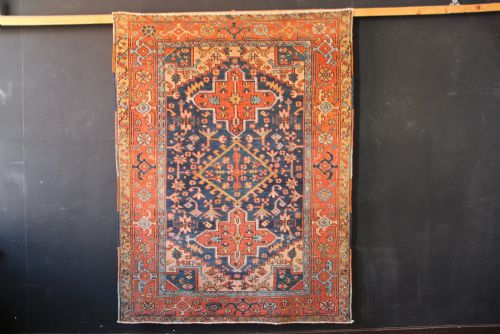
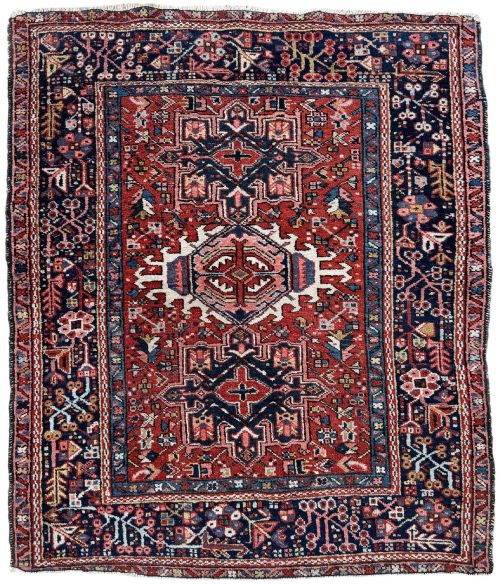
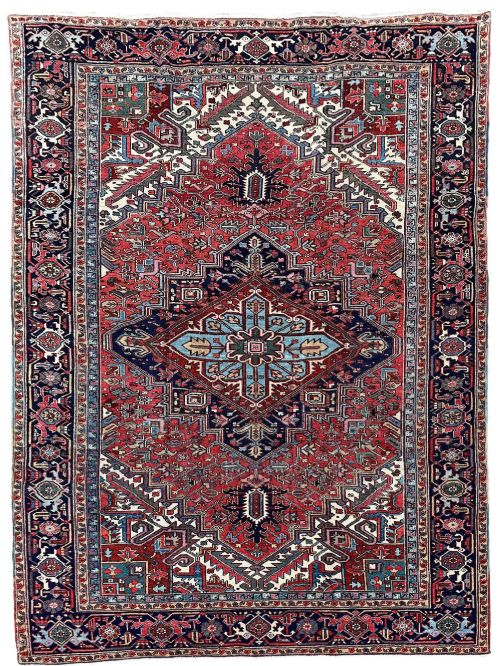
A heriz area rug is a substantial floor covering originating from North-West Persia, valued for geometric medallions and robust construction. Buyers search for these pieces to anchor rooms with traditional Persian artistry that withstands daily traffic.
The listings here concentrate on pieces woven between the late nineteenth century and the early twentieth century, spanning decades from the eighteen-eighties to nineteen-thirty. Most examples take the form of large carpets or smaller hearth-sized rugs.
Alongside standard Heriz designs, related regional pieces such as Serapi, Karaja, Bakshiash, and Ahar appear frequently. These variations share technical roots in the same mountainous districts while offering distinct shifts in field pattern and scale.
How They Were Made
Construction relies on hand-spun wool pile knotted tightly onto cotton warps, providing the heavy handle characteristic of the region. This material combination gives the carpets structural stability while allowing the dense geometric pile to endure for generations.
Dyers utilised natural materials to achieve deep tones on ivory, red, or sky blue grounds, resulting in saturated colours that mellow gracefully over time. Weavers built each carpet by hand without synthetic shortcuts, tying sturdy knots that maintain pile integrity.
Heriz Area Rug Retail Price Guide 2026
Typical asking prices for heriz area rug among the pieces listed under this phrase on Sellingantiques today, from the lower quarter to the upper quarter. They describe what is for sale here now, not the wider market.
Many a Heriz weaver worked from memory alone, letting village geometry grow organically row by row.
What Varies in Quality
Knot density and structural crispness distinguish finer room-sized carpets from simpler village productions, dictating how sharply the geometric medallions resolve against the field. Extremely fine weaves exhibit greater precision in the drawing of rectilinear motifs.
The balance and saturation of vegetable dyes separate standard examples from those possessing exceptional colour palettes. Skilful dyeing yields rich contrasts that hold the eye across large expanses of wool pile.
The Heriz Area Rug Glossary
- Heriz
- A town in North-West Persia known for producing large geometric carpets with prominent central medallions. These rugs draw influence from surrounding village traditions rather than urban court workshops.
- Serapi
- A sub-category of Heriz carpet from the nineteenth century featuring more open designs and subtle colour palettes. Collectors prize these older pieces for their spaced-out rectilinear patterns.
- Warp
- The vertical cotton threads stretched across the loom that foundation the entire rug. The knot rows are tied directly around these parallel foundation lines.
- Karaja
- A village near Heriz producing smaller rugs and runners with distinct geometric block motifs and tribal medallions. These pieces often employ similar materials to their larger regional neighbours.
- Pile
- The upright wool surface formed by the ends of knotted yarn. This upper layer absorbs foot traffic and displays the woven design.
Heriz Area Rug: Frequently Asked Questions
How do I clean a heriz area rug?
Gentle vacuuming without a beater bar removes surface dirt from the wool pile safely.
Professional immersion washing is necessary for deep cleaning to protect the cotton warps and natural dyes.
Are these rugs durable enough for hallways?
The dense hand-spun wool and sturdy cotton foundations handle heavy foot traffic well.
Placing a quality underlay beneath the carpet prevents sliding and reduces friction against the floorboards.
What is the difference between Serapi and Heriz?
Serapi carpets typically date from the nineteenth century and feature more open, spacious geometric fields.
Standard Heriz pieces usually present bolder, tighter medallion designs from slightly later production dates.
How do I identify a rug from this region?
Look for heavy cotton warps combined with thick, robust wool knotting in bold rectilinear patterns.
North-West Persian pieces consistently display distinctive corner spandrels and strong central medallions.