

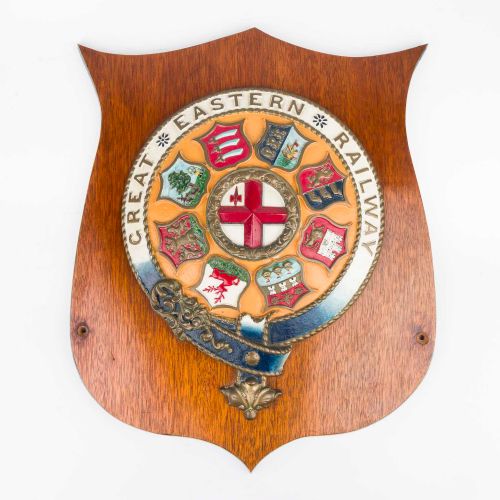


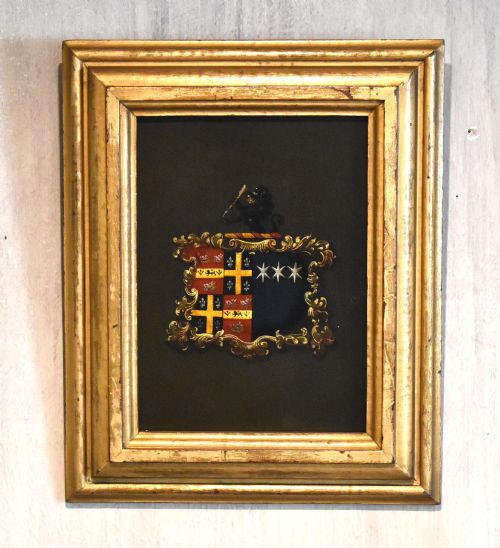


Heraldic Coat of Arms Painting
These heraldic coat of arms painting examples bring centuries of heraldry into the interior through painted wood, glass, iron, and leather.
Heraldic Coat of Arms Painting
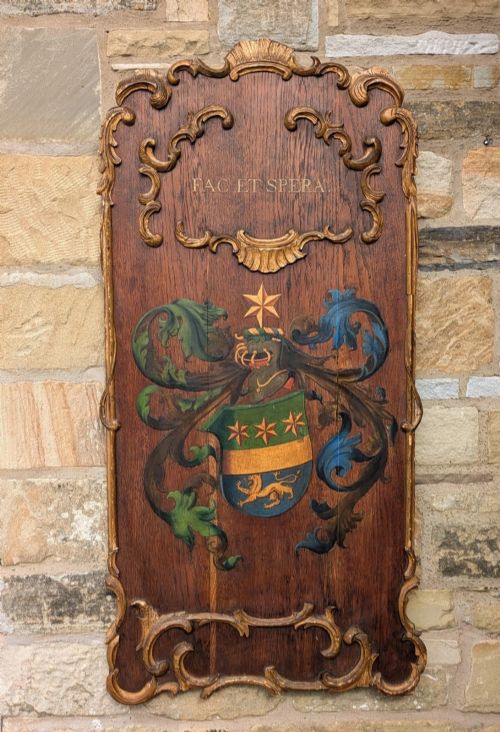
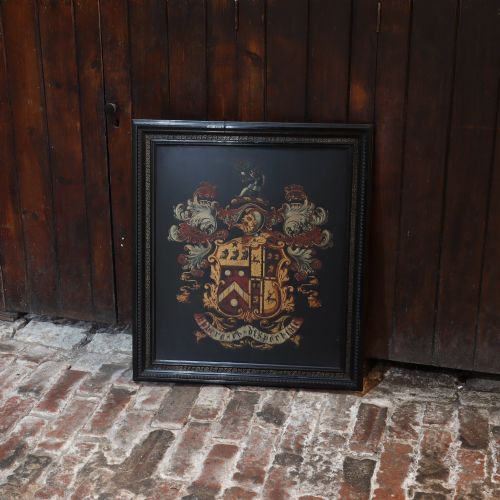
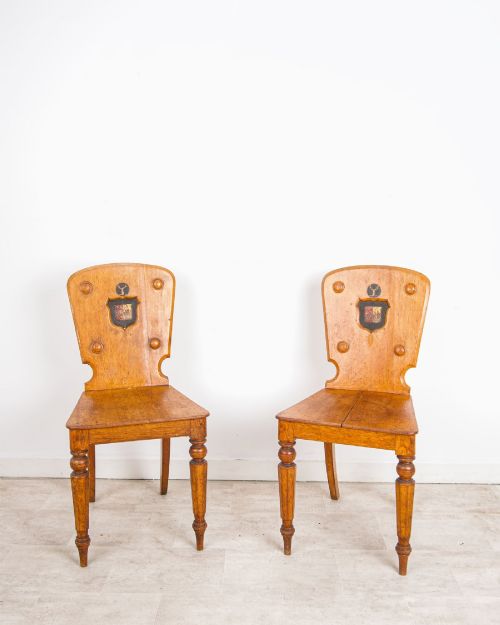
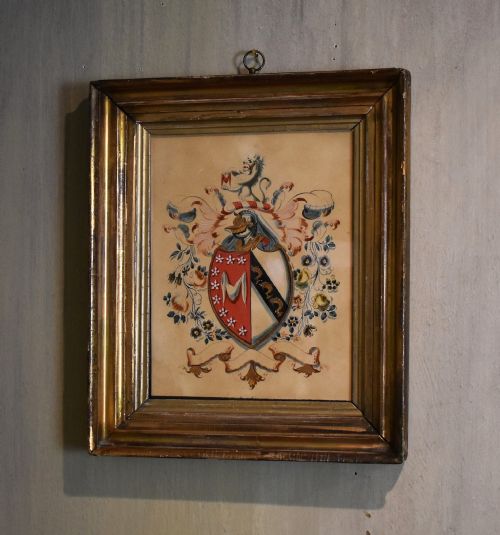
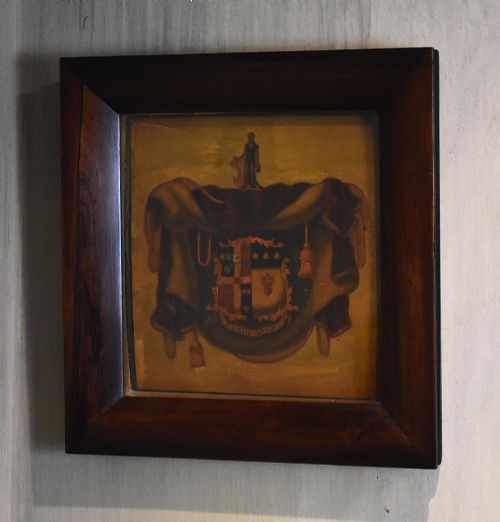
A heraldic coat of arms painting represents family lineages, civic bodies, and institutional crests executed across diverse material supports. Buyers searching this phrase encounter everything from framed watercolours and oil panels to painted iron plaques and leather coaching panels.
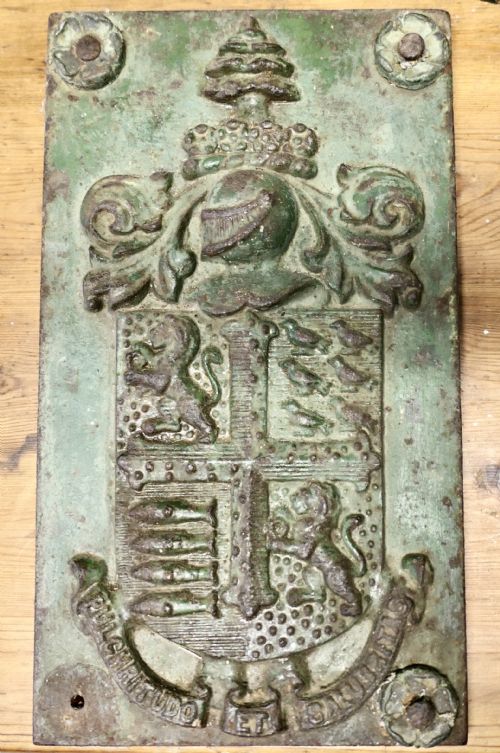
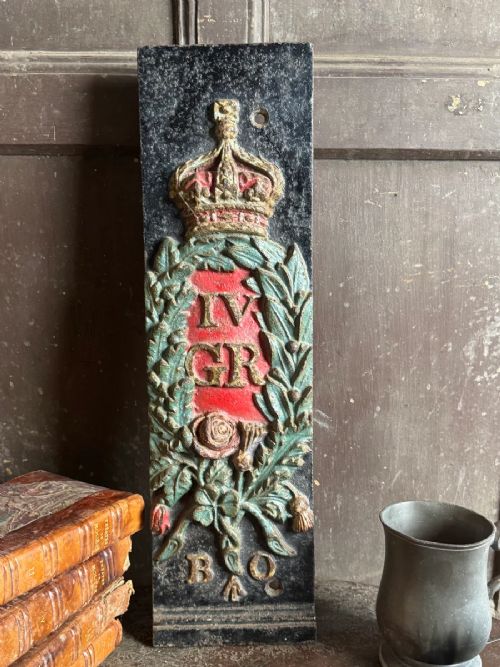
The selection on this page leans heavily toward nineteenth-century works, alongside Georgian and eighteenth-century survivals. Pieces range from large wooden wall panels and cast iron royal arms to delicate porcelain plates and glass window designs.
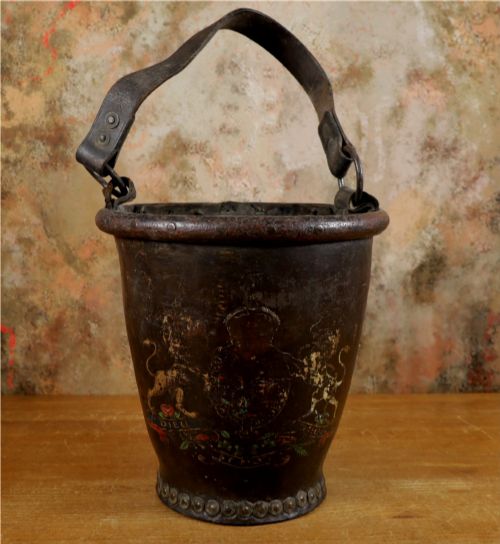
Origins span British provincial workshops, European makers, and Chinese export kilns commissioned for Western families. Forms include wall art, decorative panels, fire buckets, and ceramic plates bearing specific armorial bearings.
Materials and technique
Pigments and gold leaf are applied directly to wood panels, leather, canvas, and glass surfaces to render precise heraldic tinctures. Cast iron and bronze plaques utilise metal casting techniques before receiving hand-painted polychrome finishes.
Ceramic pieces such as porcelain plates and sauce boats combine underglaze painting with overglaze enamels and gilding. Leather items like fire buckets employ soft leather coverings, metal studs, and painted armorial decorations.
Heraldic Coat of Arms Painting Retail Price Guide 2026
Typical asking prices for heraldic coat of arms painting among the pieces listed under this phrase on Sellingantiques today, from the lower quarter to the upper quarter. They describe what is for sale here now, not the wider market.
Materials represented across the inventory include cast iron, porcelain, soft leather, glass, bronze, and giltwood.
Judging quality in armorial works
Quality rests upon the precision of the brushwork and the heraldic accuracy displayed in the charges, tinctures, and supporters. Master painters deliver crisp lines and convincing depth, whereas lesser examples present stiff or formulaic execution.
The integrity of the material support dictates overall execution, from finely grained oak panels and smooth porcelain bodies to heavy cast iron castings. Preserved original surfaces carry greater authority than later overpainting or heavy restoration.
Icilio Federico Joni·Barr Flight And Barr·Samson Of Paris·Minton
The Heraldic Coat of Arms Painting Glossary
- Coat of arms
- A formal design displayed on a shield representing a specific family, corporation, or sovereign authority. This central visual forms the primary subject of armorial paintings.
- Tincture
- The traditional colours, metals, and furs utilised in heraldry. These are divided into metals like gold and silver, and colours including red, blue, black, and green.
- Crest
- The component of a heraldic display positioned above the main shield, often mounted on a wreath or helmet. It appears frequently on standalone plaques and plates.
- Coach panel
- A curved section of wood or leather removed from a carriage, bearing the painted arms of the owner. These survive as decorative wall art.
- Armorial
- An adjective describing any object decorated with a coat of arms or heraldic device. This term applies equally to porcelain, glass, and metalwork.
Heraldic Coat of Arms Painting: Frequently Asked Questions
What is a heraldic coat of arms painting?
A heraldic coat of arms painting is a visual representation of a family or institutional crest rendered on wood, canvas, leather, or glass. These works record lineage, status, and civic identity through traditional heraldic symbols.
Items range from domestic wall art and coaching panels to cast iron architectural plaques and decorative ceramic plates. Each piece displays specific charges, tinctures, and mottoes tied to historical families or bodies.
How were coaching panels used?
Coaching panels were painted sections lifted from horse-drawn carriages to display the coat of arms of the carriage owner. They served as mobile symbols of rank and prestige during transit.
When vehicles fell out of use, these wooden or leather panels were often removed and framed for interior display. They survive today as atmospheric wall art.
Are these pieces from the 19th century?
Many listings date from the nineteenth century, reflecting a Victorian revival of interest in genealogy and heraldry. This era produced both cast iron royal arms and decorative household items.
Earlier examples from the eighteenth and seventeenth centuries also appear alongside later Victorian and Edwardian interpretations. Dating relies on material analysis, painting style, and contextual markers.
How do I display an armorial plaque?
Armorial plaques and wall panels require secure mounting due to their weight, particularly heavy cast iron or large wooden boards. Placing them at eye level allows the intricate details of the crest to be fully appreciated.
Pairing these pieces with traditional interiors enhances their historical character. Avoid hanging them in areas subject to direct sunlight or damp conditions.