
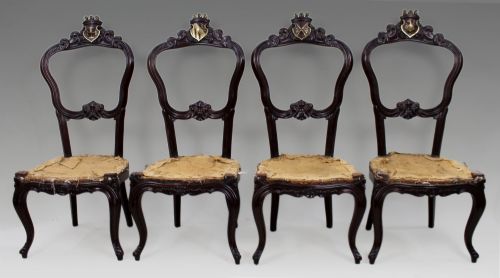
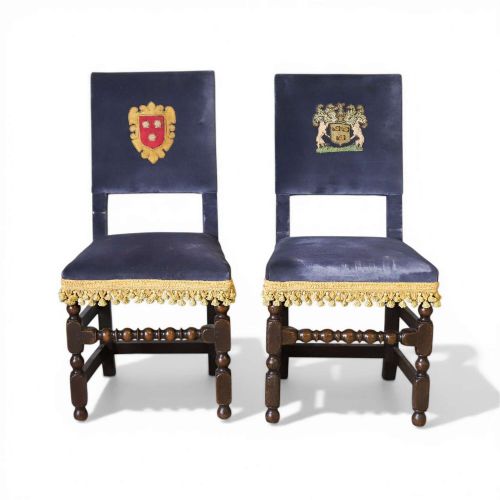
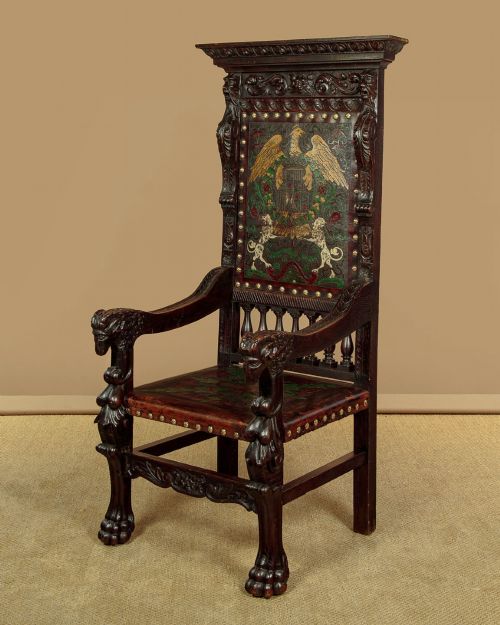
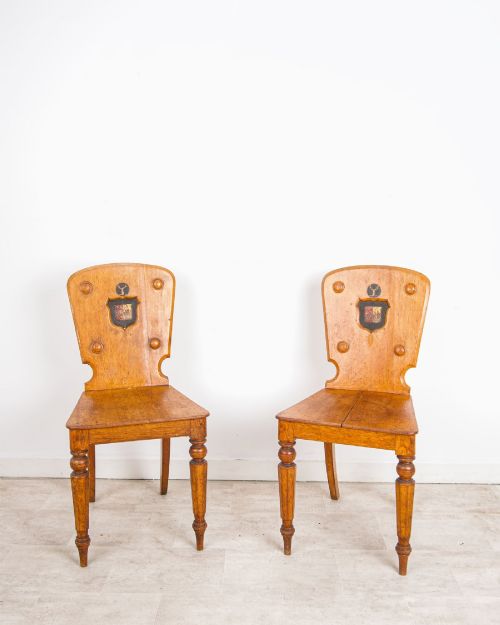


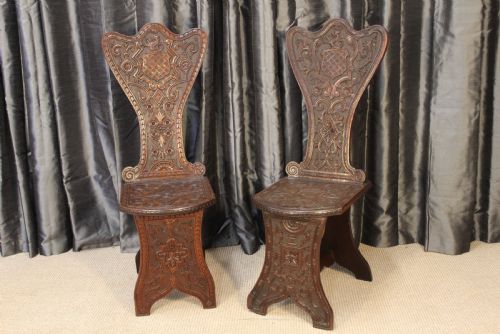


Heraldic Carved Chair
These heraldic carved chair examples bring centuries of armorial history and sturdy craftsmanship straight into the home.
Heraldic Carved Chair
A heraldic carved chair incorporates armorial crests, shields, and family badges into its woodwork, spanning forms such as hall chairs, armchairs, side chairs, and dining chairs. Buyers seeking a heraldic carved chair typically encounter examples shaped by 17th Century, Victorian, and 19th Century aesthetics, reflecting grand country house and law chambers provenances.
The selection ranges from robust oak armorial clan chairs and Italian Renaissance Revival thrones to mahogany hall chairs with carved shield backs. These seating forms served practical and ceremonial roles in historic interiors, often displaying painted leather, velvet, tapestry, or hessian upholstery alongside intricate timber carvings.
Materials and construction
Craftsmen built these chairs predominantly using dense hardwoods like oak, mahogany, and walnut, ensuring structural longevity for heavy daily use. Decorative elements frequently combine deep relief carving with applied brass details, painted finishes, and tactile upholstery fabrics including velvet and leather.
Joinery methods varied according to the period, employing traditional framing techniques to support imposing carved backs and heraldic crests. Selected pieces incorporate rich textile coverings fixed with brass studs, enhancing both the visual weight and the comfort of the seat.
Several chairs carry the quiet authority of law chambers and estate room lineage, ready to preside over modern post.
Assessing quality and character
Quality rests in the crispness and depth of the heraldic carving, where sharply defined armorial shields and crests distinguish superior pieces. The choice of timber grain and the integrity of the original framing structures also determine the standing of an individual chair.
Provenance plays a role in distinction, with recorded lineage to specific estates or law chambers adding documented context. Furthermore, the preservation of original upholstery materials, such as period velvet or painted leather, contributes to the overall coherence of the piece.
The Heraldic Carved Chair Glossary
- Armorial
- Relating to heraldry, family crests, or coats of arms. These motifs are carved into the woodwork or displayed on the upholstery of the chair.
- Caquetoire
- A type of 16th-century conversational armchair with a high, narrow back and a trapezoidal seat. The form originated in France to allow women seated in wide skirts to converse easily.
- Sgabello
- An Italian Renaissance chair featuring a wooden seat set on trestle supports or solid slab legs, often richly carved. These chairs were typically placed in hallways for formal display.
- Hall chair
- A rigid wooden seat designed for placement in a grand entrance hall rather than for prolonged sitting. They frequently featured painted or carved family crests to greet arriving guests.
Heraldic Carved Chair: Frequently Asked Questions
Where were heraldic carved chairs placed?
These chairs were traditionally positioned in grand entrance halls, reception rooms, and law chambers to display family lineage and status to visitors. Their imposing backs and carved shields served a largely ceremonial and decorative function within large estates.
Today, they suit studies, libraries, and hallways where their historical character and heraldic detailing can be appreciated as standalone statement pieces.
How do I care for antique upholstery?
Preserving fabrics like velvet, tapestry, leather, or hessian requires gentle surface cleaning and protection from direct sunlight to prevent fading. Maintaining stable room humidity prevents the supporting timber frames and natural textiles from drying out.
Professional conservation advice is recommended if structural or fabric repairs become necessary over time.
What woods were used for these chairs?
Carpenters and cabinet makers relied heavily on durable hardwoods such as oak, mahogany, and walnut to build these substantial seats. These timbers provided the necessary strength for deep relief carving and long-term daily use.
Selection of wood often reflected the prevailing fashion of the period, moving from native oak in earlier centuries to rich mahogany and walnut in later Victorian designs.
How do I identify the period?
Dating relies on examining the timber species, construction techniques, and stylistic vocabulary, such as Renaissance Revival details or Victorian interpretations of earlier forms. Comparing the carving style and upholstery methods to documented examples helps narrow down the era.
Provenance notes and recorded estate history also offer reliable clues to establish the approximate date of manufacture.