
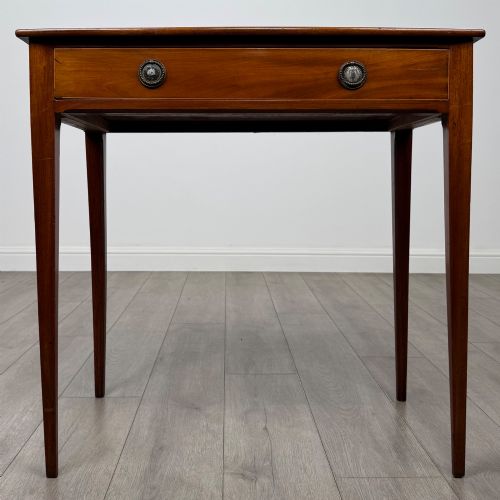





Hepplewhite Style Console Table
A hepplewhite style console table brings refined late eighteenth-century elegance and delicate neoclassical lines into a modern interior.
Hepplewhite Style Console Table
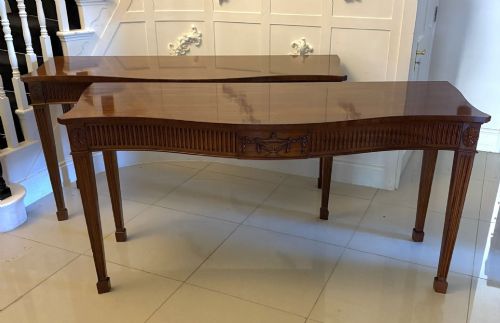
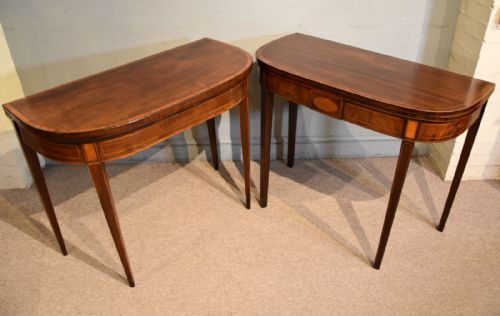
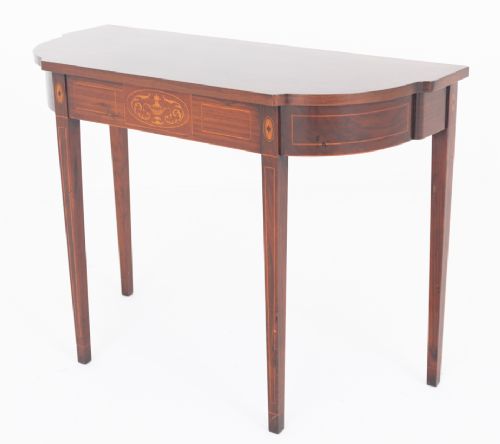
A hepplewhite style console table embodies the graceful proportions and understated ornamentation characteristic of late eighteenth-century design, though many examples appearing here date from subsequent revival periods such as the Edwardian era and the early twentieth century. Buyers seeking this phrase typically encounter demi-lune or serpentine forms designed to stand against a wall, frequently functioning as card tables, tea tables, or serving consoles. The construction spans genuine Georgian origins through to later interpretations executed during the nineteenth and twentieth centuries.
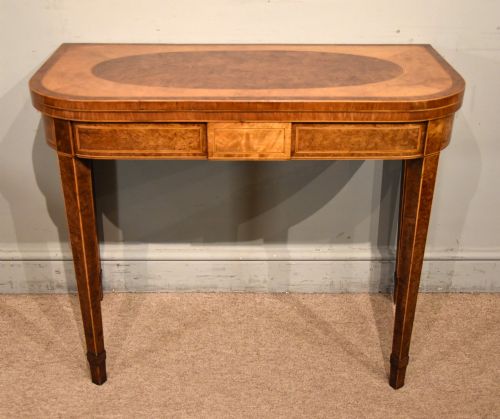
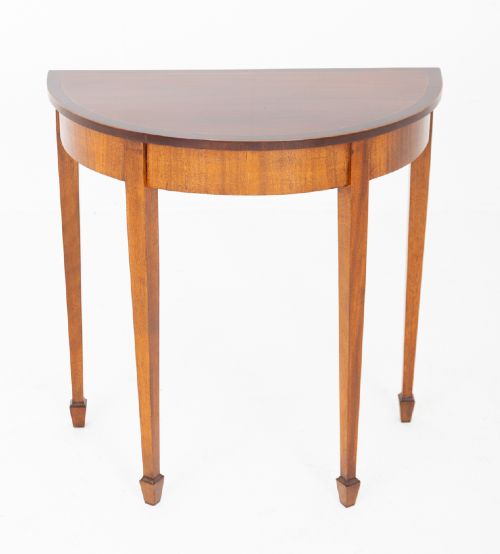
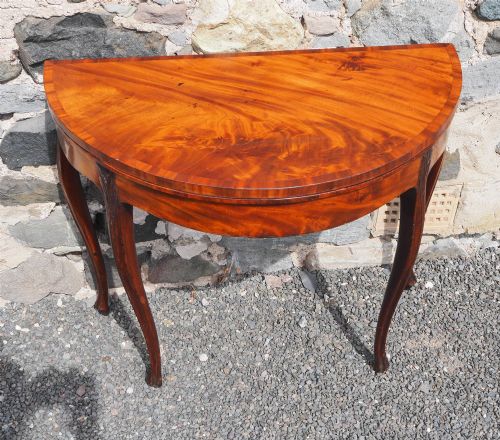
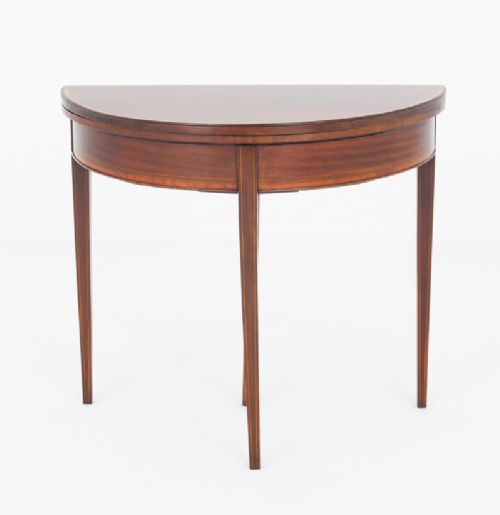
The prevailing configuration on this page relies upon a semi-circular or crescent footprint known as a demi-lune, often fitted with folding tops that conceal a baize-lined surface for cards or writing. Alongside these versatile game and side tables, the selection includes related serving tables and sideboards sharing the characteristic tapered legs and refined geometry. These pieces derive their aesthetic from the lighter, more attenuated vocabulary that replaced heavier earlier furniture styles.
Materials and Construction
Makers built these tables primarily using solid mahogany and satinwood, frequently enhanced by intricate wood inlay, boxwood stringing, and crossbanding. The timber selection often includes burr yew and rosewood for decorative contrast on tabletops and friezes, displaying natural grain patterns beneath traditional polished finishes.
Structural embellishment relied on cabinetmaking techniques such as fineveneering, delicate brass hardware, and low-relief neoclassical carving. Joinery remained precise, accommodating the curved serpentine fronts and folding mechanisms integral to demi-lune card and tea tables.
Listings feature mahogany, satinwood, and burr yew across periods spanning Georgian origins to Edwardian revivals.
Craftsmanship and Proportion
Quality separates along the precision of the timber inlay, the crispness of the neoclassical carving, and the subtlety of the tapering leg profiles. Finer tables demonstrate seamless grain matching across folding leaves and sophisticated handling of contrasting veneers like satinwood and boxwood.
The structural integrity of the pivoting or folding mechanisms on card and tea tables indicates the standard of original workshop production. Pieces executed during revival periods display varying degrees of fidelity to original eighteenth-century proportions, with superior examples maintaining lightness and balance.
Gillow
The Hepplewhite Style Console Table Glossary
- Demi-lune
- Half-moon shape. This semicircular form is typical of console and card tables designed to sit flush against a wall.
- Serpentine
- Undulating outline. The front edge curves inward and outward in a continuous flowing wave.
- Crossbanding
- Border veneer. A strip of wood veneer applied to the edge of a tabletop with the grain running perpendicular to the centre.
Hepplewhite Style Console Table: Frequently Asked Questions
What is a hepplewhite style console table?
A hepplewhite style console table is a light, elegant piece of furniture featuring neoclassical motifs, tapered legs, and often a demi-lune or serpentine shape. These tables originate from eighteenth-century designs or later revival periods.
They serve primarily as decorative side pieces, hallway tables, or convertible card and tea tables with folding leaves.
How do I identify a revival piece?
Revival pieces are typically dated to the nineteenth or early twentieth centuries, such as the Edwardian era, rather than the eighteenth century. They imitate the earlier neoclassical style using period-appropriate timbers and construction techniques.
Examining the secondary woods, internal fixings, and wear patterns helps distinguish an original Georgian table from a later revival interpretation.
Where were these tables placed?
These tables were designed to stand against walls in formal drawing rooms, entrance halls, and parlours. Their flat backs allowed them to occupy minimal floor space while displaying decorative veneers and carving.
Many versions include folding tops that open to double their surface area for card games or serving tea.
What woods were commonly used?
Cabinetmakers relied heavily on mahogany as the primary structural timber, complemented by lighter woods like satinwood for contrast. Inlay work frequently incorporated boxwood, yew, and rosewood to create geometric or neoclassical patterns.
These varied timbers added visual depth to the tabletops and friezes without increasing the physical weight of the furniture.