



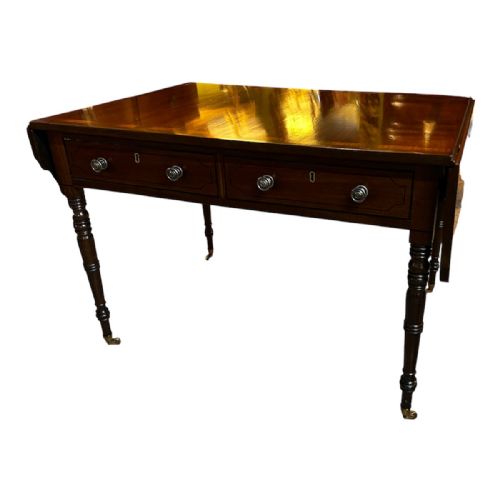


Crossbanded Console Table
A crossbanded console table brings together contrasting timbers and precise borders, offering a structured surface suited to formal rooms.
Crossbanded Console Table
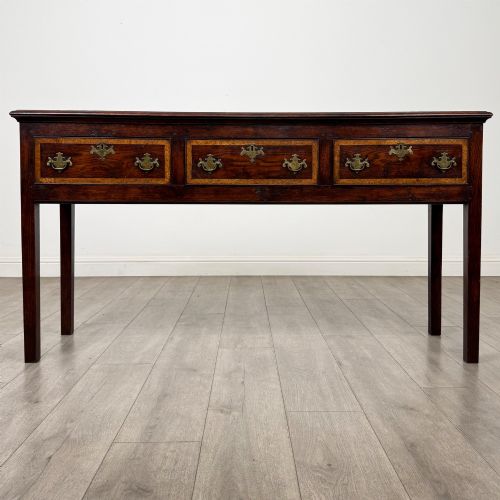
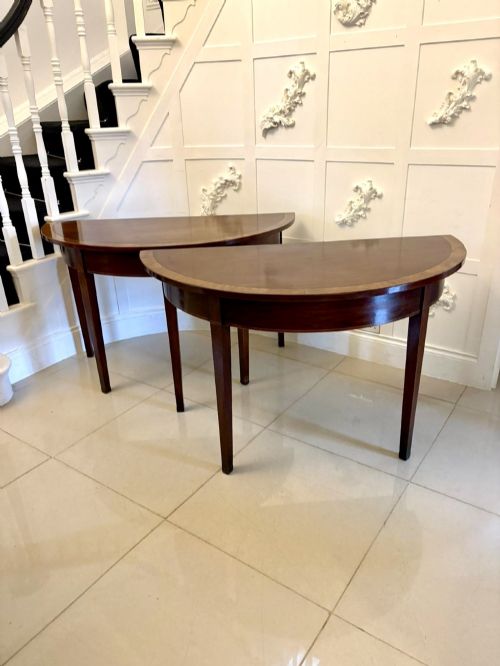
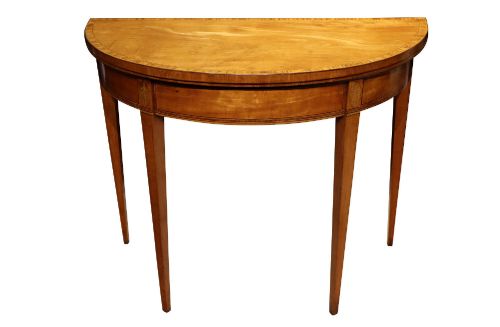
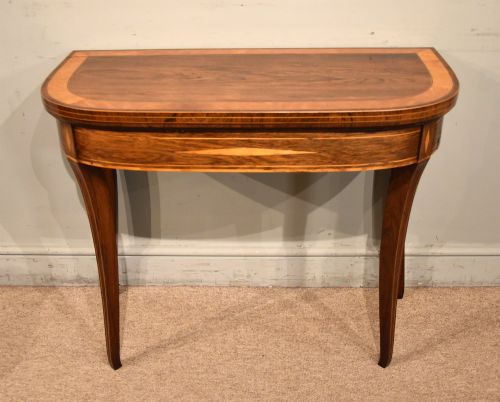
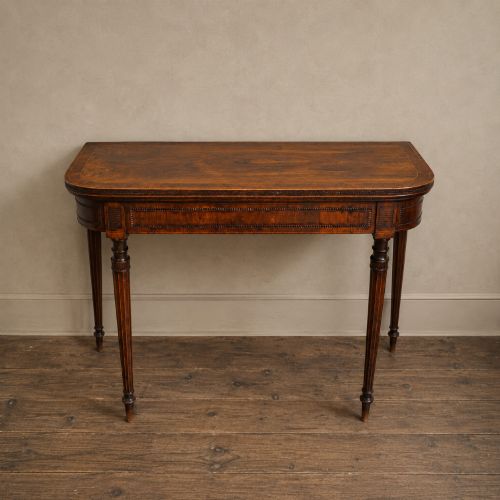
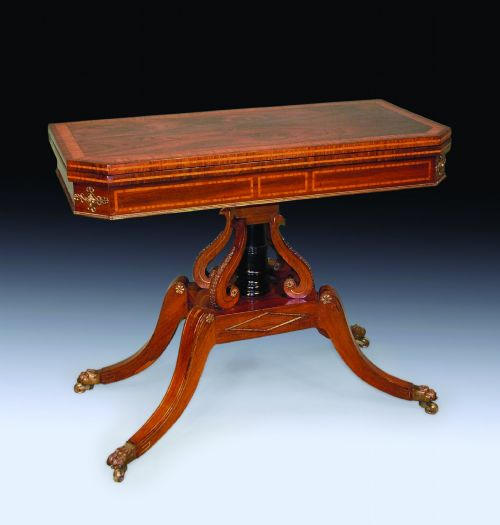
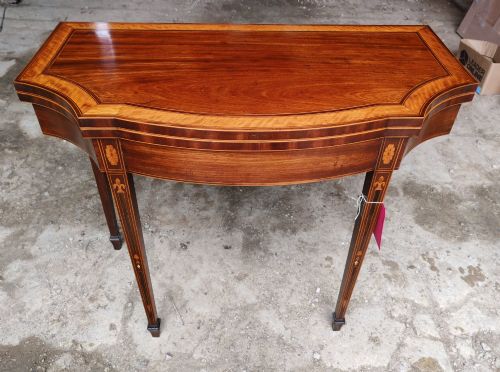
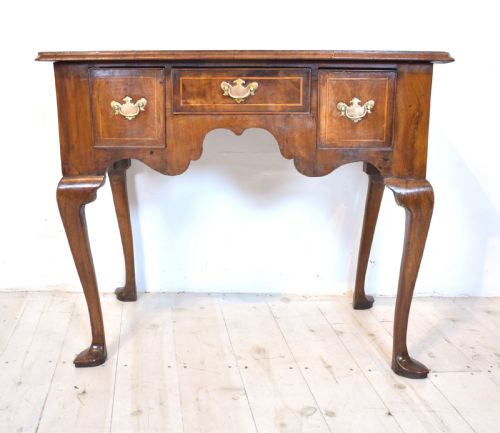
A crossbanded console table is primarily represented here by demi-lune, hall, and side forms originating from periods including the Georgian, Regency, and Edwardian eras. These pieces often overlap with related formats such as card tables, tea tables, and sofa tables due to shared structural characteristics.
The materials recorded across these examples encompass mahogany, rosewood, satinwood, walnut, and oak, frequently enhanced by contrasting borders of boxwood and ebony. Craftsmanship spans the eighteenth, nineteenth, and early twentieth centuries, reflecting changing domestic requirements for display and surface space.
How They Were Made
Cabinet makers utilised solid timbers and wood veneers laid over secondary foundations, applying distinct framing techniques to secure structural stability. Crossbanding involves laying veneer strips with the grain running perpendicular to the main surface, creating a defined decorative border.
Inlaid borders of boxwood, ebony, and satinwood were integrated into the surfaces alongside brass hardware and scroll pedestals. These methods required precise joinery to accommodate the natural movement of timber across changing interior climates.
Some tables double as games surfaces, hiding secrets of past evenings under folding tops.
What Varies in Quality
The standard of execution depends heavily on the crispness of the crossbanding and the harmonious choice of contrasting timbers like satinwood and rosewood. Superior examples display precise alignment in stringing and veneer placement without visible gaps or misalignment.
Structural integrity of the base, whether a scroll pedestal or tapering legs, dictates the long-term durability of the piece. Refined finishing of secondary timbers and the original patination of the wood surfaces further separate standard production from exceptional work.
James Mein Kelso·William Trotter of Edinburgh
The Crossbanded Console Table Glossary
- Crossbanding
- A border of veneer laid with the grain running perpendicular to the main surface. This technique frames the top of the table and highlights the central timber.
- Demi-lune
- A half-moon shape used for console and card tables designed to sit flush against a wall. The curved front profile defines many eighteenth and nineteenth-century examples.
- Satinwood
- A pale, highly figured timber utilised for contrasting panels and banding. It provides a bright visual element against darker woods like mahogany and rosewood.
- Stringing
- Thin inlaid lines of contrasting wood such as boxwood or ebony. These lines trace the contours of the table top and drawers.
- Sofa Table
- A rectangular table traditionally placed in front of a sofa, featuring drop leaves and often dual pedestals. They frequently share the crossbanded decoration found on console tables.
Crossbanded Console Table: Frequently Asked Questions
What is a crossbanded console table?
A crossbanded console table is a narrow surface featuring decorative veneer borders where the wood grain runs perpendicular to the central panel.
These pieces typically date from the Georgian and Regency periods, designed to stand against walls or function as serving surfaces in formal rooms.
How do I date a console table?
Dating relies on identifying the primary timbers, construction methods, and stylistic details such as tapered legs or scroll pedestals.
Evidence from nineteenth-century and earlier pieces shows shifts from satinwood banding on mahogany to heavier rosewood use during the Regency era.
Where should I place this table?
These tables suit entryways, hallways, or living rooms where surface space is needed without a heavy footprint.
Demi-lune variants fit neatly against flat walls, while freestanding sofa and console formats can anchor larger open spaces.
What woods were used in these tables?
Mahogany, rosewood, satinwood, walnut, and oak form the primary body and veneer materials across the listed examples.
Boxwood and ebony frequently appear as fine stringing or inlay to create contrasting borders around the central top.