
Hepplewhite Style Carver Chairs
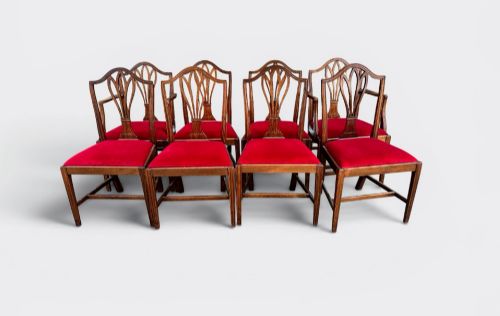
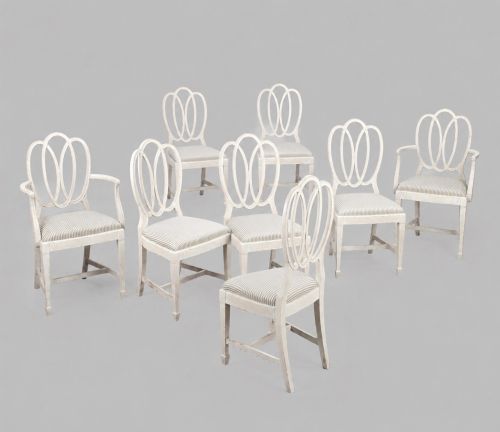
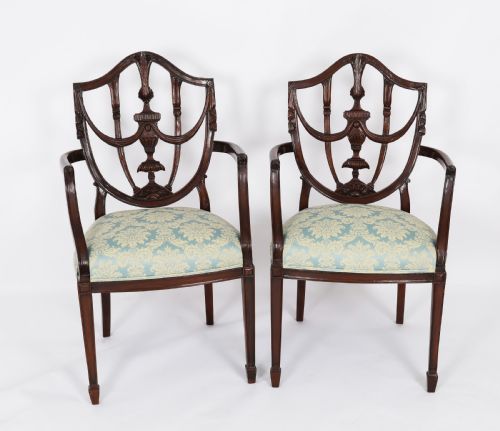
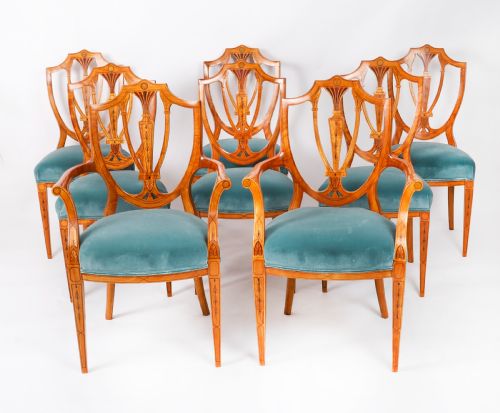
Hepplewhite style carver chairs bring distinct shield backs and open arms to a dining table, combining eighteenth-century elegance with sturdy timber construction.
Hepplewhite Style Carver Chairs
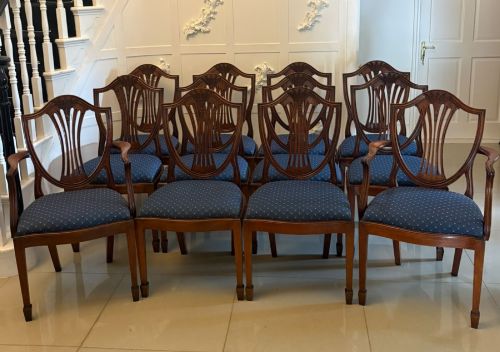
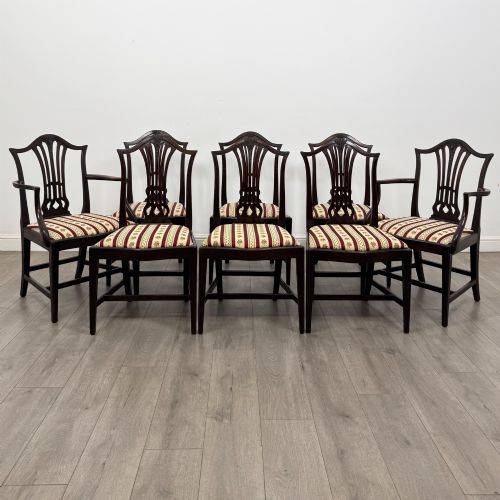
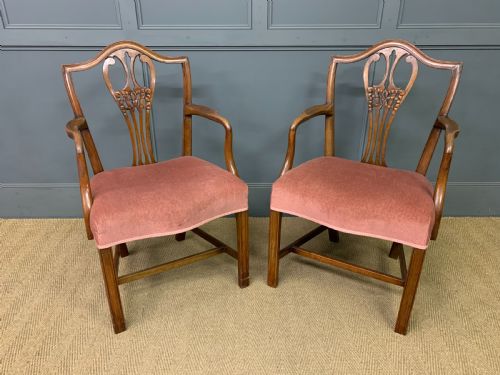
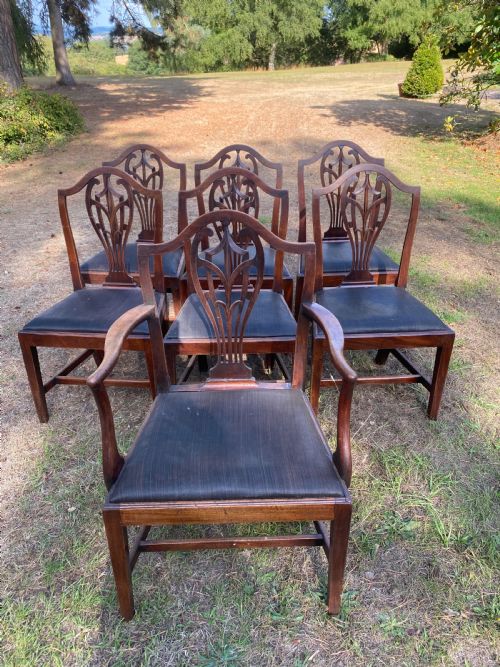
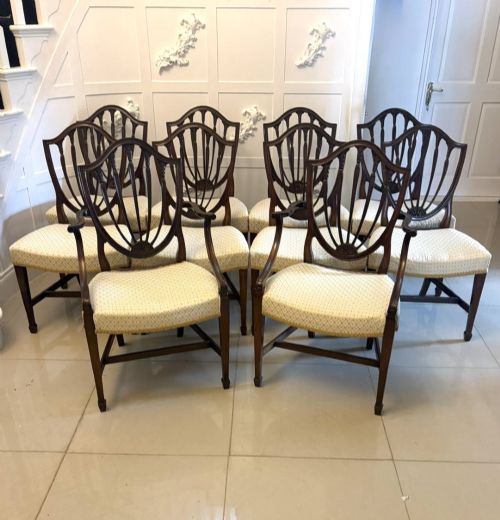
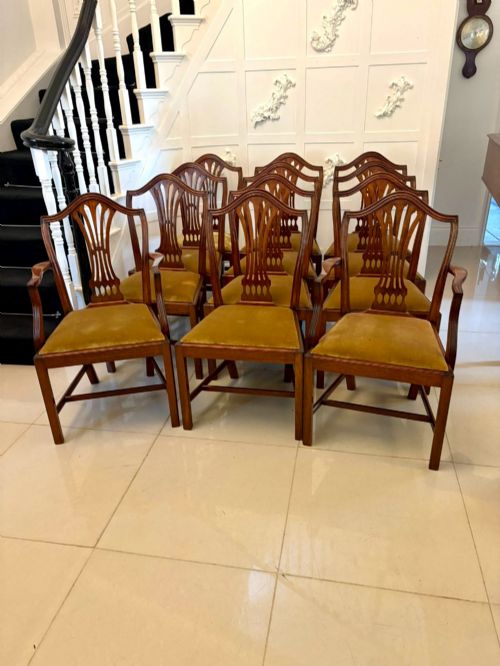
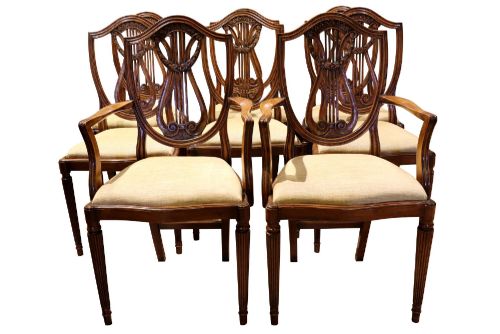
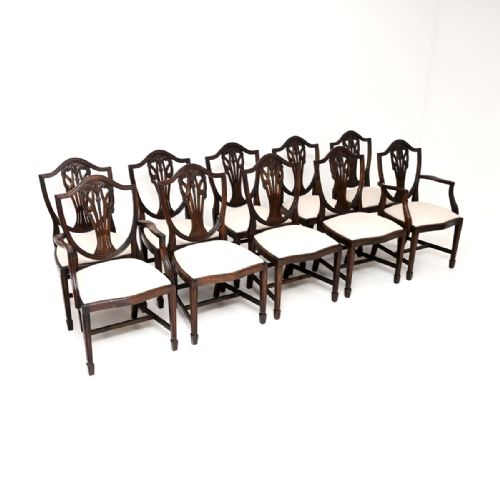
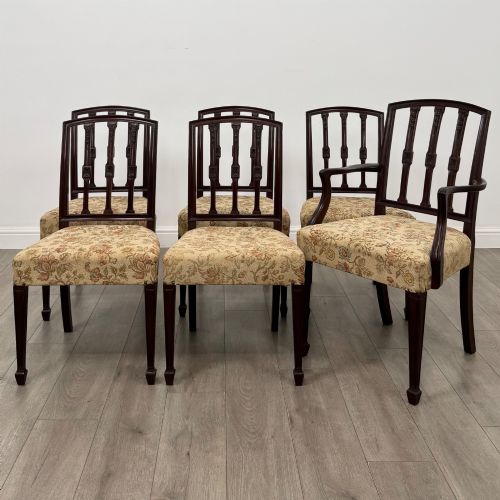
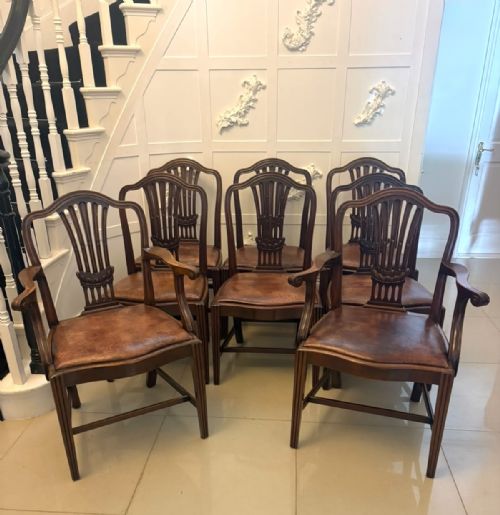
When you search for hepplewhite style carver chairs, you encounter seating designed with characteristic shield or wheel backs, moulded rails, and generous elbow supports. These armchairs typically accompany larger sets of dining chairs or appear in pairs for use at the head of a table.
The pieces on this page span from eighteenth-century originals to later revivals from the Victorian, Edwardian, and twentieth-century periods. Mahogany forms the primary timber across these eras, occasionally accompanied by satinwood, maple, or painted finishes.
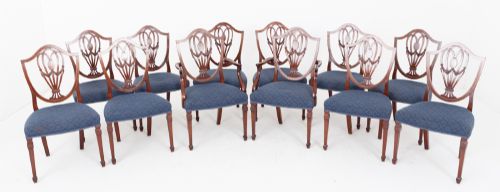
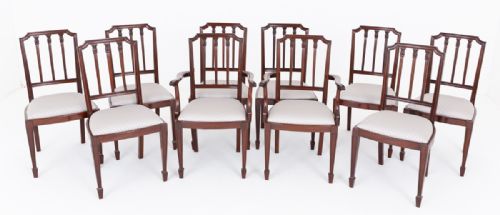
Makers and manufacturers produced these carvers in varying configurations, from single pairs to expansive dining sets including ten or twelve side chairs alongside two carvers. The overall form remains grounded in classical proportions, though revival pieces often display minor variations in carving depth and back splat geometry.
Construction and Materials
Cabinetmakers constructed these carvers predominantly from solid mahogany, utilising its dense grain to support slender vertical splats and curved arm rails without snapping under weight. Joinery relied on mortise and tenon joints to secure the legs, seat rails, and back frames together firmly.
Upholstery methods varied from drop-in pad seats webbing-tied to the frame to fixed pads covered in leather, velvet, tapestry, or printed upholstery fabric. Brass tacks frequently secured the fabric margins along the wooden seat frame edges, adding a neat metallic trim.
Upholstery materials recorded across the inventory range from original tan leather and velvet to tapestry, cotton upholstery fabric, and brass-tacked hide.
Judging Quality
The calibre of a carver rests upon the crispness of the timber carving within the shield back and the integration of the arms into the main uprights. Sharp, deep relief work indicates skilled hand carving, whereas softer, rounded edges point towards mechanical production or heavy wear.
Structural integrity dictates longevity, visible in the tightness of the joints where the arms meet the back rail and where the legs join the seat frame. Original timber surfaces possessing a rich patina outrank stripped or heavily over-varnished frames.
Maple & Co·Cowtan & Sons
The Hepplewhite Style Carver Chairs Glossary
- Carver
- An armchair designed to match a set of dining chairs, traditionally placed at the head of the table. These seats feature supportive armrests for the host.
- Shield Back
- A chair back shaped in the outline of a heraldic shield, popularized during the eighteenth century. This design frequently incorporates carved splats, swags, or wheat ears.
- Splat
- The vertical wooden strip down the middle of a chair back connecting the top rail to the seat. In these chairs, the splat often forms an openwork shield or urn shape.
- Drop-in Seat
- A removable wooden frame upholstered separately and dropped into a recess in the chair rails. This construction allowed easy reupholstering without dismantling the main frame.
- Patina
- The surface sheen and deep colour developed by aged wood through handling, polishing, and light exposure over decades. It signifies genuine age and careful maintenance.
Hepplewhite Style Carver Chairs: Frequently Asked Questions
What is a carver chair?
A carver chair is an armchair built to match a set of dining chairs. It provides armrests and typically sits at the head or foot of a dining table.
These chairs offer extra support while maintaining a unified aesthetic with the surrounding side chairs.
How do I date a Hepplewhite style chair?
Dating these chairs involves examining the timber grain, construction techniques, and secondary woods used in the frame. Eighteenth-century pieces differ in nail types, hand tool marks, and wood seasoning from later Victorian or 1920s revival items.
Cabinetmakers working in the Edwardian period or the 1920s often used machine-cut elements and standardised joinery that reveal their later manufacture upon closer inspection.
Are these chairs comfortable for daily dining?
Most of these carvers feature upholstered pad seats and supportive curved armrests suited for sitting through a meal. The open arm design also allows easy movement when sliding closer to the table.
Seat comfort depends largely on the condition of the internal webbing and the firmness of the modern or period padding beneath the fabric or leather.
How do I distinguish an original from a revival piece?
Original eighteenth-century pieces display hand-cut joinery, period secondary woods, and a deep, unforced timber patina accumulated over generations. Revival pieces from the Victorian era onward often show machine-tooled surfaces, tighter factory uniformity, and nineteenth or twentieth-century hardware.
Checking beneath the drop-in seat frame usually reveals clues about the era of manufacture through the tools and fasteners employed.