


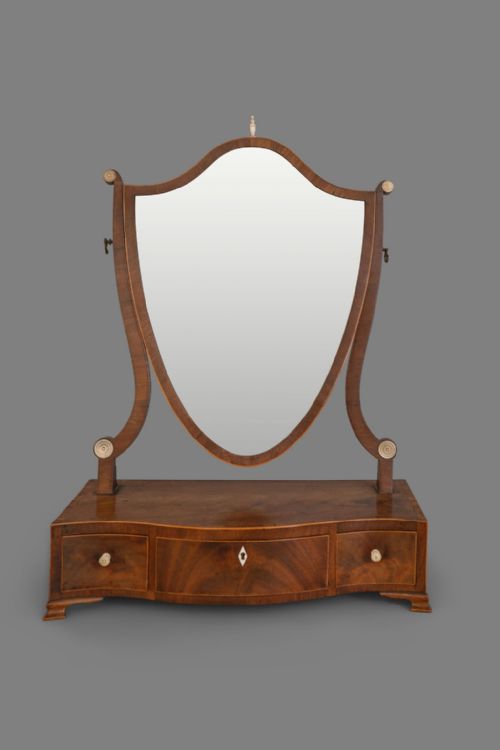


Hepplewhite Serpentine Table
A hepplewhite serpentine table brings fluid lines and refined 18th-century grace to a room through curving fronts and balanced proportions.
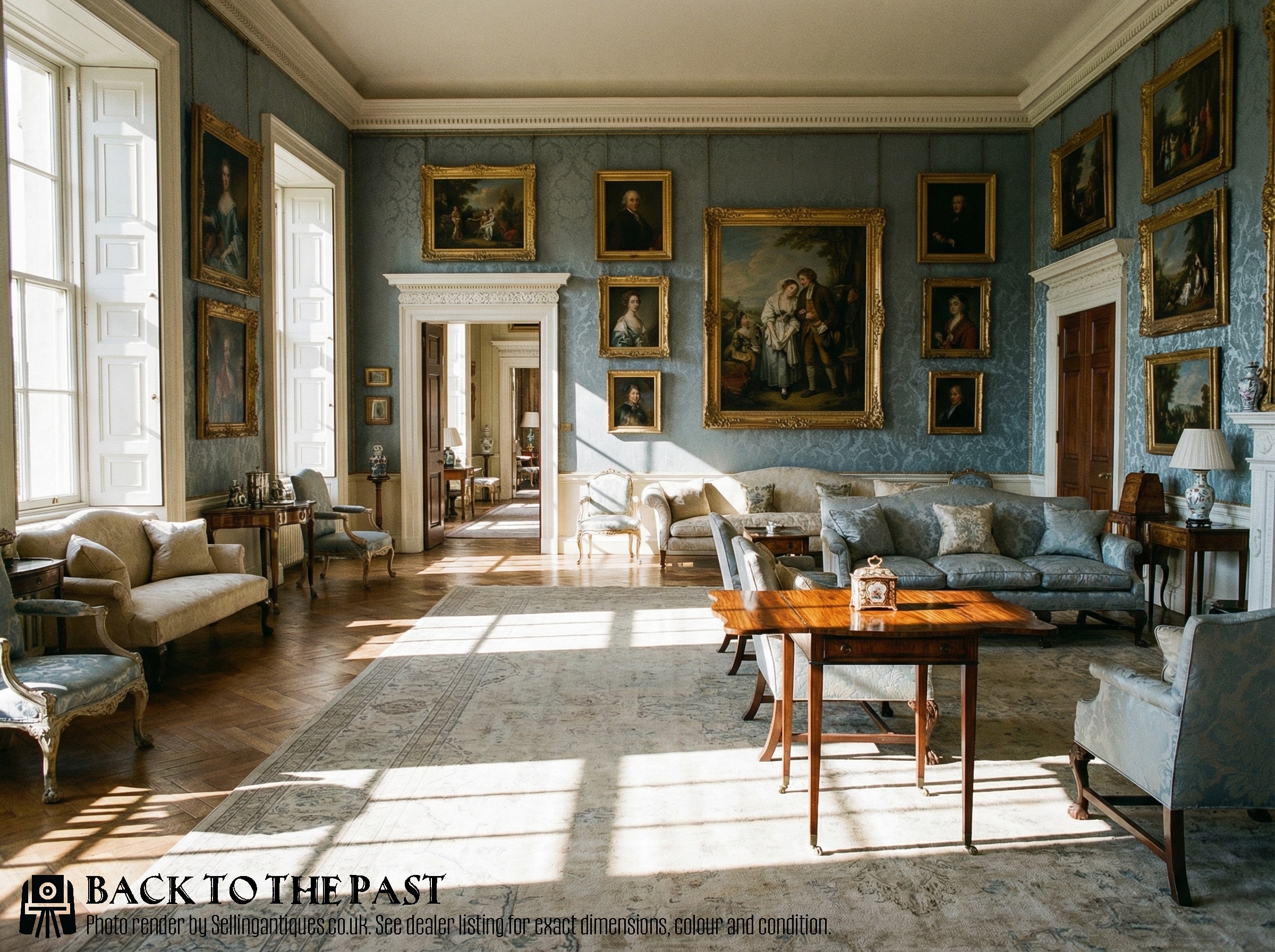
Hepplewhite Serpentine Table
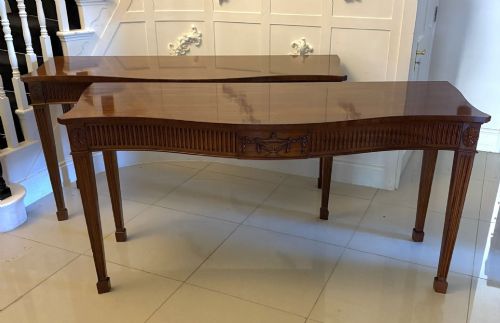
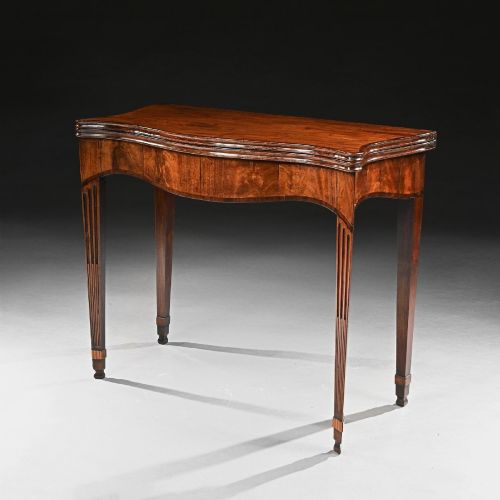
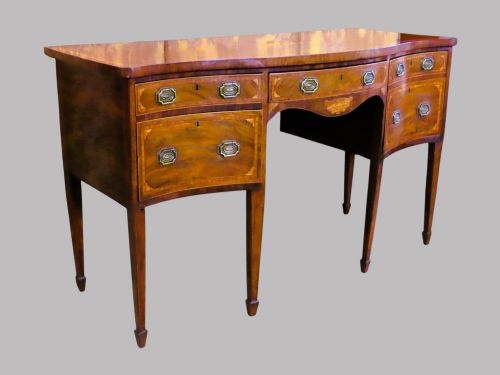
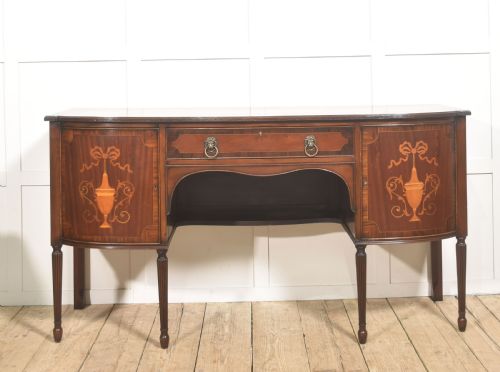
A hepplewhite serpentine table embodies the curved fronts and delicate proportions characteristic of late Georgian design. Buyers seeking this phrase encounter sideboards, card tables, console tables, and dressing mirrors created across the eighteenth century and subsequent revival periods.
The pieces on this page span from genuine eighteenth-century Georgian examples to later nineteenth-century interpretations and twentieth-century revivals. Sideboards and card tables appear most frequently, alongside smaller toilet mirrors and console pieces sharing the distinctive undulating front.
Origins stretch from the Georgian era through Victorian revivals up to the early twentieth century. Construction relies predominantly on mahogany, often enriched with contrasting stringing and timber inlay.
How they were made
Cabinetmakers constructed these tables primarily in solid mahogany and mahogany veneers, shaping the serpentine curve directly from the timber. Brass hardware, such as handles and escutcheons, complements the polished wood surfaces.
Satinwood, boxwood, and bone provide decorative contrast through intricate inlay and stringing along drawer fronts and borders. Neoclassical carving frequently accentuates the legs and aprons on examples influenced by French Hepplewhite taste.
Listings feature 18th-century Georgian pieces alongside 19th-century and Edwardian revivals in mahogany and satinwood.
What varies in quality
Quality rests in the precision of the curved serpentine line and the integrity of the timber figure. Finer examples display harmonious proportions where the undulation of the front flows naturally into the frame without stiffness.
The sophistication of secondary woods, the crispness of neoclassical carving, and the depth of paturation distinguish standard items from exceptional ones. Original brasses and minimal timber replacement elevate the standing of earlier pieces.
Gillow
The Hepplewhite Serpentine Table Glossary
- Serpentine
- A curved furniture front shaped in a continuous concave-convex-concave wave. This contour demands high carpentry skill to execute cleanly across drawers and rails.
- Inlay
- A decorative technique embedding contrasting woods or bone into the primary surface. Boxwood and satinwood commonly create geometric borders.
- Patination
- The surface sheen and colour developed by wood over decades of handling and polishing. Natural ageing produces a warm depth absent in modern finishes.
- Card table
- A folding table designed for evening games, typically featuring a baize-lined interior. Many serpentine examples utilise a swing leg to support the opened top.
- Sideboard
- A large dining room server used for storing linens and serving food. Serpentine fronted variants introduce dynamic movement to dining spaces.
Hepplewhite Serpentine Table: Frequently Asked Questions
How do I identify a genuine period piece?
Examine the timber construction, secondary wood species inside drawers, and hand-cut joinery details.
Eighty-century examples show construction methods and wear patterns consistent with period hand tools rather than modern machinery.
Where should I place a serpentine table in my home?
These tables suit hallways, dining rooms, or living spaces where their curved fronts can be appreciated from multiple angles.
Smaller dressing mirrors find practical placement on chests of drawers or dedicated dressing surfaces.
How do I care for mahogany surfaces?
Apply traditional beeswax sparingly and buff gently with a soft cloth to maintain the natural lustre.
Keep tables away from direct sunlight and sudden temperature changes to protect the veneer and polished finish.