





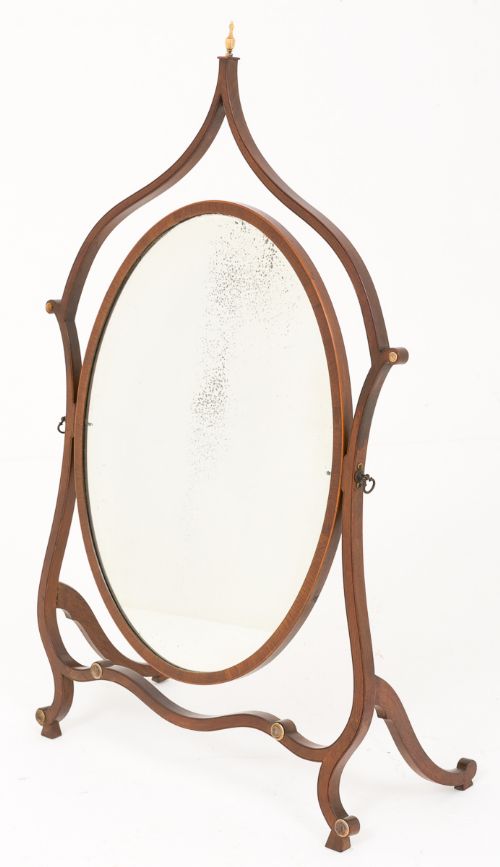
Hepplewhite Dressing Mirror
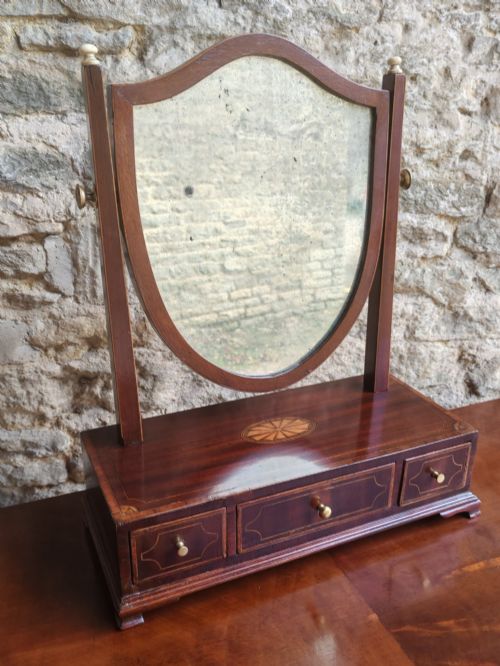
A hepplewhite dressing mirror sits upon a chest or table, offering a polished swing glass framed in mahogany.
Hepplewhite Dressing Mirror
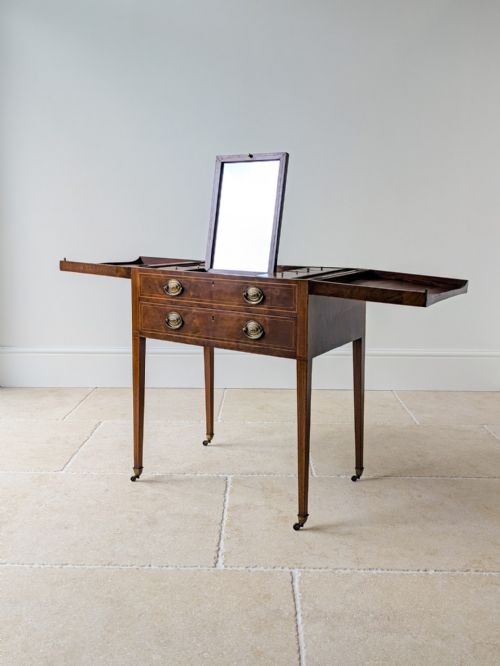
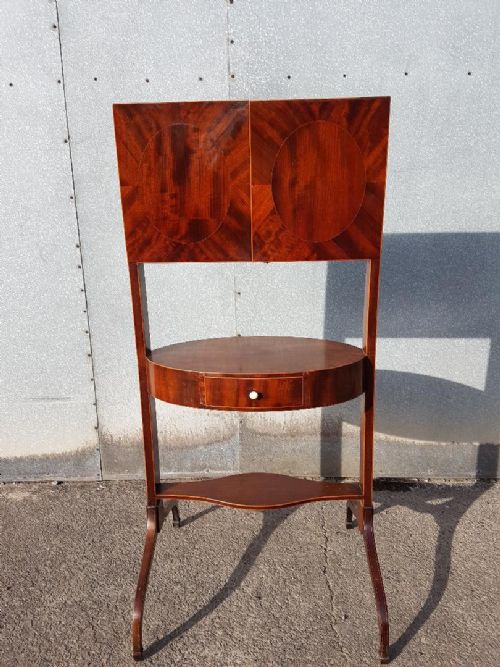
A hepplewhite dressing mirror is a tabletop looking glass designed for grooming and personal reflection during the eighteenth and nineteenth centuries. These pieces typically feature a pivoting frame supported by upright arms attached to a small base containing one or more drawers.
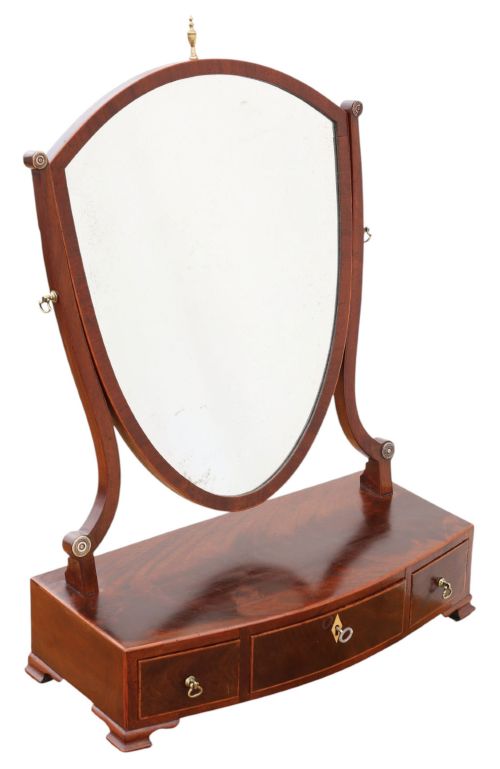
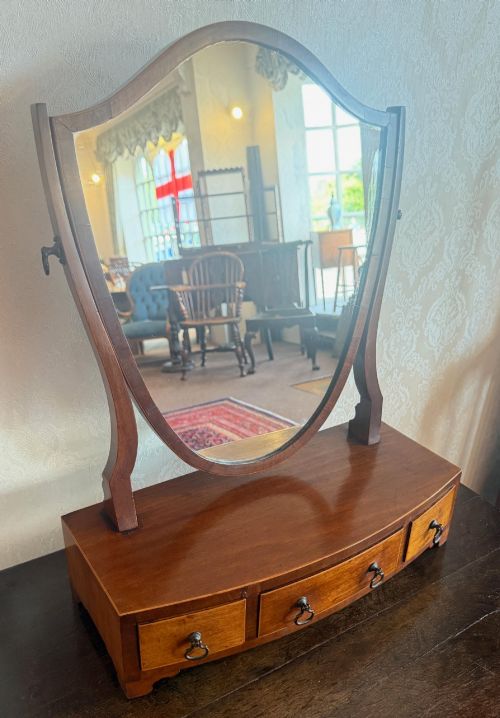
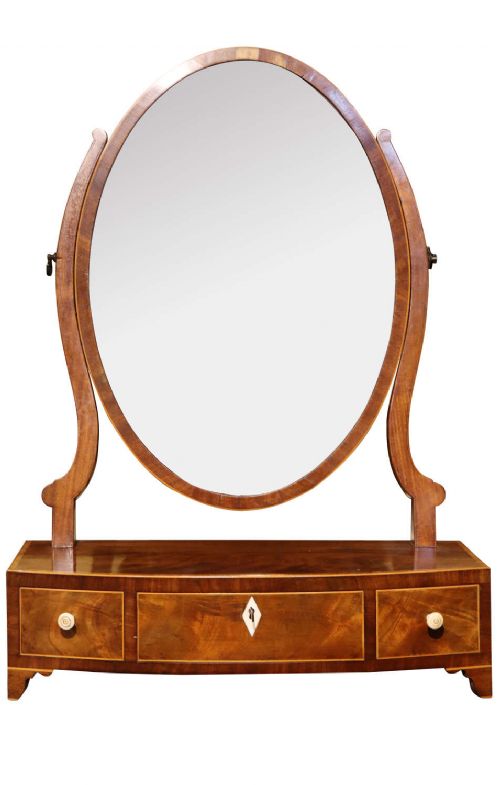
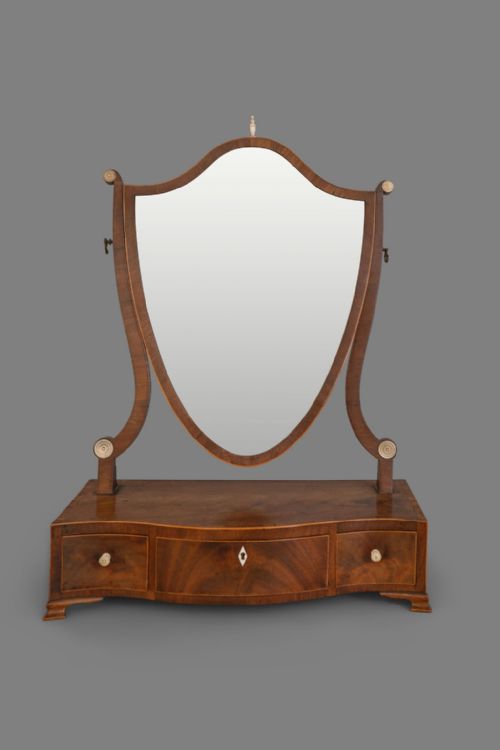
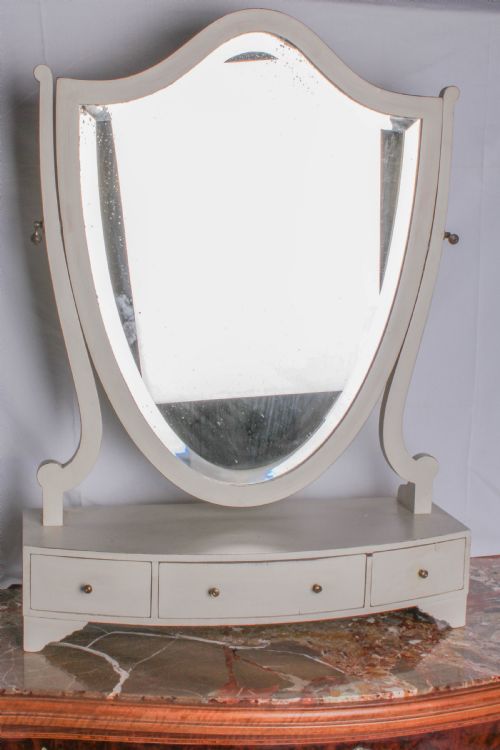
The selections encountered here range from authentic eighteenth-century examples to later nineteenth-century revivals and Edwardian interpretations. Most pieces utilise traditional forms such as shield, oval, or rectangular plates suspended above serpentine or straight box bases.
Makers constructed these mirrors to sit upon dressing tables, chests of drawers, or vanity surfaces in domestic bedchambers. Their compact proportions allowed owners to adjust the angle of the glass for optimal light and visibility.
How they were made
Cabinetmakers built the frames and bases using dense timbers like mahogany, occasionally incorporating satinwood or harewood for contrast. They shaped shield and oval glass surrounds with hand saws and smoothing planes, securing the mirror plates within slender wooden rabbets.
Craftsmen applied decorative details such as boxwood inlay and crossbanding to the drawer fronts and outer edges of the base. Brass knobs, swing screws, and small support hardware allowed the mirror frame to pivot smoothly between upright posts.
Some hidden compartments require discovering secret catches to reveal tiny spaces meant for private trinkets.
What varies in quality
The fineness of a hepplewhite dressing mirror depends on the selection of timber grain and the precision of the cabinetwork in the base. Superior examples display subtle figuring in the mahogany, crisp proportions in the upright supports, and careful dovetail construction within the small drawers.
The sophistication of decorative embellishments also distinguishes standard pieces from exceptional ones. Refined versions incorporate delicate boxwood inlay, serpentine fronts, and original brass hardware, whereas simpler iterations rely on plain rectangular plates and unadorned surfaces.
The Hepplewhite Dressing Mirror Glossary
- Shield mirror
- A dressing glass shaped like an upright heraldic shield, characteristic of late eighteenth-century design. This form provides a curved silhouette supported by scrolling wooden arms.
- Crossbanding
- A border of veneer laid across the grain of the main surface to create a framed effect. Cabinetmakers used this technique to add visual depth to the edges of table bases and drawer fronts.
- Serpentine drawer
- A drawer front featuring a concave centre flanked by convex curves, or the reverse. This undulating shape requires precise woodworking to fit smoothly within the frame.
- Toilet mirror
- A historical term for a small tabletop dressing mirror used during the Georgian and Edwardian periods. These pieces sat upon larger furniture items for personal grooming.
- Triplate dressing table
- A mirror arrangement featuring three glass panels hinged together to allow side angles of reflection. The central glass remains fixed while the wings adjust.
Hepplewhite Dressing Mirror: Frequently Asked Questions
Where did these mirrors sit?
These mirrors were designed to sit upon dressing tables, chest of drawers, or dedicated vanity surfaces in bedchambers. Their compact bases meant they could be placed on existing furniture without requiring dedicated floor space.
Owners positioned them near windows to catch natural morning light for shaving, dressing, and applying cosmetics.
How do I date a mirror?
Dating relies on examining the timber species, construction methods of the small drawers, and the shape of the mirror plate frame. Eighteenth-century examples often feature hand-cut dovetails and native hardwoods like mahogany.
Later Edwardian and revival pieces display different secondary woods and machine-cut elements that separate them from Georgian originals.
Are the glass plates original?
Mirror glass frequently suffered damage or silver degradation over centuries of use, leading to period or modern replacements. Examining the backboards and silvering helps determine the age of the glass itself.
Original plates often show slight foxing, distortion, or waviness characteristic of early manufacturing methods.
How were the drawers used?
The small drawers built into the base held personal items such as rings, pins, cosmetics, and small grooming tools. Their compartmentalised interiors kept loose accessories organised on the dressing surface.
Secret compartments also appear in select examples for storing valuables.