
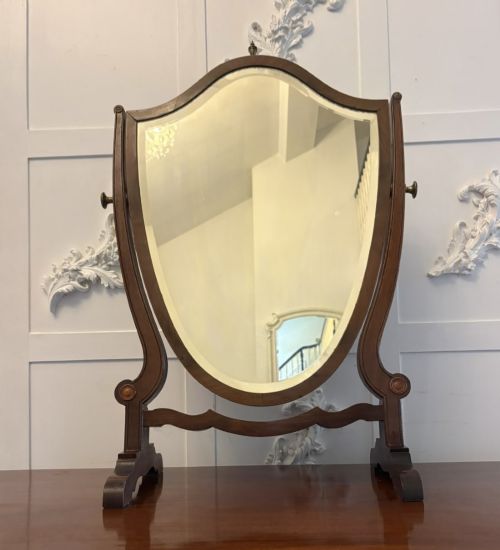
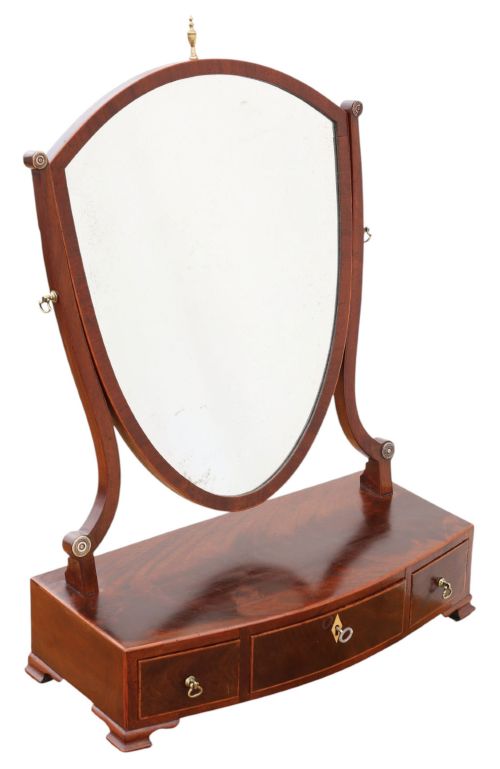
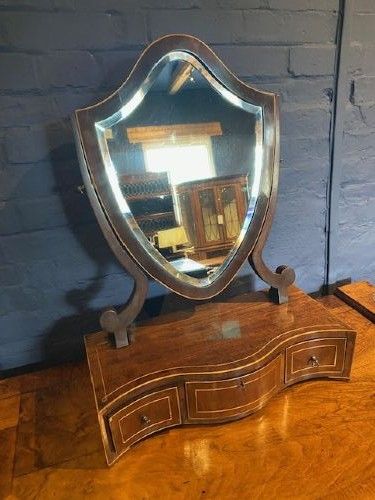
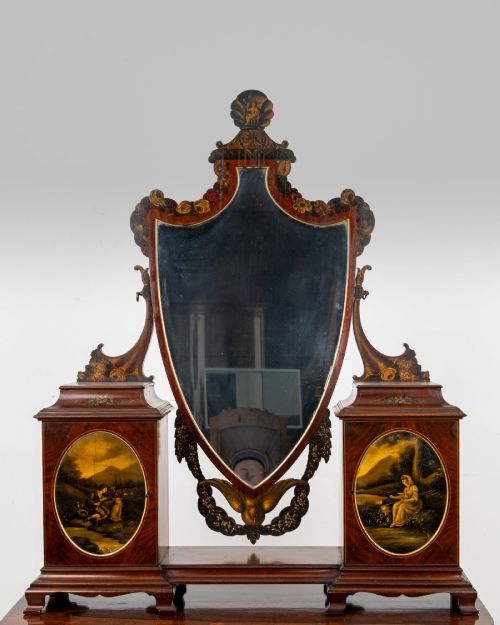
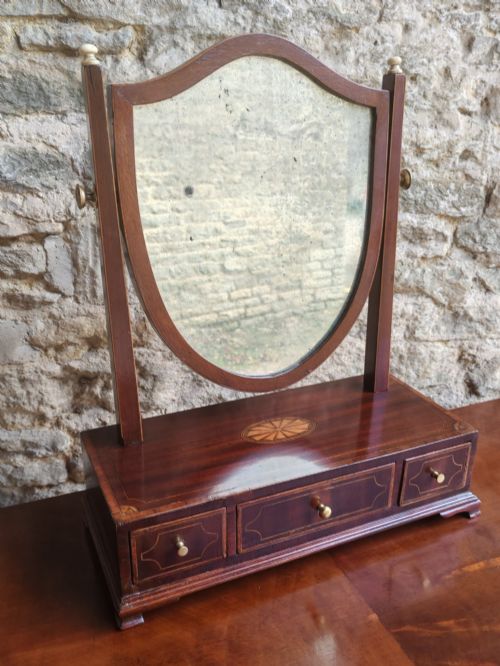


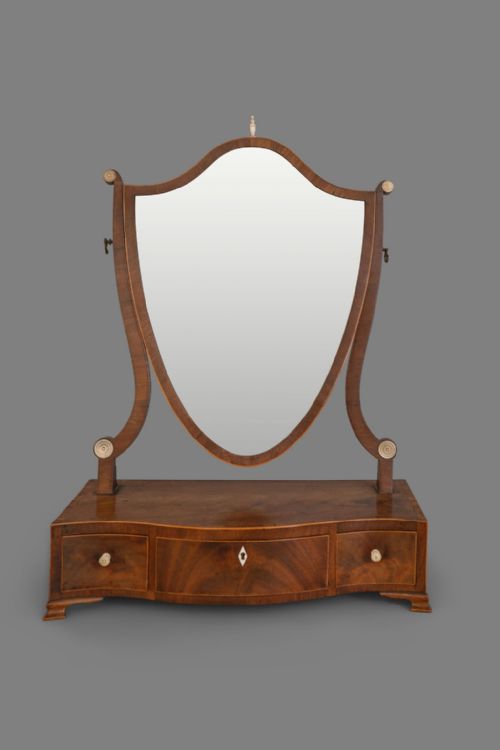


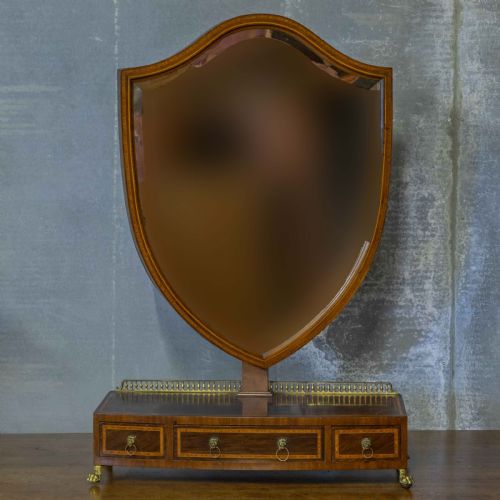
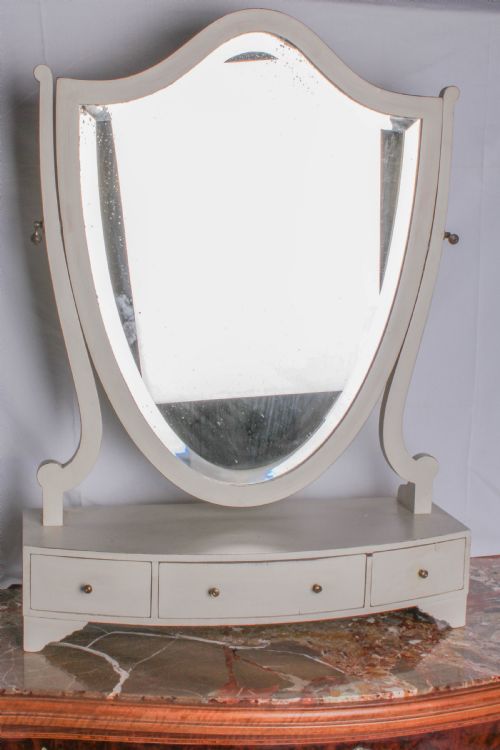


Shield Shape Toilet Mirror
These shield shape toilet mirror examples sit upon a dressing table or chest, pivoting to catch the morning light.
Shield Shape Toilet Mirror
When you search for a shield shape toilet mirror, you encounter pieces designed for the dressing table, spanning Georgian, Victorian and Edwardian eras. Most examples on this page date from the eighteenth century through to nineteen hundred, showing the enduring popularity of the form.
The assortment includes dressing table mirrors, shaving stands and table top cheval mirrors alongside straightforward toilet mirrors. Mahogany forms the backbone of these pieces, often accompanied by serpentine fronted bases and subtle inlay work.
How they were made
Cabinet makers utilised solid mahogany and satinwood veneers, shaping the timber into slender uprights and curved frames. Boxwood stringing and bone details frequently accentuate the drawer fronts and borders of the better pieces.
The glass sits within a pivoting swing frame mounted on brass pivots, allowing the user to adjust the angle of reflection. Painted wood and mirror glass complete the construction of the later Edwardian variations.
Listings feature mahogany, satinwood, boxwood, bone and brass across Georgian, Victorian and Edwardian periods.
What varies in quality
Quality rests upon the proportion of the shield frame and the crispness of any inlaid boxwood or satinwood stringing. Finer examples display carefully selected mahogany grain on the serpentine base drawers rather than plain timber.
The integration of the brass fittings and the weight of the supporting arms dictate how steadily the mirror holds its position. Drawer construction with neat dovetails marks out the work of a more capable workshop.
The Shield Shape Toilet Mirror Glossary
- Serpentine
- A curved shape resembling a snake, featuring a convex centre flanked by two concave curves. This contour appears frequently on the base boxes of Georgian dressing mirrors.
- Cheval mirror
- A full length floor standing mirror, though the term also describes larger table top versions equipped with jewellery cabinets. They allow the user to check an outfit rather than just the face.
- Stringing
- A narrow inlay of contrasting wood, such as boxwood or satinwood, set into the surface of mahogany. It outlines the edges of drawers and framing borders to decorative effect.
- Swing mirror
- A glass plate hung on pivoting pins between two upright posts, enabling the user to tilt the reflection. The mechanism relies on brass screws or threaded bolts.
- Toilet mirror
- A smaller mirror designed to sit on a dressing chest or table, often incorporating small drawers beneath. The name derives from the dressing ritual rather than bathroom use.
Shield Shape Toilet Mirror: Frequently Asked Questions
What is a shield shape toilet mirror?
A shield shape toilet mirror is a table top dressing glass framed in the outline of a heraldic shield, mounted on uprights above a small set of drawers. It provides a movable reflection for grooming and personal care.
Cabinet makers produced these pieces primarily in mahogany throughout the eighteenth and nineteenth centuries, adapting the proportions to suit changing interior fashions.
How do I date an antique mirror?
Dating relies on observing the timber choice, construction methods, and secondary woods used inside the drawer boxes. Georgian pieces lean toward solid mahogany and hand cut dovetails, while Edwardian examples often show machine cut elements and lighter painted decoration.
Examining the mirror glass itself can also offer clues, though many original plates have been replaced over the centuries due to foxing and wear.
Were these mirrors used by men or women?
These mirrors served both men and women during their morning and evening dressing routines. They sat upon dressing tables and washstands in bedrooms across the household.
Shaving stands and adjustable table mirrors catered specifically to male grooming needs, while serpentine and inlaid variants found a place in the main bedchambers.
How do I clean mahogany wood?
Maintenance requires a soft cloth and a traditional beeswax polish to nourish the timber and preserve the natural sheen. Avoid modern silicone sprays and excessive moisture, which can damage the polish and veneer.
Keeping the mirror away from direct sunlight and steady heat sources prevents the mahogany from drying out and cracking over time.