



Hepplewhite Dining Table
A hepplewhite dining table or related dining piece brings neoclassical grace to a room through refined mahogany and delicate inlay work.
Hepplewhite Dining Table
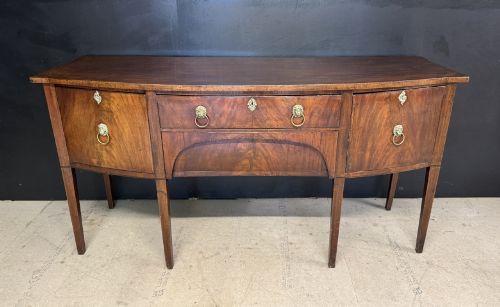
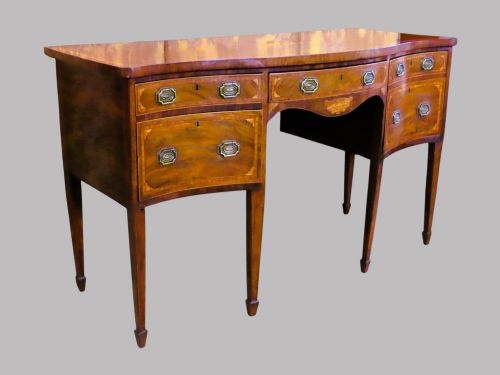
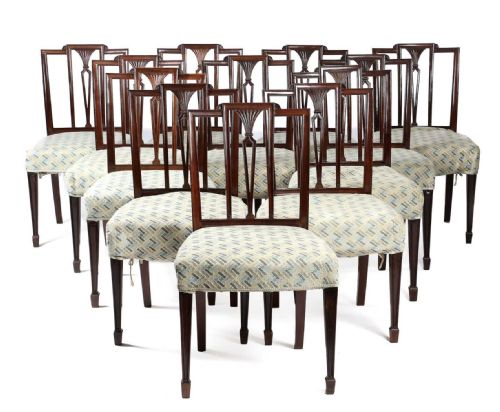
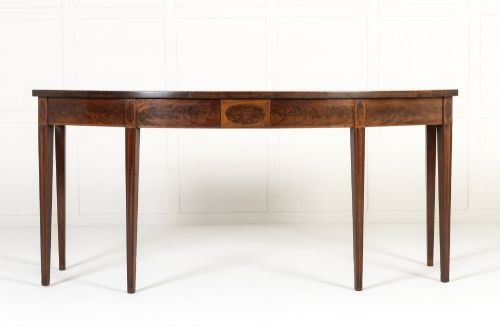
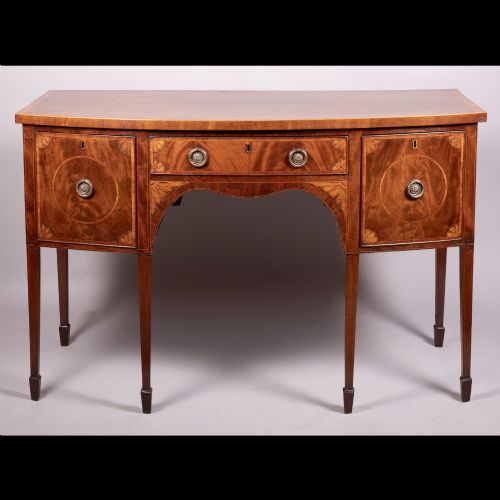
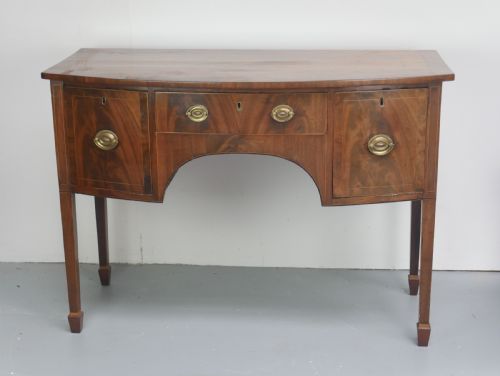
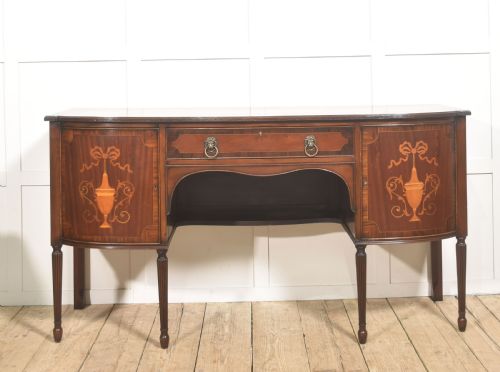
A hepplewhite dining table search gathers elegant dining furniture, sideboards, and chairs dating from the Georgian period onwards. The selection on this page leans heavily towards mahogany sideboards, serving tables, and dining chairs reflecting George Hepplewhite designs.
Makers and cabinetmakers of the eighteenth and nineteenth centuries produced these forms in mahogany, often incorporating satinwood and boxwood inlay. Pieces span original Georgian items to later revival works from the nineteenth and early twentieth centuries.
Buyers encounter serpentine fronts, bow fronts, and D-end configurations alongside sets of chairs. These items served formal dining rooms and continue to function as practical dining or serving furniture today.
What varies in quality
The choice of timber grain creates a distinct visual hierarchy, with rich flame mahogany and crisp boxwood inlay marking superior examples. Detail in the cabinetmaking, such as the sharpness of the serpentine curves and the execution of the marquetry, separates standard production from finer pieces.
Originality of surfaces and hardware influences the character of each piece. Tables and sideboards retaining their period brass fixtures and stable structural integrity command greater appreciation.
Listings feature mahogany as the predominant timber, accompanied by satinwood and boxwood inlay across Georgian and later revival periods.
George Hepplewhite·Gillow
The Hepplewhite Dining Table Glossary
- Serpentine front
- A front surface curving outward in the centre and inward at the ends. This shape requires advanced woodworking skill to execute properly in solid mahogany.
- Bow front
- A convex curved front that sweeps outward in a continuous arc. It appears frequently on Georgian sideboards.
- Flame mahogany
- Mahogany timber sliced to reveal a distinctive undulating flame pattern in the grain. Cabinetmakers reserved this prized veneer for primary display surfaces.
- Boxwood inlay
- Narrow strips of pale boxwood inserted into recesses in the darker mahogany to form geometric or linear borders. It provides sharp visual contrast.
- D-end dining table
- A table with semi-circular ends resembling the letter D, which can often be separated or combined with leaves. These sections allow flexible seating arrangements.
Hepplewhite Dining Table: Frequently Asked Questions
How do I identify a genuine Hepplewhite design?
Authentic design characteristics include slender tapered legs, shield-back chair designs, and delicate contrasting inlay work on mahogany surfaces.
Many pieces follow the pattern books published in the eighteenth century rather than bearing a maker's stamp.
Are these tables suitable for daily use?
These mahogany tables and sideboards were built for practical dining and serving purposes in busy households.
Using coasters and placemats helps protect the polished antique surfaces from heat and moisture during regular meals.
What is the difference between Georgian and revival pieces?
Original Georgian items date from the eighteenth and early nineteenth centuries and carry the patina of age. Revival pieces originate from later Victorian or Edwardian periods, copying earlier styles.
Timber density, construction methods, and wear patterns help distinguish the original era from later interpretations.
How should I care for mahogany dining furniture?
Regular dusting with a soft, dry cloth preserves the finish without building up heavy wax layers. Keeping pieces away from direct heat sources prevents the mahogany and its veneers from drying out.