



Helmet Coal Bucket
A helmet coal bucket brings practical fireside history to a hearth, shaped like an inverted military helmet to pour fuel cleanly.

Helmet Coal Bucket
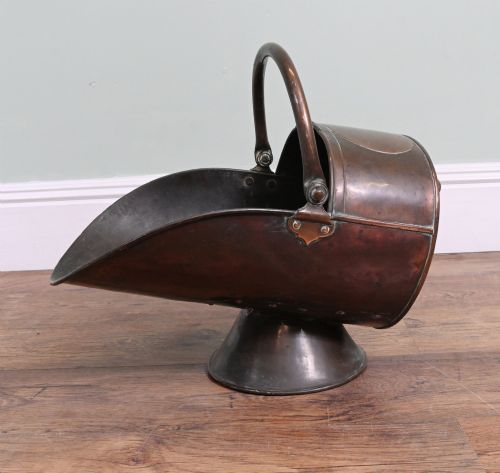
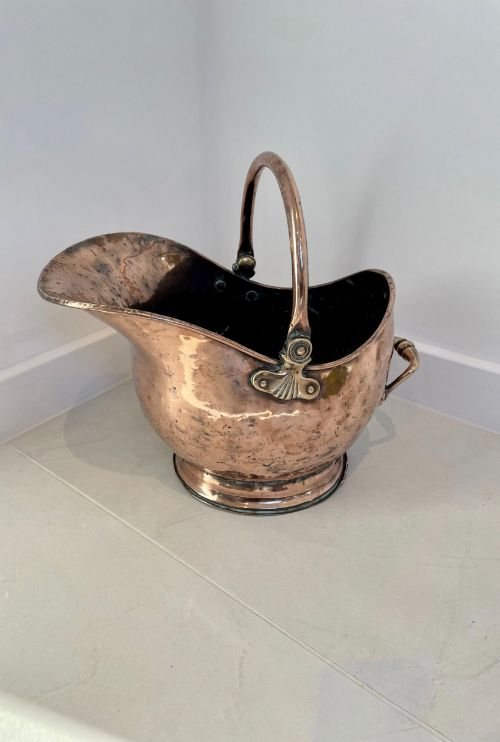
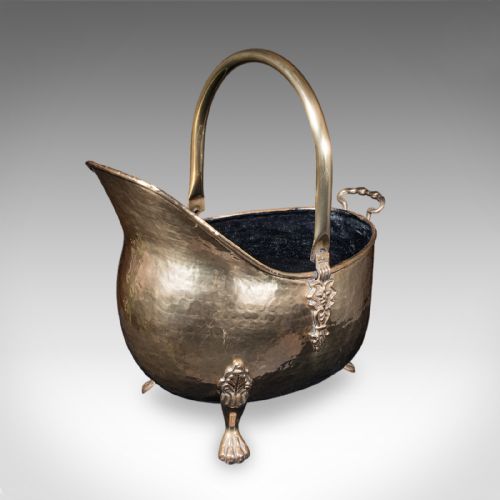
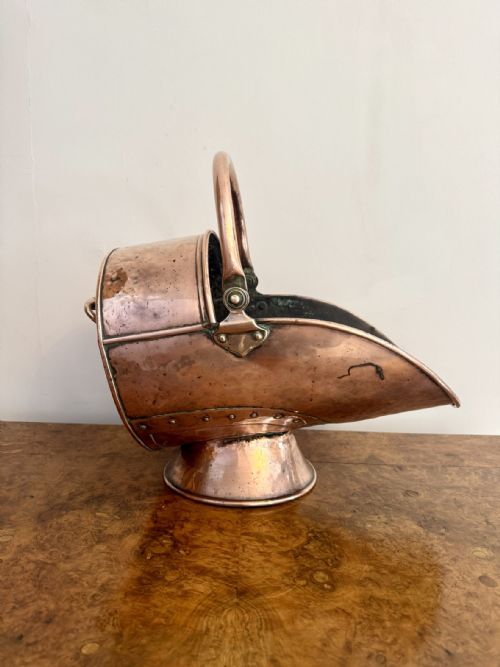
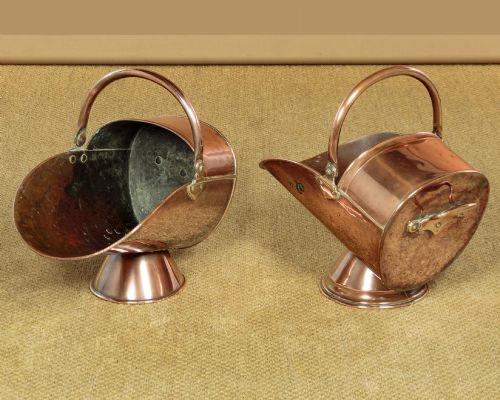
A helmet coal bucket is a functional fireside container designed to hold and transfer solid fuel to an open hearth. The characteristic flared lip and sloping body resemble a traditional helmet, which allows the user to tip coal or logs directly onto the fire without spilling.
Most examples found in these records date from the Victorian and Edwardian eras, spanning the nineteenth and early twentieth centuries. Earlier Georgian pieces also appear, alongside diverse styling influences ranging from Arts and Crafts to Art Nouveau.
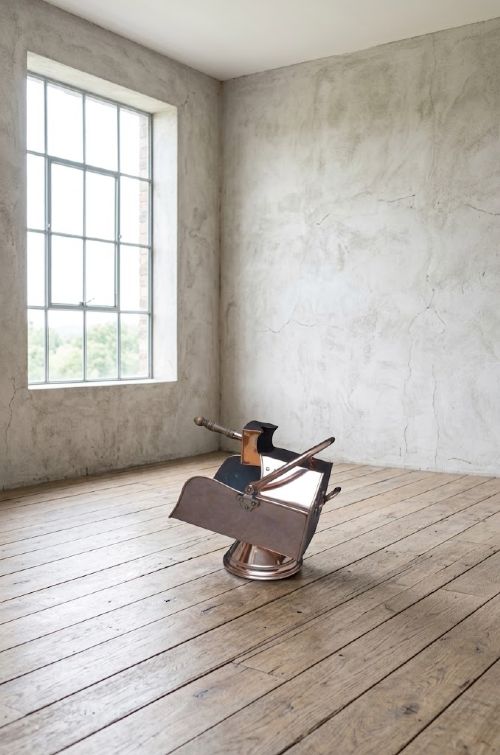
These vessels function primarily as fireside accessories and log bins, sitting beside the hearth as both utility items and decorative metalwork. They frequently appear alongside matching shovels or scoops designed for handling fuel.

Materials and construction
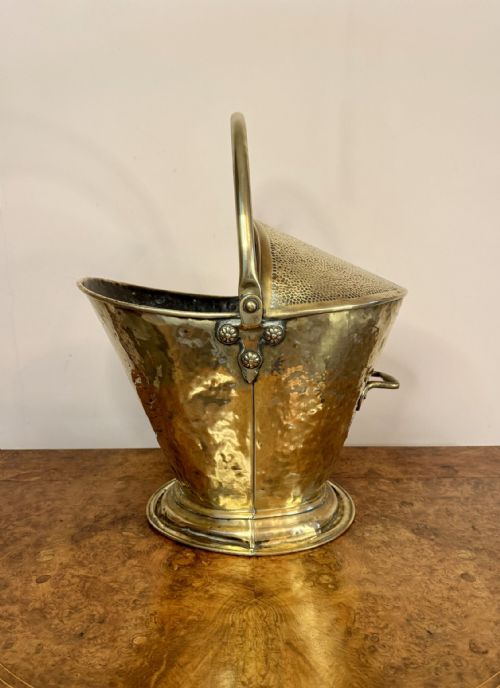
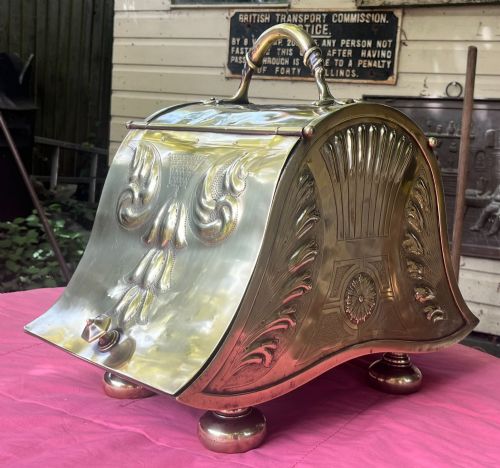
Makers relied heavily on copper and brass, shaping sheet metal into the distinctive helmet profile through beating, joining, and polishing. Many pieces feature hammer-beaten textures or embossed surface decoration applied by hand during manufacture.
Iron, cast iron, wrought iron, and ebonised wood also appear in the construction of bodies, handles, and feet. Sturdy handles in brass or ceramic allow for carrying heavy loads of coal from the cellar to the fireplace.
Helmet Coal Bucket Retail Price Guide 2026
Typical asking prices for helmet coal bucket among the pieces listed under this phrase on Sellingantiques today, from the lower quarter to the upper quarter. They describe what is for sale here now, not the wider market.
Some helmet buckets arrived with china handles, offering a delicate grip for heavy loads of coal.
Distinctions in craftsmanship
The standard of metalworking dictates the distinction between ordinary utility items and finer workshop production. Heavy gauge sheet metal, crisp hammer work, and secure riveting separate robust vessels from thinner commercial equivalents.
Maker attribution and original matching accessories like designated brass shovels elevate certain pieces. Refined handling of decorative styles such as Arts and Crafts or Art Nouveau marks out the more ambitious examples.

Benham and Froud·Henry Loveridge
The Helmet Coal Bucket Glossary
- Helmet coal bucket
- A fireside container featuring a sloped rim and flared mouth for pouring fuel. This shape defines the primary forms found across Victorian and Edwardian domestic metalwork.
- Coal scuttle
- A broader category of vessel for storing and transporting coal to a fireplace. These often include hinged lids, swing handles, and matching scoops.
- Log bin
- A larger receptacle utilised for holding firewood rather than small coal. They share many construction traits with coal buckets from the same periods.
- Arts and Crafts
- A design movement prioritising visible handmade construction and honest materials. Metalwork from this style often displays prominent hammer marks on copper surfaces.
- Art Nouveau
- A decorative style characterised by flowing, organic lines and natural motifs. Pieces from this period integrate stylized plant forms into handles and body embossing.
Helmet Coal Bucket: Frequently Asked Questions
What is a helmet coal bucket used for?
These vessels were designed to store coal near the fireplace and transport fuel from the coal cellar. The sloping rim allowed domestic servants or homeowners to direct the fuel accurately into the hearth.
Over time, their role shifted from purely utilitarian storage to decorative fireside furnishings. Today they serve equally well for holding logs, kindling, or acting as umbrella stands.
How do I date a copper coal bucket?
Dating relies on observing manufacturing techniques, material choices, and decorative style markers. Mid-nineteenth-century Victorian pieces often display heavy gauge copper with cast brass feet and swing handles.
Later Edwardian and Art Nouveau items introduce different handle attachments and machine-assisted embossing. Georgian predecessors from around eighteen hundred tend to feature simpler lines and heavier hand-wrought construction.
Are brass and copper buckets heavy?
Solid metal construction from the Victorian period makes these vessels surprisingly substantial before any fuel is added. Quality pieces utilise thick sheet copper or brass to withstand daily use at the hearth.
Handles attached with sturdy rivets provide the necessary leverage to lift heavy loads safely. This weight contributes to their stability when resting beside an active fireplace.
How do I clean an antique coal bucket?
Maintenance depends entirely on the desired finish and the age of the metal surface. Many collectors prefer to leave a mellow, aged patina developed over decades of domestic service rather than polishing the metal to a bright shine.
If cleaning is necessary, mild soapy water and a soft cloth remove accumulated dust without harming the copper or brass. Abrasive cleaners should be avoided to preserve original hammer marks and surface textures.