



Height Adjustable Stool
A height adjustable stool offers mechanical adaptability paired with traditional timber, serving keyboard players and dressing tables alike.
Height Adjustable Stool
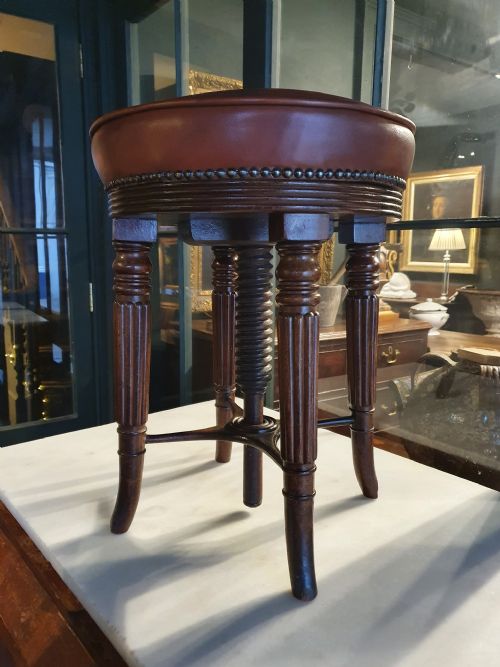
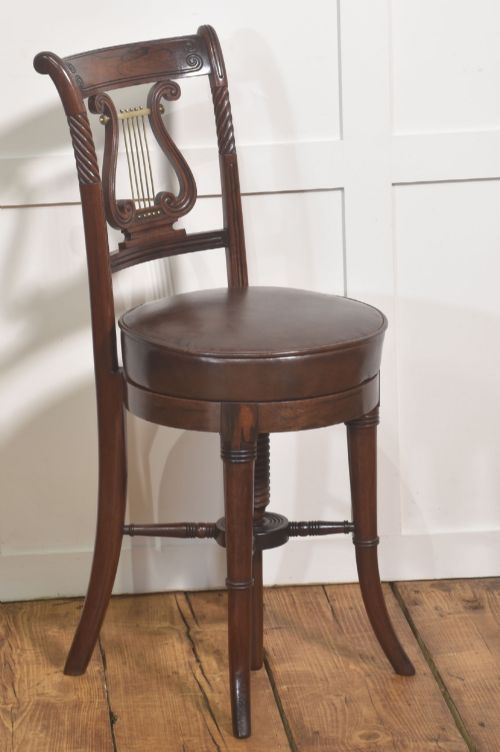
A height adjustable stool is primarily found in the form of a piano stool, music chair, or revolving dressing table seat, dating from the nineteenth and early twentieth centuries. These pieces span Georgian, Regency, William IV, and Victorian periods, often taking the form of a swivel top or screw-adjust mechanism.
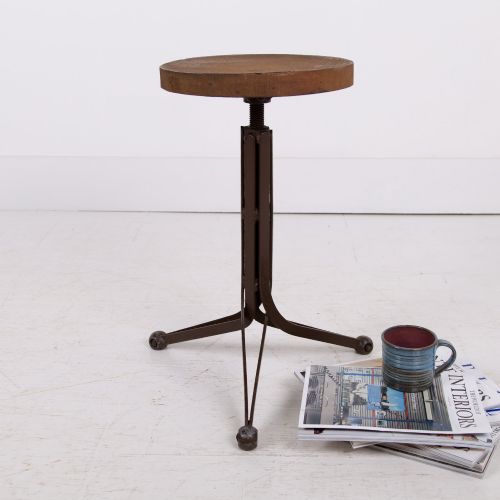
The most common examples encountered on this page are Victorian mahogany or walnut revolving piano stools, alongside industrial workshop models in cast iron and wood. Makers produced these for practical utility in the parlour, music room, or workspace, utilising timber frames combined with leather, fabric, or tapestry upholstery.
Materials and mechanism
Makers constructed the frames predominantly from solid hardwoods such as mahogany, walnut, and rosewood, occasionally incorporating brass inlay, gilt paint, or satinwood. Industrial variants utilise robust cast iron alongside timber seats to achieve durability.
The adjustment mechanism relies on a central wooden or iron screw thread, a rise and fall ratchet, or a revolving swivel base that permits the seat to turn. Upholstered tops feature stuffing finished in leather, fabric, or tapestry, secured to a wooden chassis.
Height Adjustable Stool Retail Price Guide 2026
Typical asking prices for height adjustable stool among the pieces listed under this phrase on Sellingantiques today, from the lower quarter to the upper quarter. They describe what is for sale here now, not the wider market.
The listings show a prevalence of nineteenth-century mahogany and walnut, alongside cast iron workshop pieces from the early twentieth century.
Judging quality and craftsmanship
Quality reveals itself in the precision of the turning mechanism and the stability of the central screw or swivel action. Superior examples maintain smooth operation without excessive play in the column.
Cabinetmaking detail distinguishes finer pieces, seen in carved hardwood supports, brass inlay, reeded legs, and the retention of original upholstery materials. Plain country variants and utilitarian workshop stools prioritise robust construction over decorative embellishment.
Gillows·James Shoolbred·Rubery Owen
The Height Adjustable Stool Glossary
- Revolving piano stool
- A seat featuring a mechanism that turns a full circle on a central threaded spindle or pivot, allowing the player to adjust height or position.
- Rise and fall
- A mechanical system utilising a ratchet or screw mechanism to raise or lower the seat height incrementally.
- Swivel base
- A pivoting chassis that allows the upper portion of the stool to rotate independently of the legs and stretcher base.
- Music chair
- A seating form designed specifically for instrumentalists, often equipped with a supportive backrest and adjustable height.
- Dressing table stool
- A low seat utilised primarily in bedrooms, frequently sharing the mechanical adjustment properties of music seating.
Height Adjustable Stool: Frequently Asked Questions
How do I adjust the height on these stools?
Most examples operate by rotating the circular wooden seat clockwise or anticlockwise to raise or lower the central screw thread. Others utilise a mechanical rise and fall ratchet lever.
Ensure the mechanism is free of debris and lightly lubricated if the screw action feels stiff during adjustment.
Were these stools only used for pianos?
While the majority served keyboard players in nineteenth-century music rooms, many were built as dressing table chairs or workshop seating. Industrial versions functioned as tall clerks or machine operator seats.
Their adaptable height made them suitable for any task requiring a seated position at varying desk or table levels.
How do I date a Victorian revolving stool?
Dating relies on timber choice, such as rosewood and early mahogany for Regency and William IV pieces, transitioning to walnut and ebonised finishes by the late Victorian era. Turning styles on the legs also shift from reeded neoclassical columns to heavily carved cabriole supports.
Patent stamps and registration marks occasionally stamped into the iron mechanism provide more precise chronological evidence.
Are industrial stools from the same era as piano stools?
Industrial workshop stools generally date from the later periods represented here, particularly around nineteen-thirty, reflecting twentieth-century manufacturing needs. Piano stools dominate the earlier nineteenth-century and Victorian listings.
Both types share the height-adjustable requirement but serve entirely different domestic and working environments.