

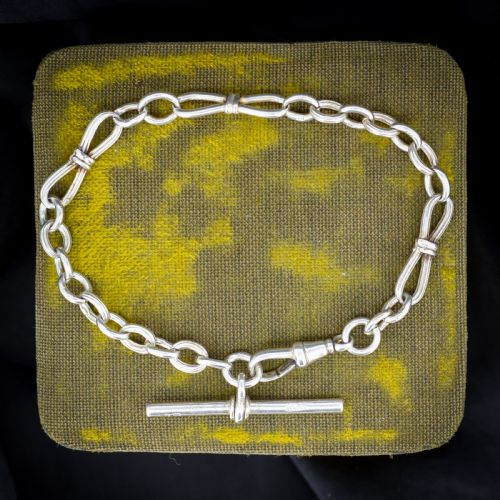


Heavy Silver Watch Chain
A heavy silver watch chain delivers the substantial presence and solid linkwork that defined gentleman's attire across the turn of the twentieth century.
What these pieces are
A heavy silver watch chain is primarily a pocket watch accessory, also catalogued as an albert chain or jewellery, designed to secure a timepiece in a waistcoat pocket while displaying decorative fobs or drops. These items originate predominantly from the Victorian and Art Deco eras, capturing the robust manufacturing standards of nineteen-hundred, nineteen-ten, and nineteen-twenty.
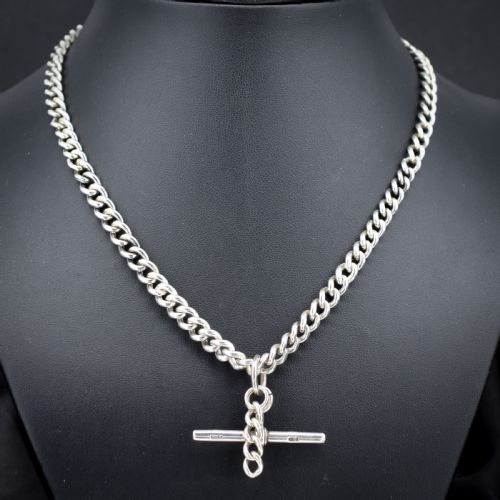
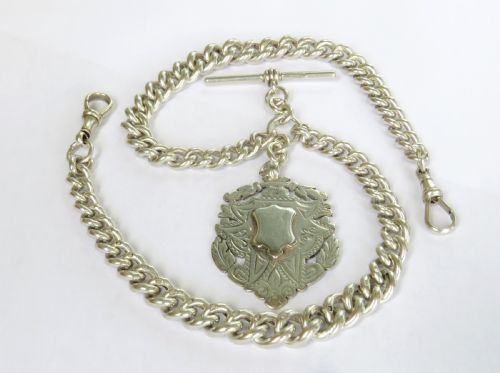
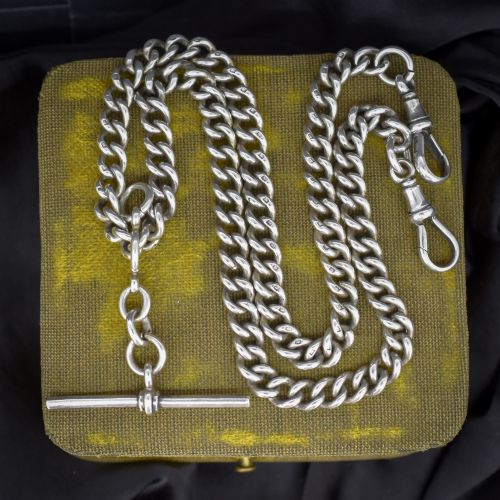
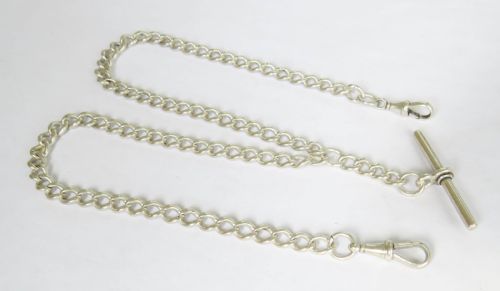
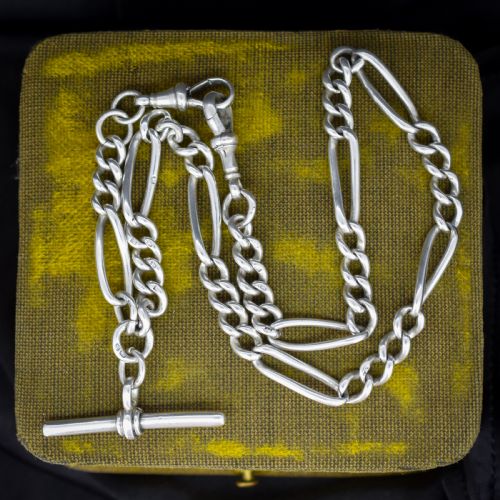
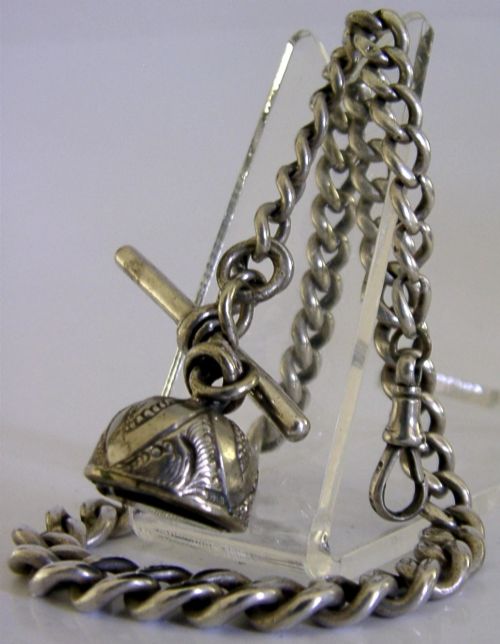
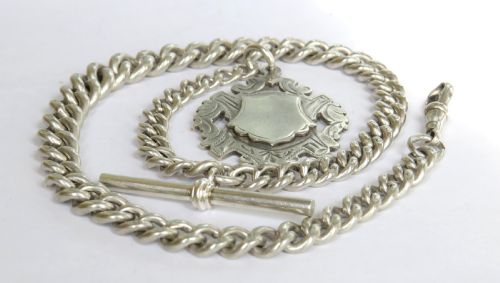
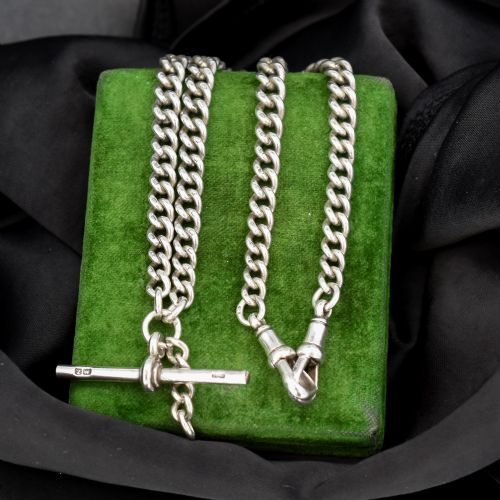
The versions most frequently met on this page are substantial curb link chains, often accompanied by original T-bars, dog clips, and armorial or commemorative fobs. Single and double albert configurations appear regularly, with lengths accommodating both traditional pocket wear and contemporary necklace styling.
How they were made
Silversmiths constructed these pieces using solid silver and sterling silver, fabricating individual links by hand or through early industrial stamping methods. Each link was joined, soldered, and polished to withstand the daily friction of a pocket watch and fob.
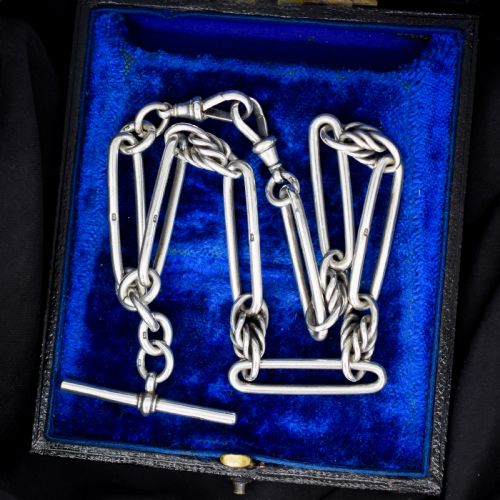
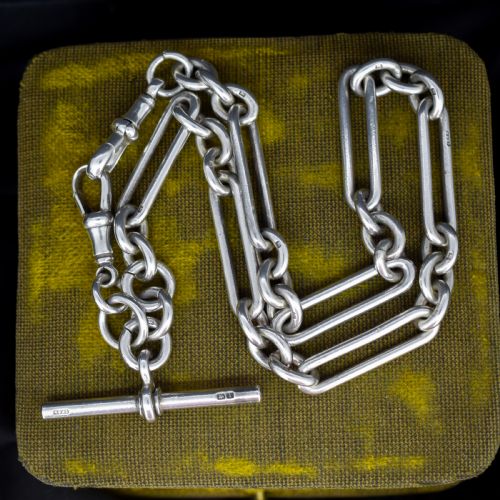
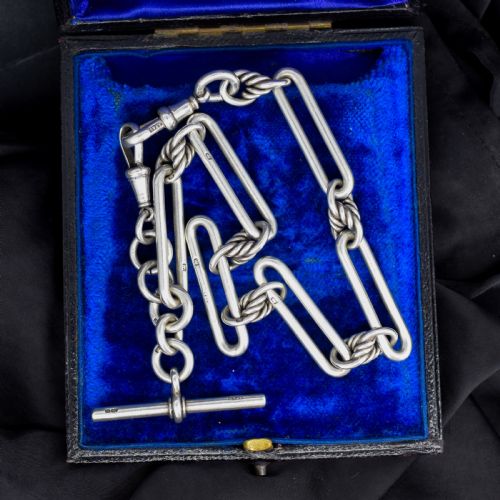
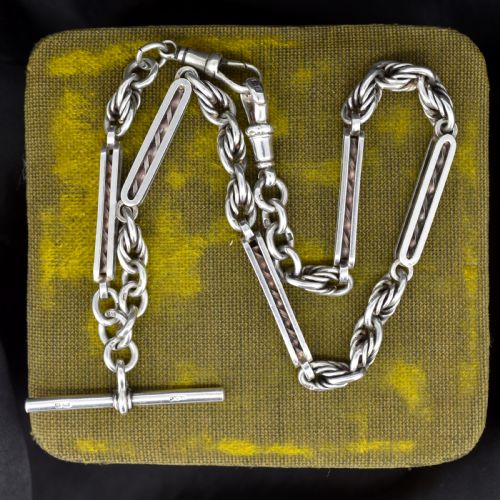
Specialised link designs, such as the trombone and love knot patterns, required intricate wire-bending and assembly. Components like dog clips and T-bars were cast separately and integrated securely into the main chain structure.
Retail Price Guide 2026
Typical UK retail prices for heavy silver watch chain, calculated from the Sellingantiques database of over a million retail prices indexed since 2003. This retail price guide relies exclusively on Sellingantiques data; no external sources or auction records are used, so the figures do not describe the wider market.
Some Goliath chains reach a staggering quarter-kilogram, proving that Victorian gentlemen took timekeeping very seriously indeed.
What varies in quality
The distinction between standard examples and the top of the range rests on overall mass, link gauge, and the presence of complete, matching hardware. Chains exhibiting exceptional weight, such as heavy Goliath formats, command attention through sheer material presence.
Quality also resides in the crispness of hallmarks, the retention of original fobs, and the harmonious graduation of links across the length of the chain. Unaltered, original components elevate an assembly far above pieces featuring mixed or replacement parts.
The Heavy Silver Watch Chain Glossary
- Albert chain
- A pocket watch chain named after Prince Albert, designed to stretch across a waistcoat. These typically feature a T-bar at one end and a dog clip at the other.
- T-bar
- The crossbar component attached to the centre of an albert chain. This bar slipped through a buttonhole to anchor the chain securely.
- Dog clip
- A spring-loaded swivel clasp used to attach a pocket watch or fob to the chain. This mechanism allowed the attached item to rotate freely without twisting the links.
- Fob
- A decorative pendant suspended from the watch chain. These often took the form of engraved shields, lockets, or armorial seals.
- Curb link
- A classic chain design featuring uniform, twisted links that lie flat. This pattern provided the strength and flexibility required for heavy daily use.
Frequently Asked Questions
How do I wear a pocket watch chain today?
Many buyers wear these chains as necklaces or secure them through belt loops and jacket buttonholes. The substantial weight of silver makes them versatile statement pieces for modern wardrobes.
Original dog clips and T-bars provide functional fastening points, allowing the chain to be styled in various lengths and configurations.
How can I date my silver watch chain?
Dating relies heavily upon official assay office hallmarks stamped directly onto the individual links, T-bars, or dog clips. These tiny punch marks reveal the specific year of manufacture, city of assay, and silver standard.
Stylistic shifts, such as the transition from ornate Victorian ornamentation to streamlined Art Deco geometry, also offer strong chronological indicators.
Are these chains made of solid silver?
The pieces recorded here consist of solid silver and sterling silver, reflecting the high manufacturing standards of the period. This composition ensures durability and a deep, natural patina over decades of handling.
Solid silver construction distinguishes genuine antique pieces from later silver-plated base metal reproductions.