

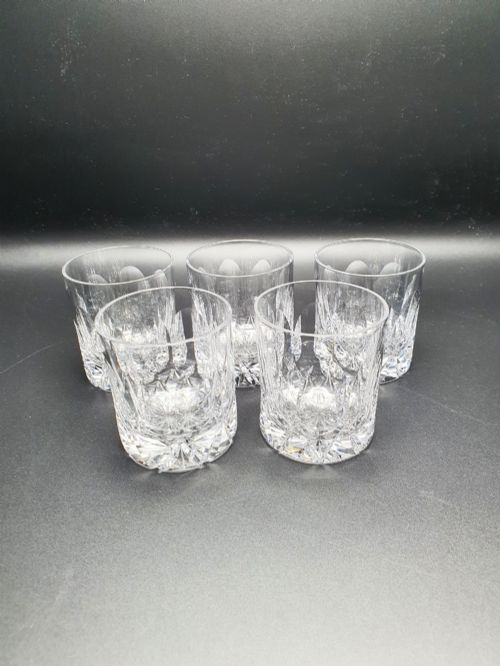
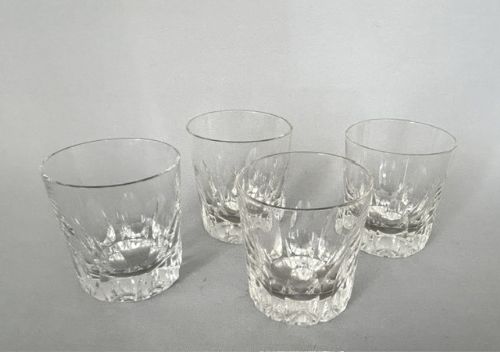
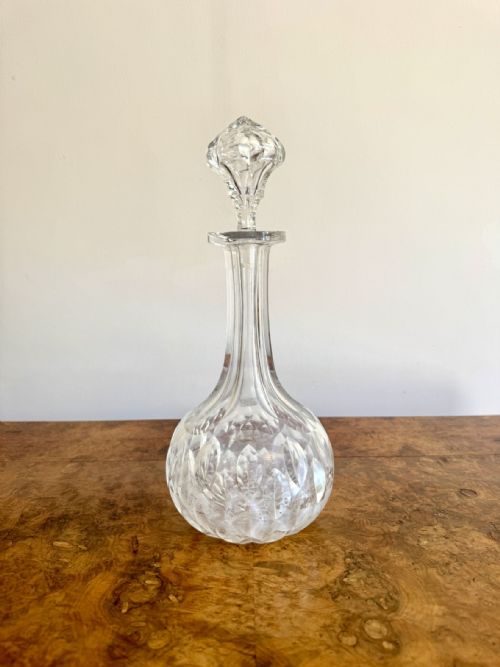

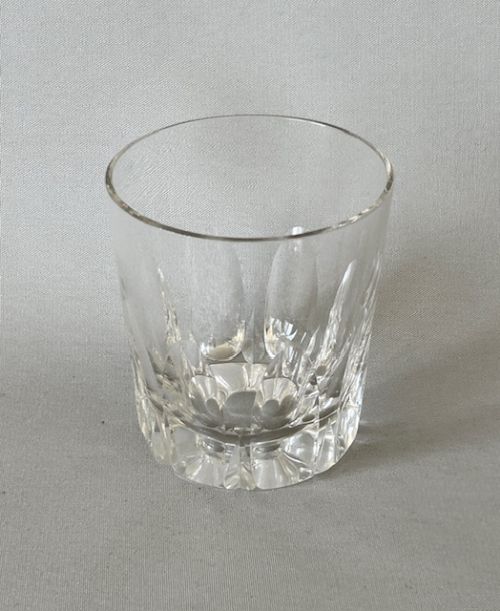


Heavy Crystal Spirit Glasses
Heavy crystal spirit glasses and decanters bring genuine weight and nineteenth-century cut glass brilliance to a home bar.
Heavy Crystal Spirit Glasses
When you search for heavy crystal spirit glasses, you encounter pieces designed for serving and drinking spirits like whisky, drams, and brandy across several eras. The selection ranges from robust Georgian baluster dram glasses to Victorian and Edwardian tumblers and decanters.
The version you meet most often on this page is the Edwardian or Victorian cut glass decanter, usually accompanied by sets of tumblers from the same periods. These vessels reflect the social habits of the nineteenth and early twentieth centuries when serving fine spirits required substantial, refractive glassware.
How they were made
Makers shaped these vessels using lead glass and crystal, adding significant density and clarity that allowed deep surface cutting. Artisans then applied wheel-cutting techniques to create faceted patterns, flutes, and stars across the body.
Certain pieces incorporate additional metalwork, such as silver gilt mounts added to the glass bodies by silversmiths like Freeman & Son Ltd. The combination of heavy blown crystal and precise cutting created durable tableware designed to catch the light.
Heavy Crystal Spirit Glasses Retail Price Guide 2026
Typical asking prices for heavy crystal spirit glasses among the pieces listed under this phrase on Sellingantiques today, from the lower quarter to the upper quarter. They describe what is for sale here now, not the wider market.
Listings span from the early eighteenth century through the Georgian, Victorian, Edwardian, and Art Deco periods into the mid-twentieth century.
What varies in quality
The distinction between ordinary and superior pieces rests on the crispness of the wheel-cut facets and the weight of the metal content in the glass. Finer decanters and tumblers display sharp, deep cutting that remains crisp to the touch, whereas simpler items feature softer, shallower depressions.
Proportion and clarity also separate the ranges, with better examples showing high transparency without cloudiness in the material. The presence of matching sets, original stoppers, and hallmarked silver mounts further elevates the standing of a piece.
Freeman & Son Ltd
The Heavy Crystal Spirit Glasses Glossary
- Decanter
- A glass vessel fitted with a stopper, used for holding and serving wine or spirits. They often feature heavy cut glass decoration and wide bases for stability.
- Tumbler
- A flat-bottomed drinking glass without a stem or handle. In this context, they are sturdy vessels intended for whisky and other spirits.
- Baluster dram glass
- An early drinking vessel featuring a heavy, knopped stem resembling a architectural baluster. These small glasses were designed for strong liquors.
- Ship's decanter
- A decanter with a broad, low base and sloping sides designed to prevent tipping aboard a ship at sea. They date primarily from the Regency and Georgian periods.
- Lead crystal
- Glass containing a substantial percentage of lead oxide, which increases the weight, refractive index, and brilliance of the material. It allows for deeper and sharper cutting.
Heavy Crystal Spirit Glasses: Frequently Asked Questions
Can I use these antique glasses every day?
Many Victorian and Edwardian tumblers and decanters were made robustly for regular use and handle daily hospitality well. Hand washing preserves the surface patterns and prevents accidental knocks.
Take care with very early pieces like eighteenth-century dram glasses, which are thinner and better reserved for occasional use or display.
Why do ship decanters have wide bases?
The distinctive conical shape with a broad base kept the decanter stable on rolling dining tables during sea voyages. This practical design proved so popular that it remained in homes long after sea travel was finished.
Their heavy lead crystal construction further ensured they stayed upright during spirited gatherings.
How can I tell a Victorian decanter from a Georgian one?
Georgian and early Regency pieces often display simpler, heavier forms with thick walls and hand-blown pontil marks on the base. Cut glass decoration on earlier pieces tended to be broader and less intricate than later Victorian work.
Victorian and Edwardian examples frequently show sharper, more complex machine-assisted wheel-cutting and higher overall brilliance due to refined lead crystal formulas.