
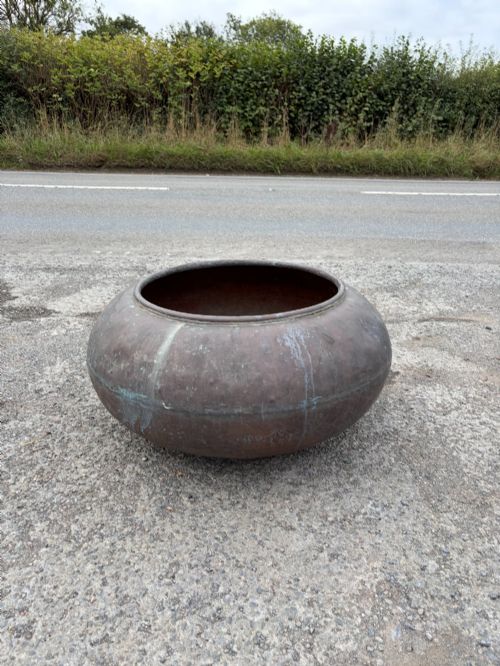
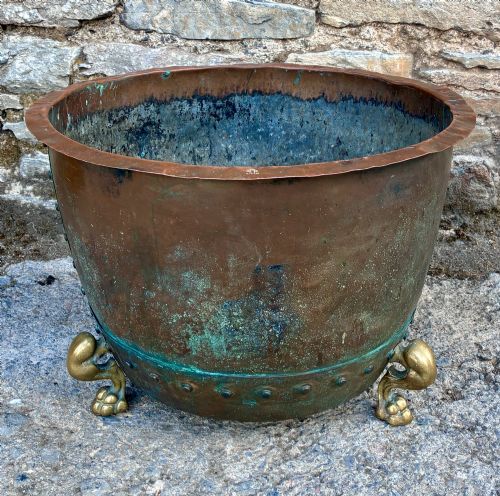
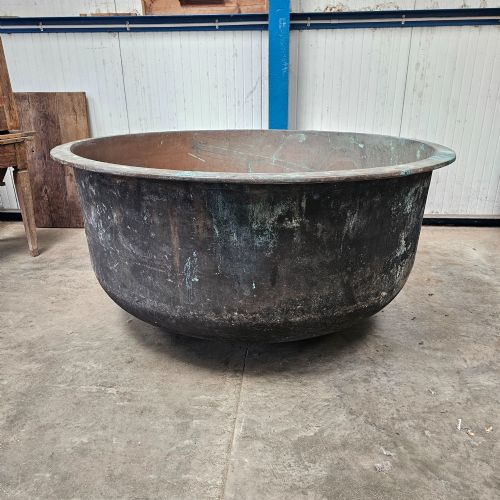
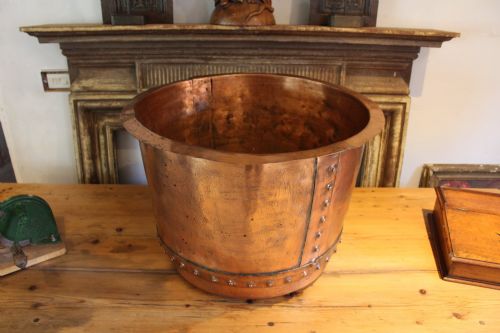
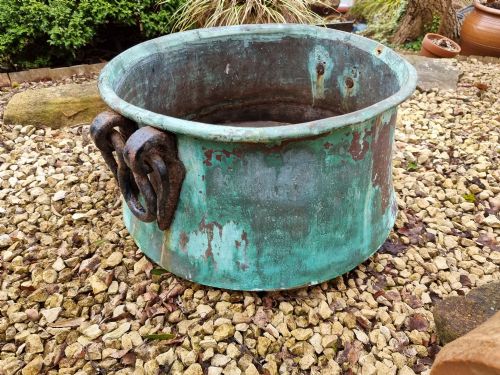


Heavy Copper Wash Tub
A heavy copper wash tub brings practical warmth to a room, offering sturdy metal vessels built for hard daily work.
Heavy Copper Wash Tub
A heavy copper wash tub represents the durable utility items found across nineteenth-century homesteads and country houses. When searching for a heavy copper wash tub, buyers encounter domestic vessels originally shaped for laundering, boiling, and brewing.
Most examples date from the Victorian period through to the late nineteenth century, spanning rustic farmhouse and industrial styles. These pieces frequently appear repurposed as log bins, planters, and large decorative bowls.
Originating from British and French workshops, these containers display substantial heft and practical utilitarian design. The selection includes cauldrons, cheese vats, and grain measures alongside traditional washing vessels.
Construction and materials
Metalworkers constructed these heavy vessels using sheet copper joined by visible hand-hammered rivets. Iron, brass, and wrought iron provided structural reinforcement for handles, rims, and swingbails.
Blacksmiths and coppersmiths shaped the bodies over anvils, often pairing heavy copper walls with cast iron or steel bands. Surviving pieces retain their original patina, sometimes showing traces of verdigris or painted surfaces.
Many of these tubs spent decades scrubbing laundry before retiring to a life holding firewood.
Assessing quality and character
Quality rests in the thickness of the metal sheet and the integrity of the riveted joints. Substantial gauge copper resists denting better and maintains structural stability through decades of use.
The character of the surface finish distinguishes superior examples. Original patination, untouched verdigris, and solid wrought iron attachments elevate the visual weight of the vessel.
The Heavy Copper Wash Tub Glossary
- Verdigris
- A green patina formed naturally on copper through atmospheric oxidation. This surface layer provides historical evidence of age and exposure.
- Swing handle
- A movable bail handle attached to opposite sides of a vessel. These iron or brass additions allowed workers to lift heavy filled containers.
- Riveted
- Joined together using metal pins hammered flat at the ends. This technique secured heavy copper plates before modern welding methods existed.
- Patina
- The surface sheen and colour acquired by metal through age and handling. A genuine patina develops naturally over many decades of use.
- Cauldron
- A large deep metal pot with a rounded base designed for heating liquids over an open fire. These heavy vessels frequently served domestic and agricultural functions.
Heavy Copper Wash Tub: Frequently Asked Questions
How were these tubs originally used?
These heavy copper vessels served demanding household and agricultural duties such as boiling laundry, heating water, and preparing foodstuffs.
Larger variants functioned in dairies and farmhouses for cheese making, brewing, and grain storage before finding new life in modern interiors.
Can I use these outdoors as planters?
Copper withstands outdoor elements effectively, developing a rich verdigris finish when exposed to weather and soil over time.
Ensure adequate drainage if planting directly inside the vessel, or use the tub as an outer cachepot to protect the metal.
How do I clean antique copper?
Wash the surface gently using warm water and mild soap to remove dust while preserving the historic patina.
Avoid harsh abrasives or chemical polishes that strip away the authentic aged finish collectors value.
How do I date a copper vessel?
Examine the construction methods, noting whether the body uses hand-hammered sheets secured with irregular handmade rivets.
Victorian and Georgian pieces typically display heavier gauge metal, wrought iron fittings, and distinct tool marks from nineteenth-century workshops.