


Heavy Copper Kitchenware
Heavy copper kitchenware brings genuine functional warmth to a room, offering substantial gauge metal that holds heat steadily for authentic culinary use.
Heavy Copper Kitchenware
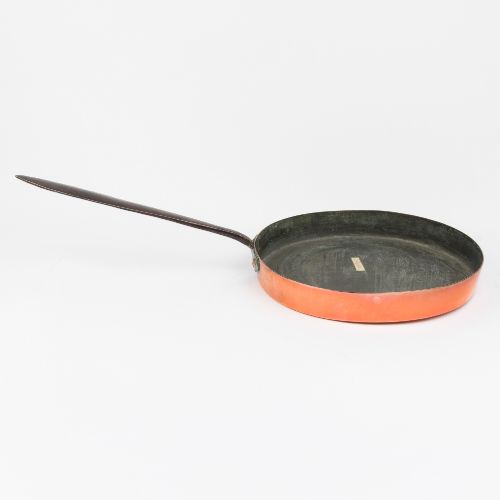
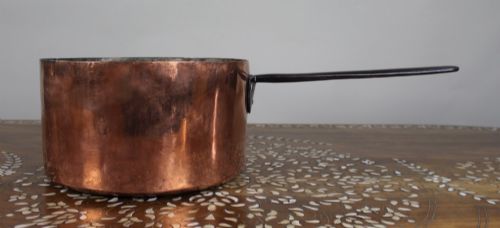
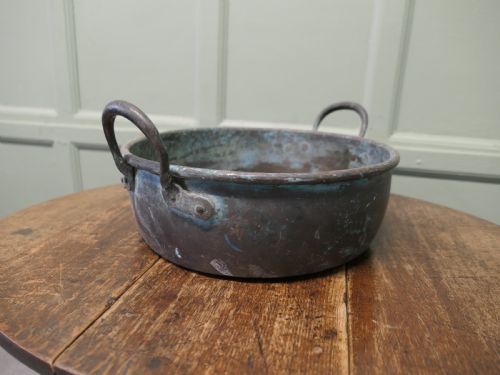
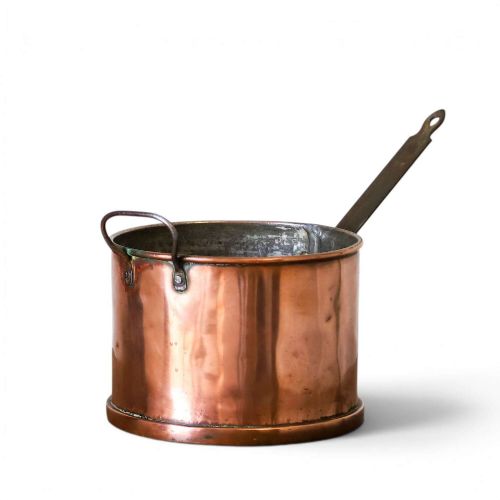
When you search for heavy copper kitchenware, you encounter robust culinary vessels designed for serious kitchen work across the Georgian, Victorian, and nineteenth-century periods. These pieces include large preserve pans, saucepans, fish kettles, sets of multiple pans, and culinary moulds originating from British and French domestic traditions.
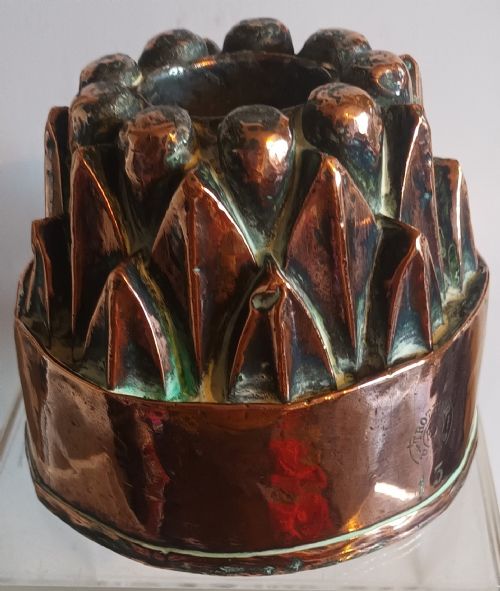
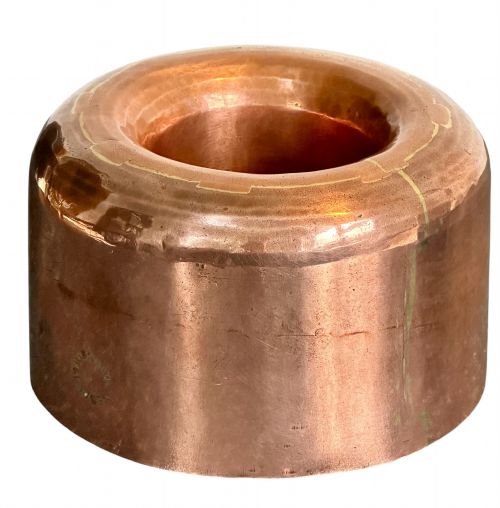
The objects most frequently met on this page are generous saucepans and preserving pans fashioned from thick metal, often accompanied by brass handles or iron attachments. Forms range from utilitarian single vessels to matched sets of pans and intricate jelly moulds intended for display as well as cooking.
How they were made
These items rely on heavy gauge copper formed by hand-beating the metal into shape, which hardens the sheet and creates subtle surface irregularities characteristic of nineteenth-century production. Rivets of copper or iron secure sturdy handles, while internal surfaces receive a traditional tin lining to prevent direct contact between food and reactive copper.
Moulds and mortars incorporate cast elements such as bronze or bell metal alongside beaten copper bodies, utilising diverse metalworking techniques suited to each specific kitchen task. Iron and brass fittings provide durable mounting points designed to withstand heavy lifting and sustained heat exposure.
Listings feature copper, iron, tin, brass, cast iron, wrought iron, bronze, and bell metal across eighteenth and nineteenth-century periods.
What varies in quality
Quality rests primarily in the thickness of the metal sheet and the integrity of the original construction, where heavier gauge walls resist warping under intense heat. Superior pieces display careful hand-beating marks, tight riveting, and well-balanced handles that remain securely fastened to the body.
The presence of maker stamps or retailer details elevates an object, as do matched sets where proportions and handle styles align harmoniously across multiple pieces. Preservation of the interior tin lining and the survival of matching lids also separate ordinary utilitarian vessels from exceptional examples.
Hodges and Sons·Trottier
The Heavy Copper Kitchenware Glossary
- Gauge
- The thickness of the metal sheet used to form the vessel. Thicker gauges denote superior commercial-grade kitchenware built for professional hearths.
- Tin lining
- A protective layer applied to the interior of copper cookware. This coating prevents copper toxicity when cooking acidic foods.
- Preserve pan
- A wide, open vessel designed for boiling fruit and sugar. These pans feature sloped sides to encourage evaporation during jam making.
- Bell metal
- An alloy of copper and tin traditionally used for casting mortars and pestles. It produces a sonorous ring and withstands heavy pounding.
- Fish kettle
- An elongated oblong pan fitted with a draining insert. This form allows whole fish to be poached evenly without breaking apart.
Heavy Copper Kitchenware: Frequently Asked Questions
Can I still cook with heavy copper pans?
Many of these pieces remain entirely functional for modern cooking provided the interior tin lining is intact and sound. If the underlying copper is exposed, professional retinning restores the vessel for culinary use.
Heavier gauge pans distribute heat with exceptional uniformity, making them particularly prized for sauce making and preserving on modern heat sources.
How do I clean antique copper?
Traditional cleaning involves gentle commercial copper creams or a simple paste of lemon juice and salt applied with a soft cloth. Avoid abrasive pads that scratch the hand-beaten surface and diminish the soft historic patina.
Allowing the metal to age naturally between occasional polishes preserves the warm tones accumulated over centuries of kitchen life.
How do I date an old copper pan?
Dating relies on observing handle attachment methods, dovetail seams on the base, and the overall weight and hammer marks of the metal. Georgian and early nineteenth-century pieces often feature distinct wrought iron handles secured with heavy hand-cut rivets.
Later Victorian production frequently incorporates cast brass handles and standardised sizing associated with larger commercial workshops.
Were these French or British?
The listings encompass both British domestic kitchenware and French country culinary equipment from the eighteenth and nineteenth centuries. French pieces often include distinctively shaped saucepans and decorative copper jelly moulds.
British examples frequently comprise heavy preserve pans and utilitarian saucepans marked by robust iron handles and simpler utilitarian forms.