






Hardwood Plant Table
A hardwood plant table brings dense, characterful timber and carved detail to domestic spaces, serving as a sturdy pedestal for pots and lamps.
Hardwood Plant Table
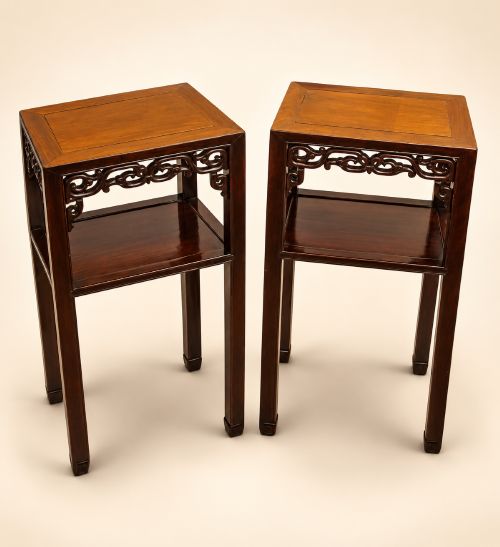
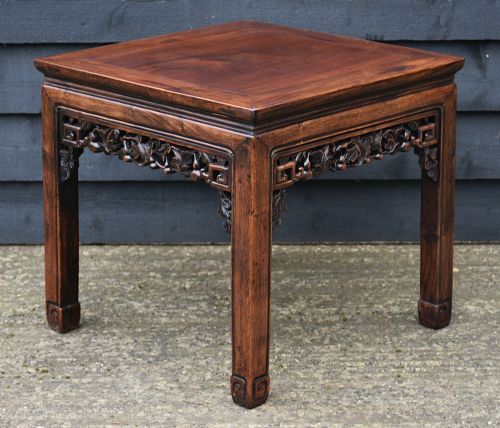
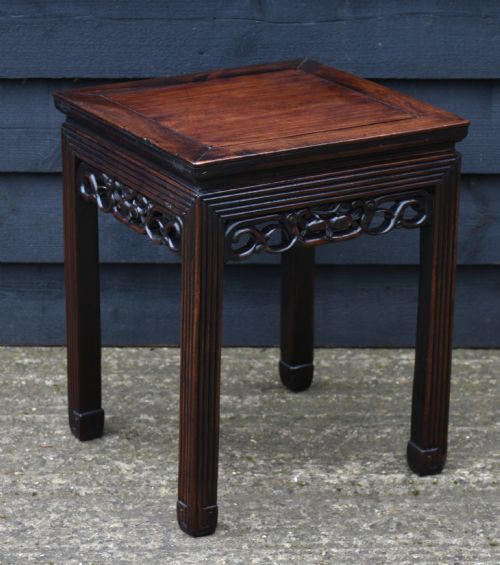
A hardwood plant table encompasses small stands, low tables, and pedestals designed to elevate greenery, ceramics, and lamps within a room. The items listed on this page span the nineteenth century into the early decades of the twentieth century, originating primarily from Chinese workshops, Anglo-Indian makers, and Japanese influence.
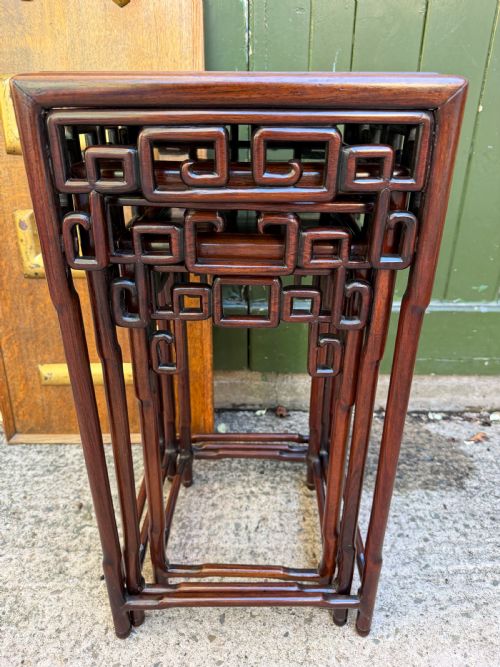
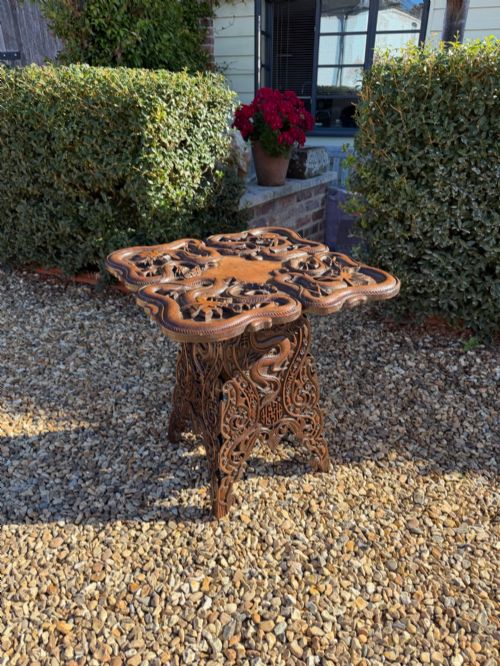
Buyers will most frequently encounter Chinese pot stands and jardiniere tables featuring shaped frames, alongside Anglo-Indian octagonal tables and nested sets. These pieces double as occasional tables and side tables, adapting easily to varied interior layouts without dominating a room.
The construction draws on traditional forms ranging from Qing Dynasty designs to Victorian adaptations and Japonisme pieces. Such tables function effectively in domestic settings as focused display surfaces that lift natural materials and decorative objects into the line of sight.
Materials and Technique
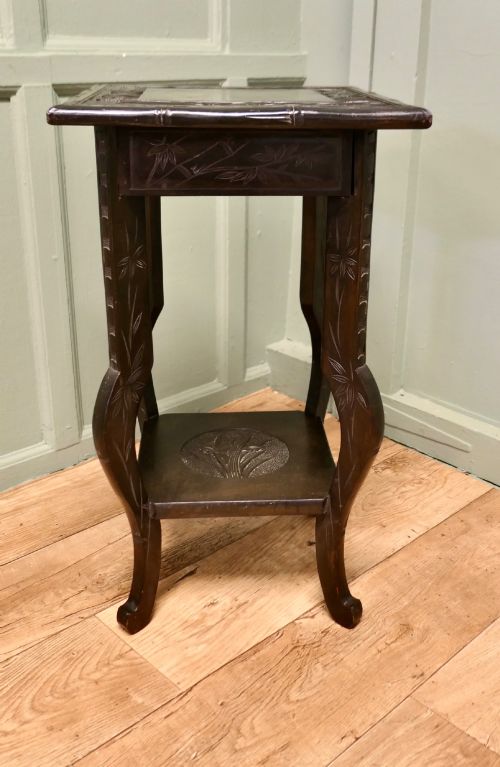
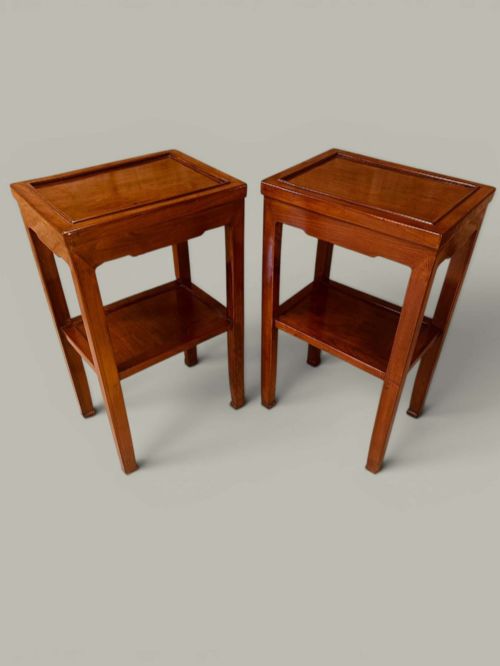
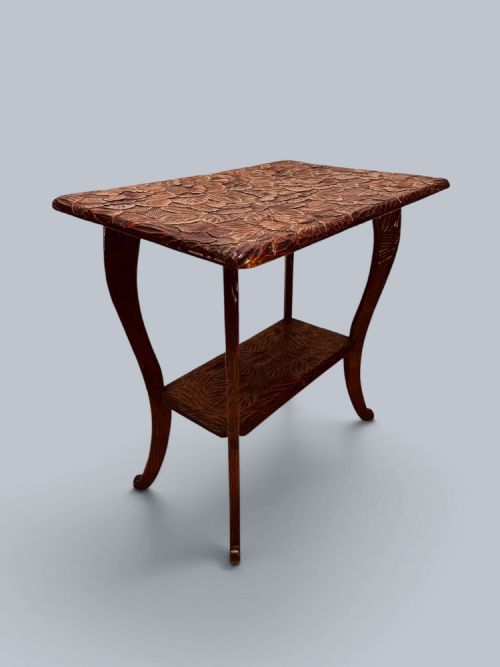
Makers utilised dense timbers such as rosewood, padouk, huanghuali, and hongmu, selecting them for structural strength and rich natural grain patterns. Ebonised hardwood and walnut also appear, providing dark, uniform surfaces or intricate carved relief.
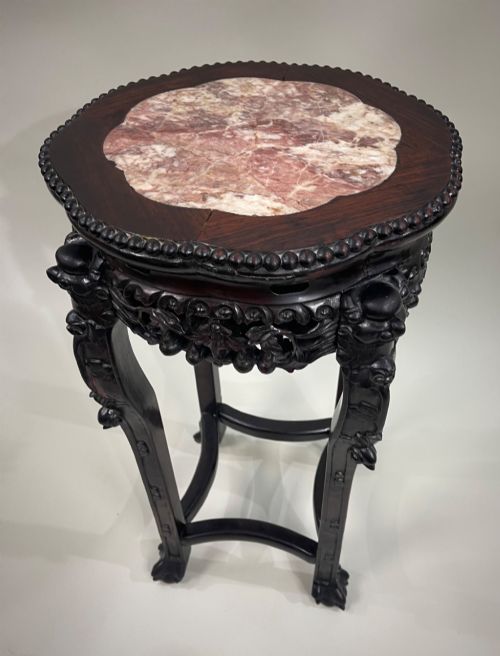
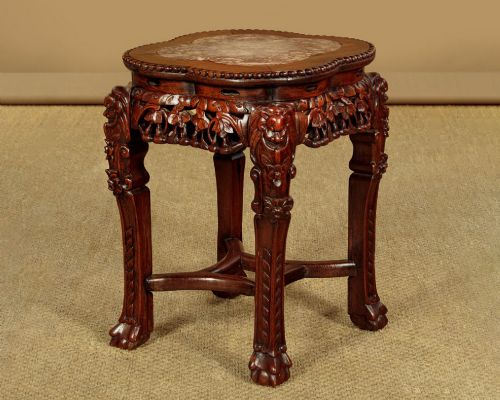
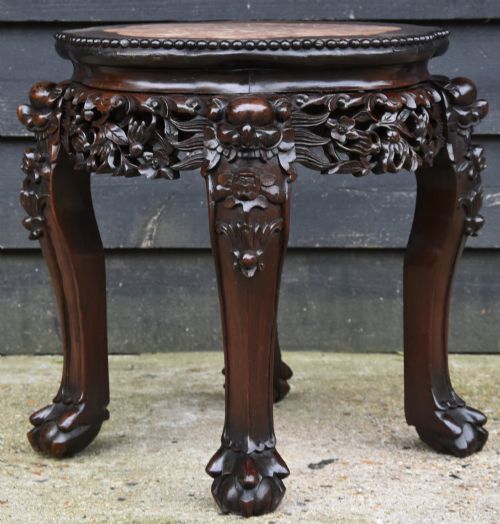
Inlay work forms a key part of the construction technique, utilising bone, mother-of-pearl, and brass set flush into the wooden top and apron. Many stands incorporate inset marble slabs into the central surface, creating a cool, durable platform for holding wet plant pots.
Joinery relied on precise traditional framing methods that allowed dense timbers to expand and contract with environmental changes. Carving was executed by hand, producing detailed floral motifs, dragons, and pierced aprons that integrated the legs smoothly with the upper surface.
Hardwood Plant Table Retail Price Guide 2026
Typical asking prices for hardwood plant table among the pieces listed under this phrase on Sellingantiques today, from the lower quarter to the upper quarter. They describe what is for sale here now, not the wider market.
Listings feature timbers including rosewood, padouk, teak, and huanghuali alongside inset marble and bone inlay.
Judging Quality
Quality rests upon the depth and crispness of the hand carving, where sharper definition in foliage and figures marks superior execution. Timber selection dictates the visual impact, with richly figured grain and uniform colour distinguishing the better examples from plainer stock.
The integration of inset elements, such as variegated rouge marble or precisely fitted bone and mother-of-pearl inlay, demonstrates the maker's skill. Solid, stable construction without excessive movement in the joints separates high-grade workshop production from standard utility items.
The Hardwood Plant Table Glossary
- Jardiniere stand
- A tall or low table specifically built to support a decorative ceramic flower pot or jardiniere. These pieces often feature water-resistant inset tops made of marble.
- Hongmu
- A translation meaning red wood, applied to a category of dense, dark tropical hardwoods used in traditional Chinese furniture. It develops a deep patina over decades of use.
- Padouk
- A heavy, durable tropical hardwood with a distinctive reddish hue that deepens with age. It holds fine carved detail exceptionally well.
- Japonisme
- A Western artistic style of the late nineteenth century influenced by Japanese art and design. It appears in European furniture that adopts Eastern structural forms and motifs.
Hardwood Plant Table: Frequently Asked Questions
What is a hardwood plant table used for?
These tables were originally built to elevate potted plants, vases, and heavy lamps above floor level to improve visibility and protect delicate flooring. Today, they serve a similar purpose in domestic interiors as versatile accent furniture for displaying ceramics or holding drinks.
Their compact footprints allow them to fit into tight corners, beside seating, or in hallways where larger furniture would obstruct movement.
How do I identify a Chinese Qing Dynasty stand?
Chinese Qing Dynasty stands are characterised by dense tropical hardwoods, pierced carved aprons, and traditional joinery methods that avoid visible metal fixings. Many incorporate inset marble tops designed to hold damp flower pots without damaging the wood.
Detailing often includes auspicious motifs such as dragons, prunus blossom, or geometric key patterns carved in deep relief along the legs and apron.
What is an Anglo-Indian occasional table?
An Anglo-Indian table combines traditional Indian carving techniques with British furniture forms popular during the nineteenth and early twentieth centuries. They frequently feature folding octagonal bases and dense overall surface decoration.
These pieces often incorporate intricate bone or brass inlay work depicting foliage, animals, or geometric patterns across walnut or teak frames.
How should I care for a marble top table?
Marble inset tops require gentle cleaning with a damp cloth and mild soap, avoiding acidic cleaners that can etch the polished stone surface. Using coasters and mats prevents scratching and staining from moisture or hot objects.
The surrounding hardwood frame benefits from occasional dusting and light waxing to maintain the condition of the timber finish.