




Hardwood Hall Table
A hardwood hall table brings sculptural timber and deep cultural carving straight into an entrance, offering a sturdy surface for daily comings and goings.
Hardwood Hall Table
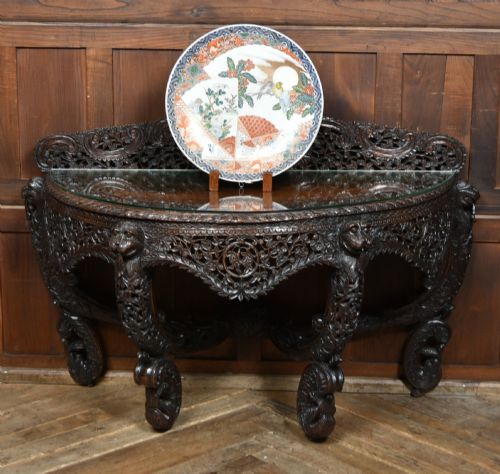
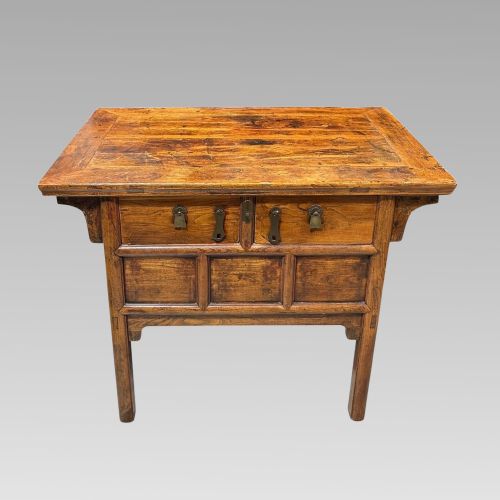
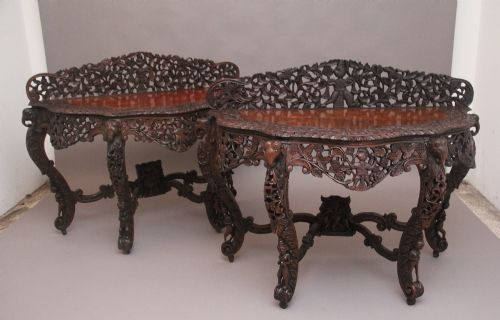
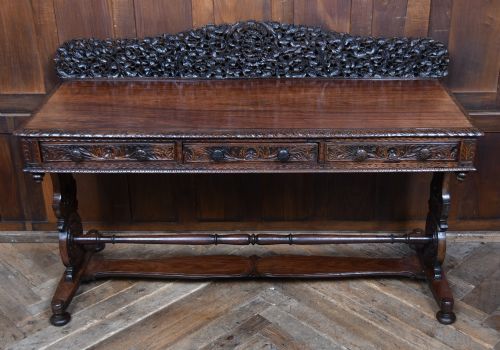
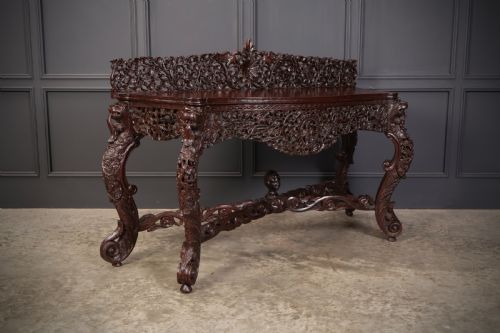
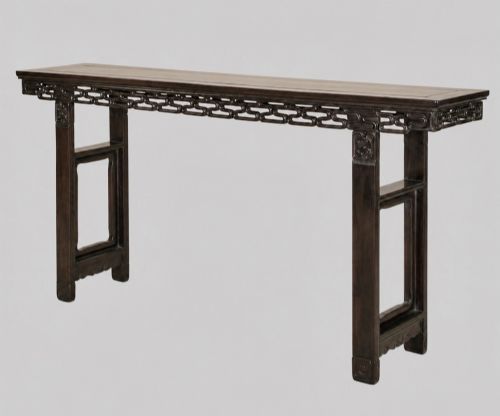
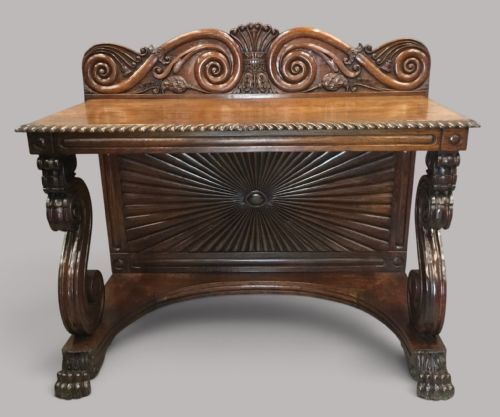
When you search for a hardwood hall table, you encounter a distinct group of entrance and reception furniture that draws heavily upon 19th-century Chinese export, Qing Dynasty design, and Anglo-Burmese craftsmanship. These tables serve primarily as console, altar, and side surfaces designed to stand flat against a wall or anchor a hallway with carved presence.
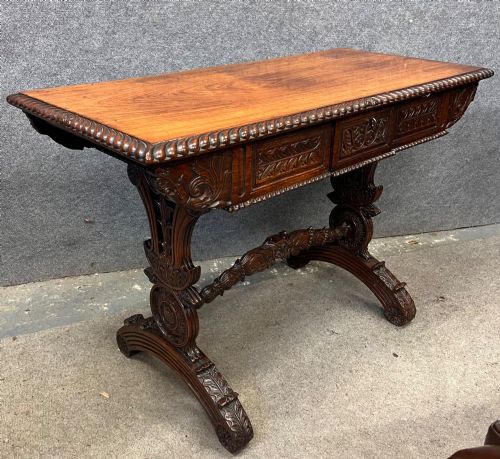
The versions you are most likely to meet on this page span the 19th century up to 1900, including Edwardian interpretations of earlier European styles like William & Mary. Forms range from linear demi-lune shapes and altar tables to long console tables embellished with intricate dragon motifs and traditional carving.
Makers and workshops from China, Burma, and India produced these pieces using dense regional timbers intended to withstand heavy domestic use. Their arrival in British interiors historically reflected global trade routes and a distinct appetite for exotic, highly figured wood.
How they were made
Cabinet makers utilised dense exotic timbers such as padouk, amboyna, elm, teak, and Hongmu, selecting them for their heavy weight and capacity to hold crisp, deep relief carving. These woods often display rich natural grain patterns that were polished rather than heavily painted to showcase the raw material.
Construction techniques combined traditional joinery with elaborate hand carving, frequently incorporating brass fittings or inset marble tops to add textural contrast to the dark hardwood frames. The surfaces feature deep undercut floral, dragon, and scroll motifs that demonstrate significant manual labour by regional artisans.
Hardwood Hall Table Retail Price Guide 2026
Typical asking prices for hardwood hall table among the pieces listed under this phrase on Sellingantiques today, from the lower quarter to the upper quarter. They describe what is for sale here now, not the wider market.
Several tables feature carved dragons glaring quietly across the hallway, keeping an unblinking watch over incoming post and stray house keys.
What varies in quality
Proportion and structural integrity also separate standard tables from masterworks, with balanced frames and well-executed joinery maintaining stability across centuries of use. The sophistication of the regional style - whether a refined Qing Dynasty altar table or a robust Anglo-Indian console - dictates the overall artistic merit.
The Hardwood Hall Table Glossary
- Padouk
- A dense, heavy tropical hardwood prized for its reddish-brown colour and stability in fine carving. It frequently appears in 19th-century Anglo-Burmese and colonial furniture.
- Demi-lune
- A half-moon shape used for tables designed to sit flush against a wall. This profile saves floor space in narrow hallways while providing a stable display surface.
- Altar table
- A traditional Chinese form characterised by an elongated rectangular top, often with upturned flanged ends. Originally used in domestic or temple settings, they adapt well as narrow hall tables.
- Amboyna
- A highly decorative wood obtained from the burl of the narra tree, displaying intricate mottled grain patterns. It is typically utilised for high-status occasional tables.
- Qing Dynasty
- The final imperial dynasty of China, spanning from the mid-17th to the early 20th century. Furniture from this period is defined by robust hardwood construction and symbolic carving.
Hardwood Hall Table: Frequently Asked Questions
How do I style an antique hall table?
Place the table flat against a hallway wall where its carved apron and timber grain can be appreciated without obstructing movement.
Pair the surface with simple items to let the dense wood and traditional craftsmanship remain the visual focal point of the entrance.
What woods were used for these tables?
Cabinet makers utilised a range of dense tropical hardwoods including padouk, teak, elm, amboyna, and Hongmu. These heavy timbers were chosen for their durability and ability to hold intricate hand-carved motifs.
Some examples also incorporate contrasting materials such as marble inserts or brass hardware.
How do I identify a Qing Dynasty table?
Qing Dynasty and Chinese export tables are typically identified by traditional forms like altar tables or demi-lune shapes, paired with motifs such as dragons and floral scrolls.
They rely on heavy hardwood construction and date predominantly from the 19th century up to 1900.