


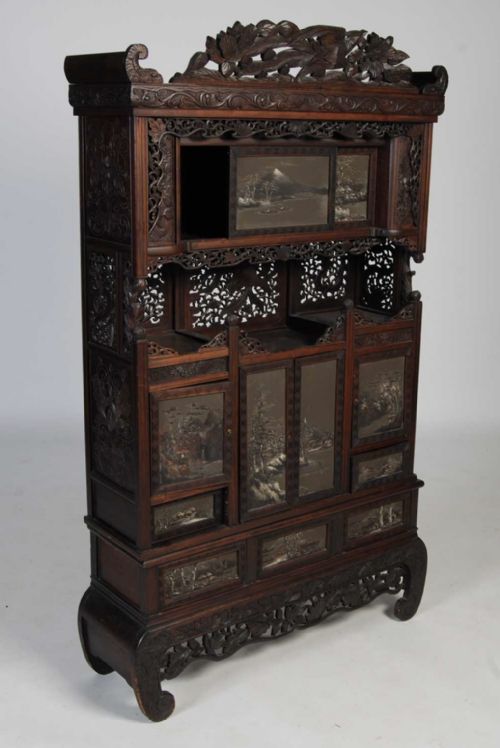


Hardwood Display Shelf
These hardwood display shelf pieces offer intricate carving and sturdy construction, bringing historic Asian craftsmanship straight into your home.
Hardwood Display Shelf
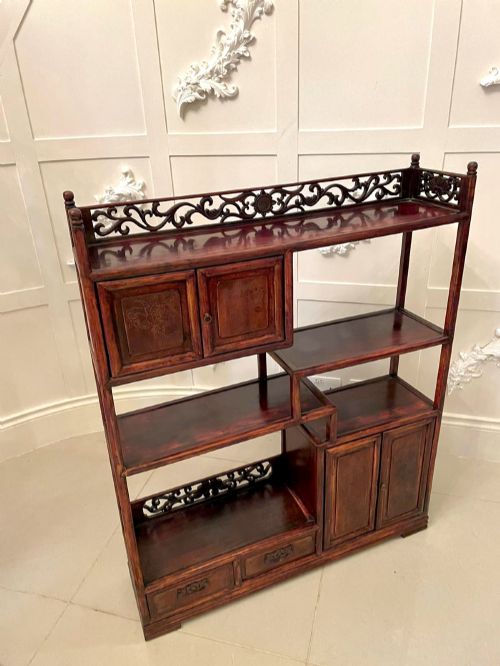
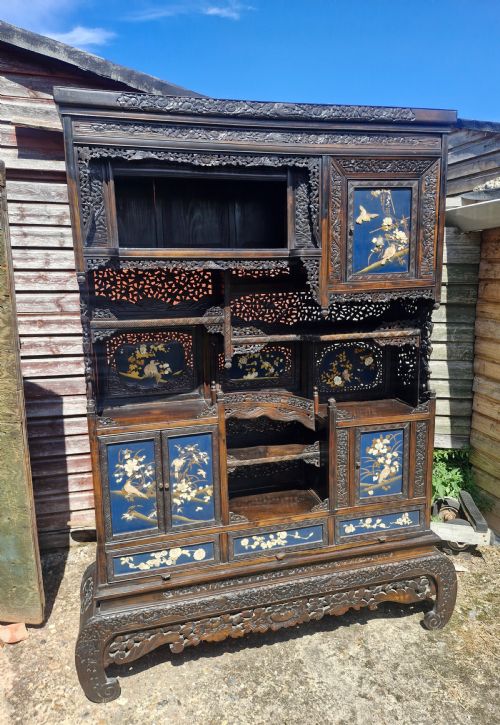
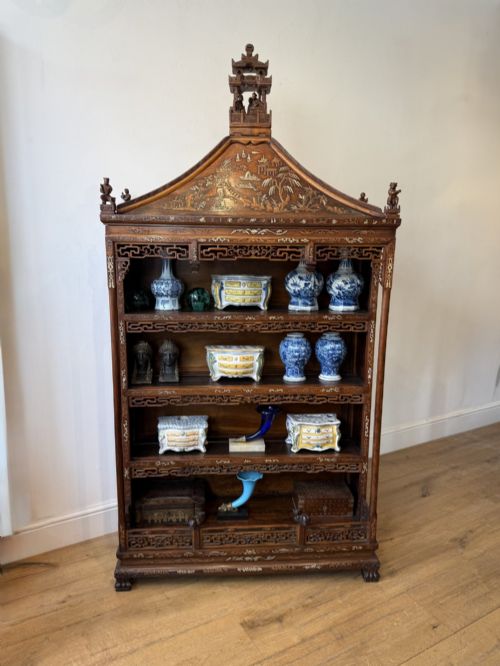
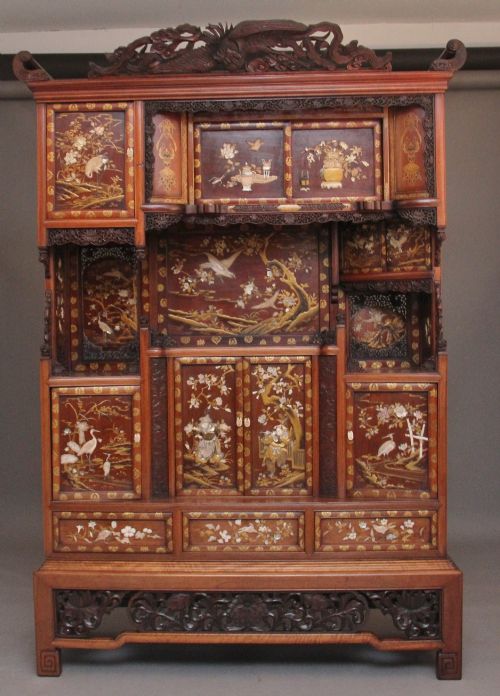
A hardwood display shelf encompasses elaborate Asian furniture such as Chinese display cabinets, Japanese shodana cabinets, and open stands designed to showcase prized objects. You are most likely to encounter nineteenth century and early twentieth century examples originating from China and Japan.
The forms range from dwarf side cabinets and tall floor clocks to multi-tiered open cabinets featuring mother of pearl inlay and bone inlay. These pieces combine practical storage with decorative display surfaces suitable for domestic interiors.
How they were made
Craftsmen utilised dense timbers like rosewood and hongmu alongside lacquered surfaces, carving the dense grain with deep relief work. Inlay work incorporated mother of pearl, bone, and brass elements set flush into the wooden framework.
Joinery methods prioritized stable frames to support multiple tiers and glass panels without warping the dense hardwood structure over decades of use.
Some dwarf side cabinets hide tiny compartments behind intricately carved doors, perfect for secreting away your smallest treasures.
What varies in quality
Quality differentiates by the crispness of the carving and the precision of the inlay work across the cabinet panels. Pieces executed with profuse, deep relief and securely fitted mother of pearl demand closer attention than plain framework.
The integration of the stand or base relative to the main cabinet body also marks the distinction between standard production and superior examples.
The Hardwood Display Shelf Glossary
- Shodana
- A Japanese multi-tiered display cabinet featuring staggered shelves and cupboards. These pieces typically exhibit intricate woodwork and varied compartment sizes.
- Hongmu
- A dense, dark Chinese hardwood prized for cabinet making. This material takes a fine polish and supports heavy carved detail.
- Chinoiserie
- European decorative style reflecting Chinese artistic traditions. It appears in furniture design through motifs and structural influences.
- Meiji Period
- A historical Japanese era spanning from eighteen sixty-eight to nineteen twelve. Cabinets from this time often display refined lacquer and carved detailing.
Hardwood Display Shelf: Frequently Asked Questions
How do I date a hardwood display shelf?
Dating relies on stylistic markers, construction methods, and documented periods such as the Qing Dynasty or Meiji Period. Examining the timber density and inlay techniques helps establish the era of manufacture.
Changes in decorative motifs across nineteenth and early twentieth century pieces provide further clues for chronological placement.
Where were these cabinets placed in a home?
These pieces sat in principal reception rooms to exhibit ceramics, bronzes, and other treasured items. Their multi-tiered shelving allowed collectors to arrange small objects effectively.
Floor standing cabinets and dwarf side cabinets served both storage and display functions within the interior layout.
What is the difference between Chinese and Japanese cabinets here?
Chinese pieces often feature profuse carving in rosewood or hongmu alongside mother of pearl inlay. Japanese shodana cabinets typically emphasise asymmetrical staggered shelving and lacquer finishes.
Both traditions utilised dense hardwoods but expressed distinct architectural arrangements in their display sections.
How should I clean a hardwood display shelf?
Dusting with a dry, soft cloth prevents particulate buildup on the carved surfaces and delicate inlay. Avoid liquid polishes that can seep into unsealed wood pores or damage lacquer.
Maintaining stable room humidity protects the dense timbers and prevents movement in the inlaid panels.