

Hanging Glass Shade Light
These hanging glass shade light fixtures range from Victorian lanterns to Art Deco pendants, bringing authentic period illumination to any room.
Hanging Glass Shade Light
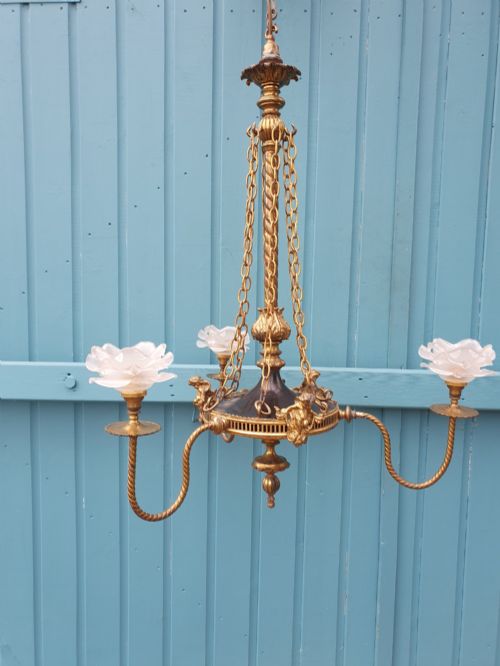
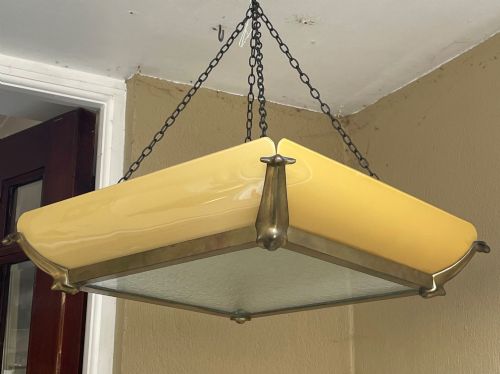
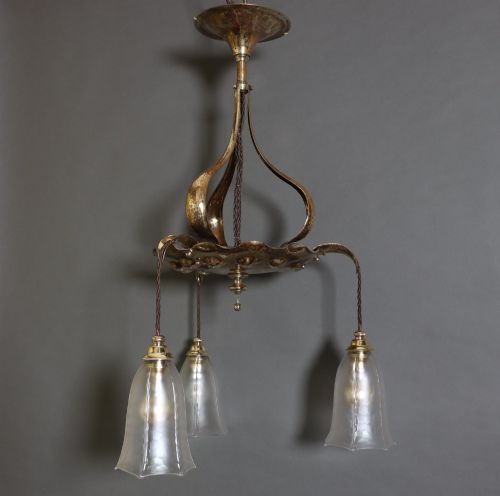
A hanging glass shade light fulfills the need for direct or diffused overhead illumination while serving as a distinct decorative focal point in a room. When you explore this selection, you encounter a wide array of ceiling lights, pendant lights, chandeliers, and individual lamp shades spanning the nineteenth century through the mid-twentieth century.
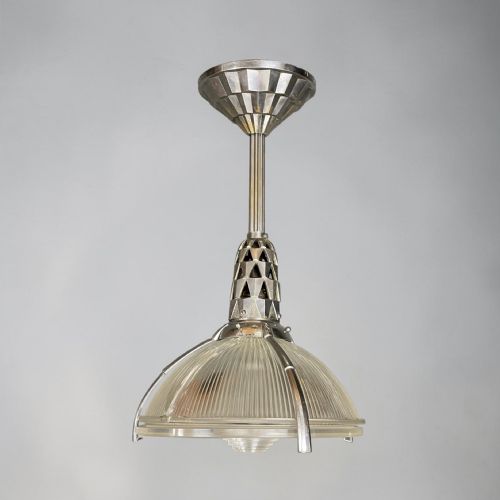
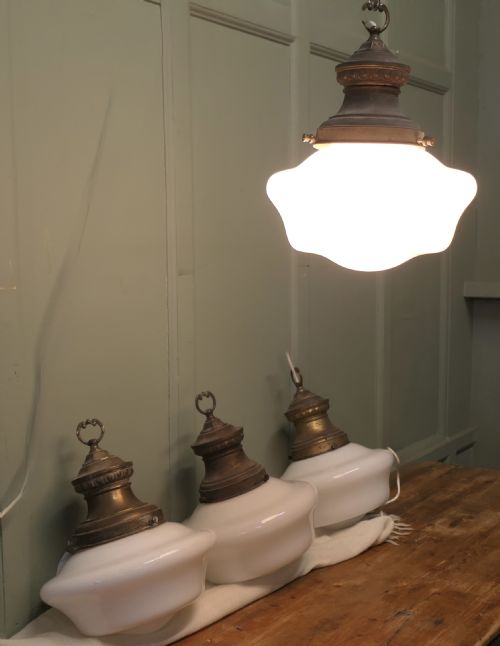
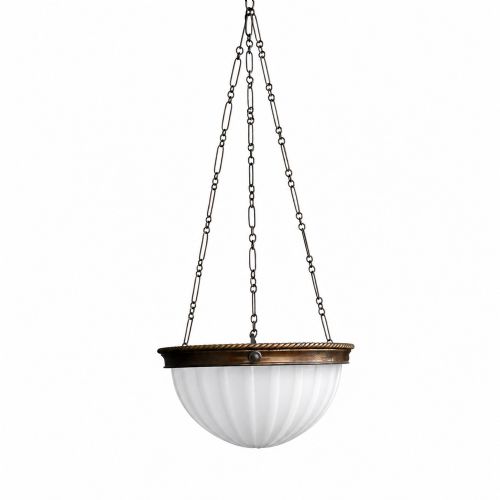
The most common examples you meet on this page date from the early twentieth century, specifically the 1920s and 1930s, reflecting Art Deco, Edwardian, and industrial aesthetics. These pieces typically take the form of pendant lights, domes, globes, and plafonniers designed to hang centrally from a ceiling.
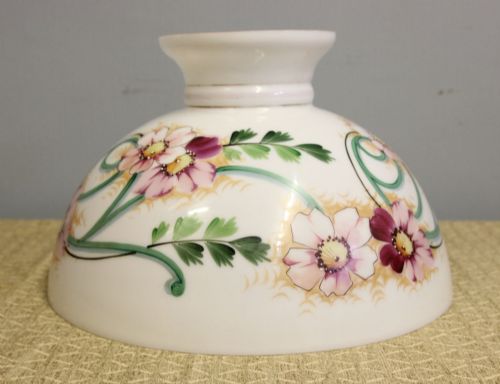
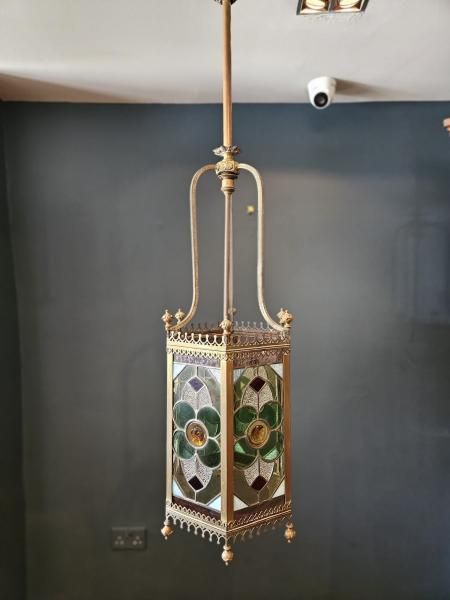
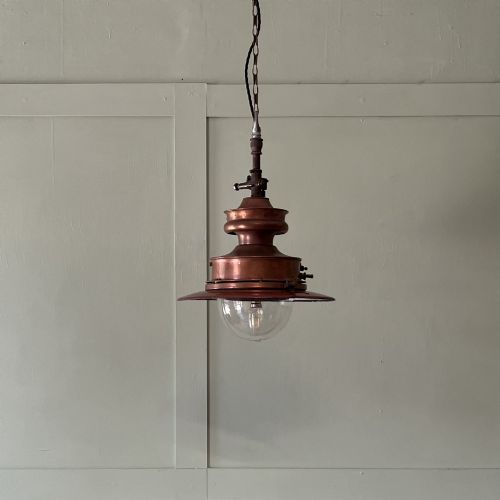
Earlier pieces from the Victorian era and the nineteenth century tend toward more robust brass, copper, and leaded glass lanterns, alongside hand-painted or opaline oil lamp shades adapted for electricity. Later mid-century modern and industrial designs streamline the profile, often utilising utilitarian glass prisms and specialised reflector profiles.
Materials and Construction
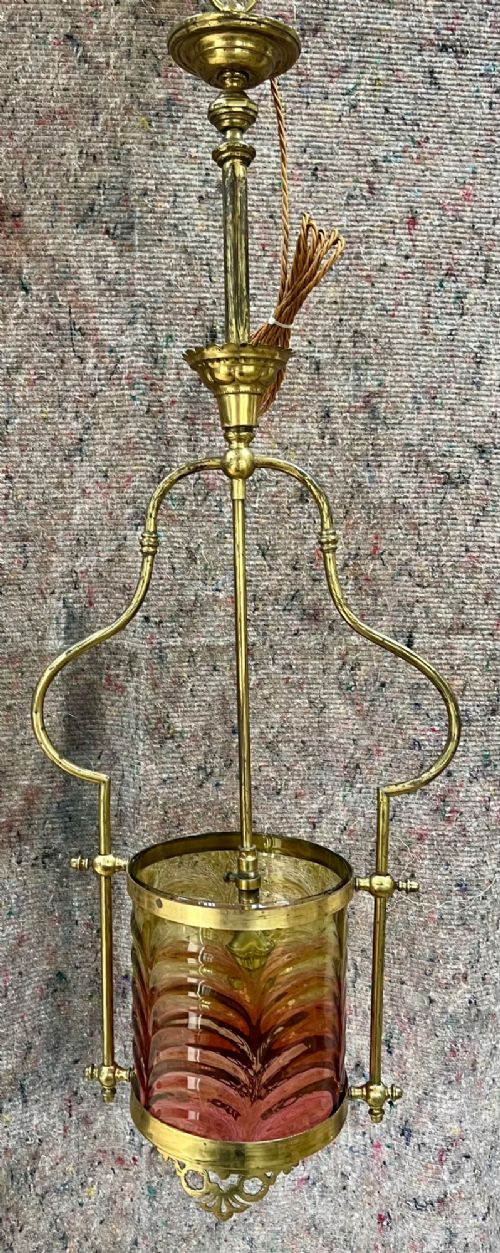
Makers constructed the structural framework of these fixtures predominantly using brass, copper, and various base metals to house and suspend the glass elements securely. These metallic components range from simple spun brass collars to elaborate cast bronze frames and nautical copper housings.
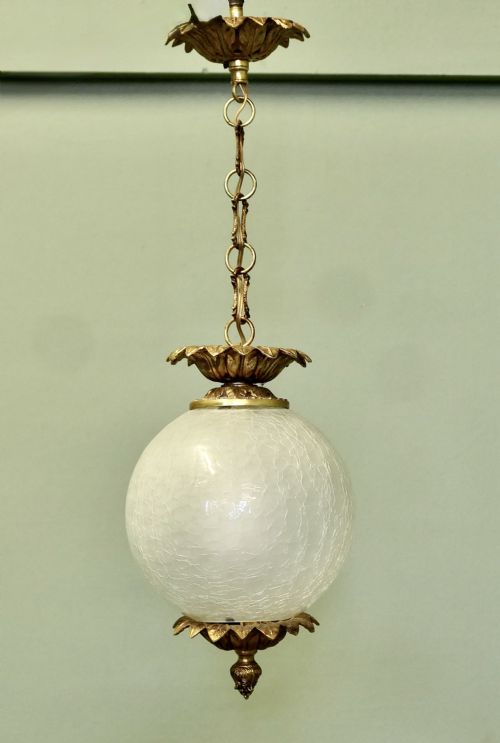
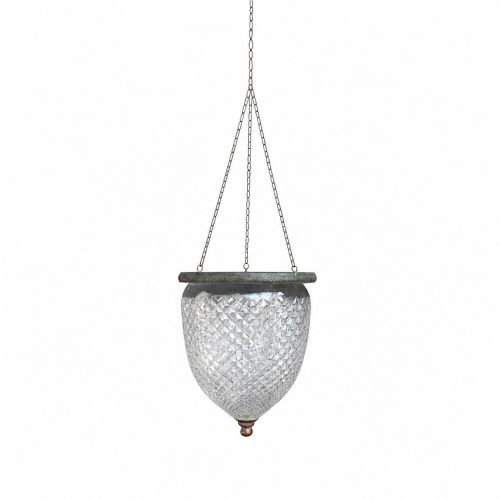
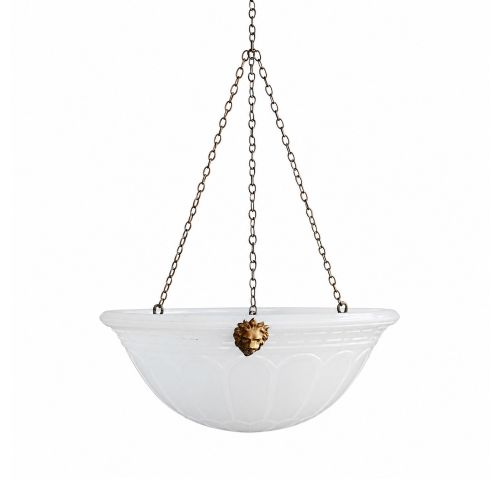
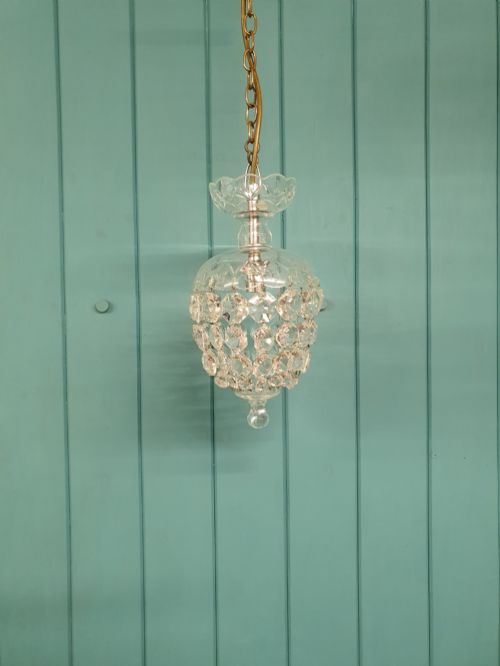
The glass shades themselves exhibit significant variety, encompassing opaline glass, frosted glass, cut glass, crystal, moonstone, crackle glass, opalescent glass, and leaded stained glass. Artisans shaped these glass bodies through moulding, hand-painting, cutting, and leaded assembly to manipulate light diffusion and colour.
Several railway and nautical lanterns successfully traded their original smoky train soot for a polite retirement hanging in modern hallways.
Assessing Quality and Craftsmanship
The distinction between standard utility lighting and superior examples rests heavily on the depth of hand-craftsmanship in both the glass and the metal mounts. Heavy cast brass or copper components with crisp leaf or geometric designs indicate higher workshop standards than pressed sheet metal.
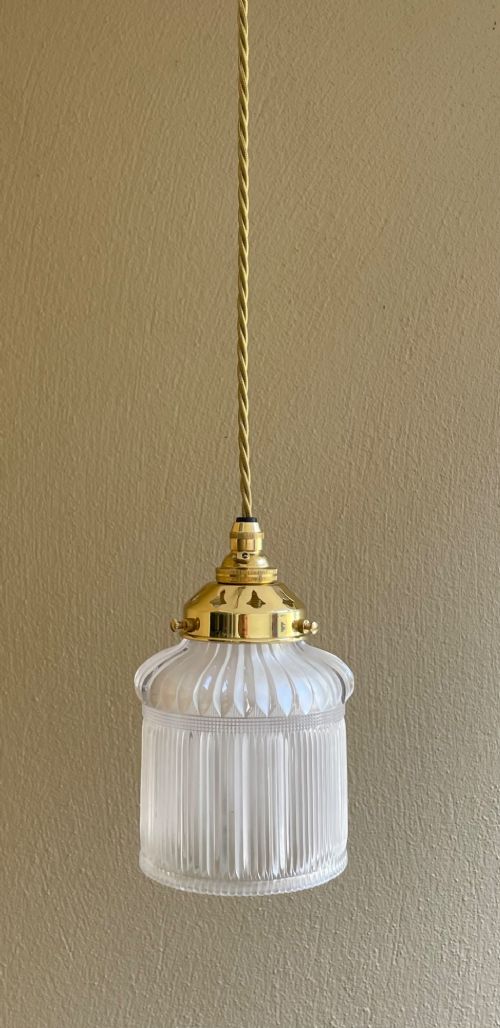
Quality in the glass shade reveals itself through consistent thickness, intentional optical properties such as prismatic ribbing or deep hand-cutting, and harmonious integration with the original hanging mechanisms. Finer examples retain specialised glass types like moonstone or signed prismatic patterns that diffuse light evenly without glare.
Émile-Jacques Ruhlmann
The Hanging Glass Shade Light Glossary
- Plafonnier
- A ceiling-mounted light fixture with a shallow glass bowl or shade held close to the ceiling surface. These sit flush or semi-flush to direct illumination downward.
- Opaline Glass
- A milk-white or tinted translucent glass developed to soften light output while maintaining high luminosity. It appears frequently in twentieth-century pendants and oil lamp conversions.
- Holophane
- A brand of scientific prismatic glass engineered to direct and diffuse light efficiently. These ribbed shades are prized in industrial and commercial lighting.
- Rise and Fall
- A mechanical pulley system utilising counterweights that allows the pendant light to be adjusted vertically. This mechanism was popular in Edwardian interiors for over tables.
- Vaseline Glass
- A yellowish-green glass containing uranium dioxide that glows under ultraviolet light. It appears in Arts and Crafts lighting fixtures.
Hanging Glass Shade Light: Frequently Asked Questions
How do I choose the right size hanging glass shade light?
Consider the scale of the room and the height of the ceiling when selecting a pendant, chandelier, or plafonnier. Smaller 5-inch to 7-inch shades suit hallways or alcoves, while large multi-arm chandeliers or expansive moonstone shades demand generous ceiling clearance and open floor space.
Ensure the hanging drop matches the functional needs of the space, whether suspended low over a dining table or fitted closer to the ceiling as a hallway centrepiece.
Can antique hanging lights be wired for modern electric systems?
Most antique and vintage fixtures encountered on the market have already been adapted for modern electrical standards or can be easily rewired by a qualified electrician. Brass and copper frames generally accommodate standard internal wiring channels without altering the exterior historic appearance.
It is advisable to have a professional inspect the internal lampholders and ceiling roses during installation to ensure safety compliance while retaining the original shade.
How do I identify an Art Deco glass shade?
Art Deco lighting fixtures, prevalent through the 1920s and 1930s, typically feature geometric motifs, stepped forms, and stylized floral or symmetrical patterns. Look for slip shades, moulded opalescent or crackle glass bowls, and streamlined brass or chrome hardware.
These pieces often embrace machine-age aesthetics alongside traditional craftsmanship, resulting in bold Conical, pear-shaped, or spherical profiles.
What is the difference between opaline and moonstone glass?
Opaline glass is an opaque or semi-translucent white glass that diffuses light with a smooth, milky appearance. Moonstone glass possesses a characteristic cloudier, softer depth that resembles the soft glow of the moon.
Both materials were utilised extensively in early twentieth-century English pharmacy and domestic lighting to eliminate harsh glare from early electric bulbs.