


Hanging Brass Chandelier
A hanging brass chandelier brings warm illumination and architectural presence to a room, drawing the eye upward with polished metal and glass.
Hanging Brass Chandelier
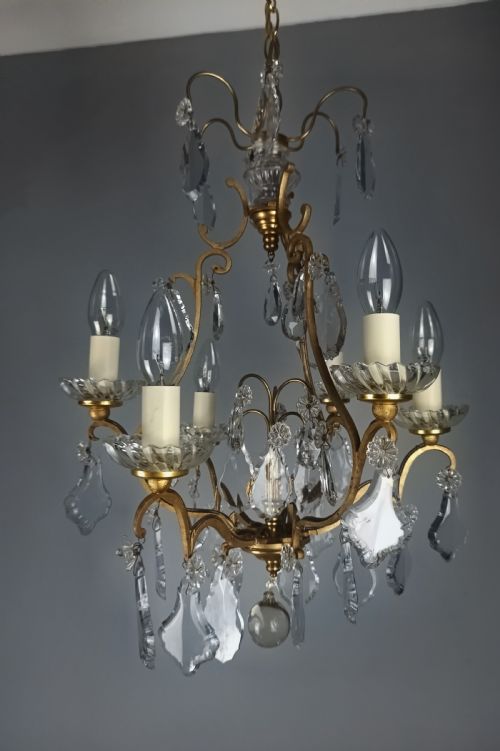
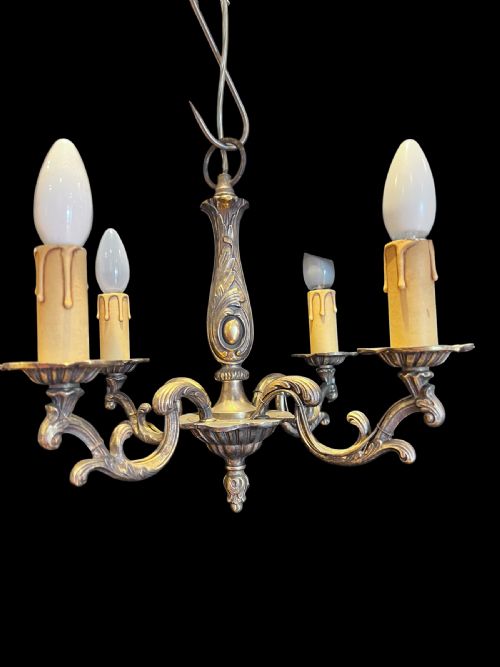
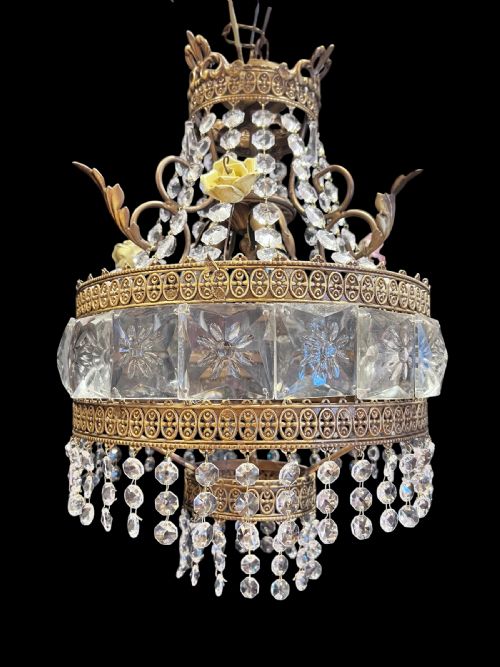
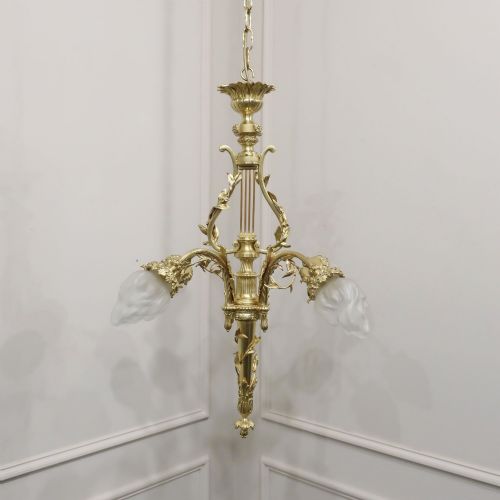
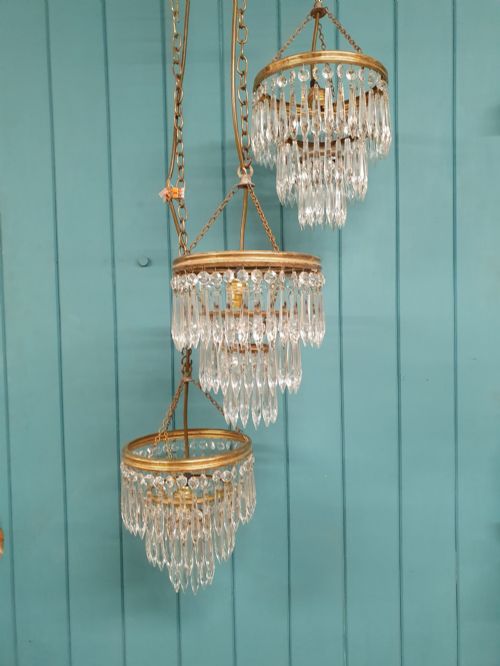
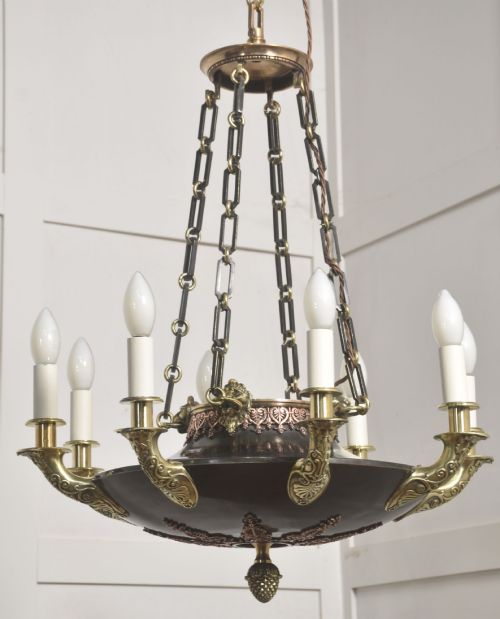
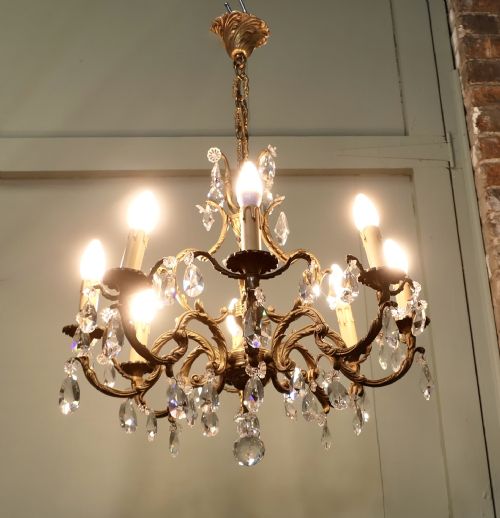
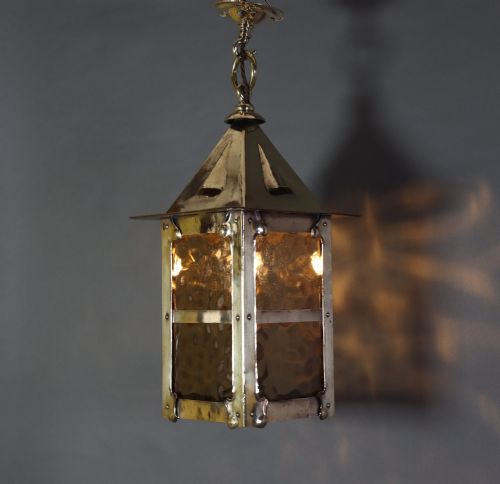
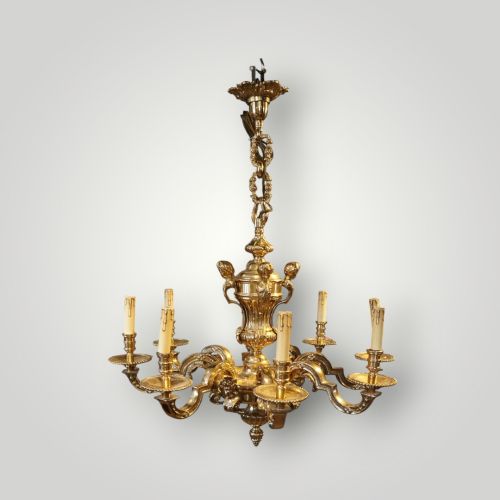
A hanging brass chandelier provides suspended overhead lighting through multi-branched frames or enclosed glass lanterns. These fixtures range from simple multi-arm configurations to ornate designs incorporating crystal lustres, porcelain flowers, and coloured glass.
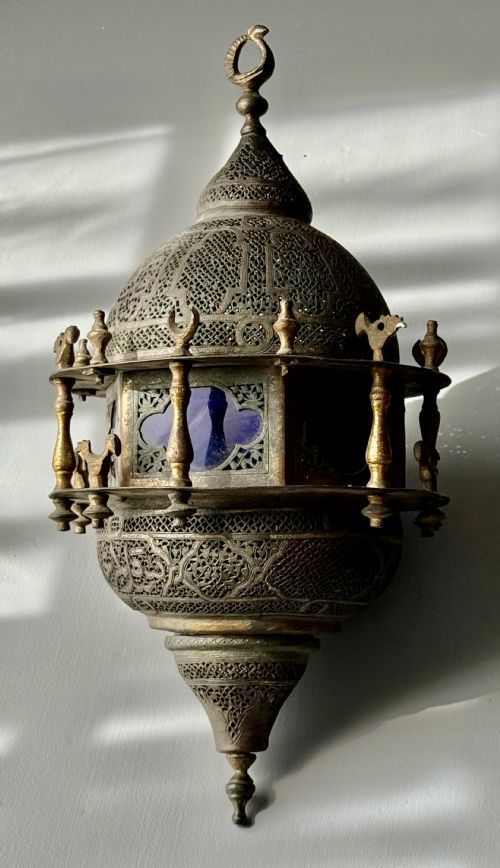
The selections span the Victorian, Edwardian, and Art Deco periods, alongside French Neoclassical, Rococo, and Moorish Revival styles. French and Italian workshops feature prominently among the continental examples.
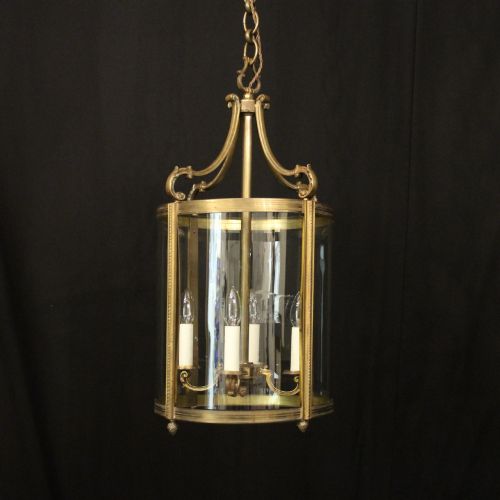
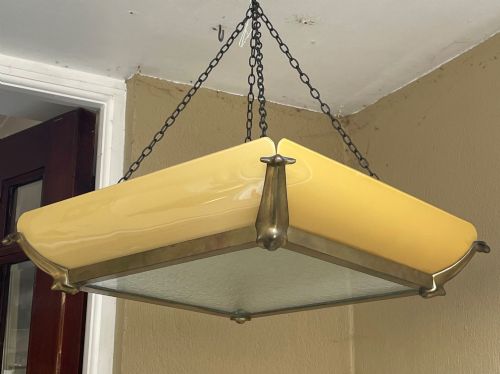
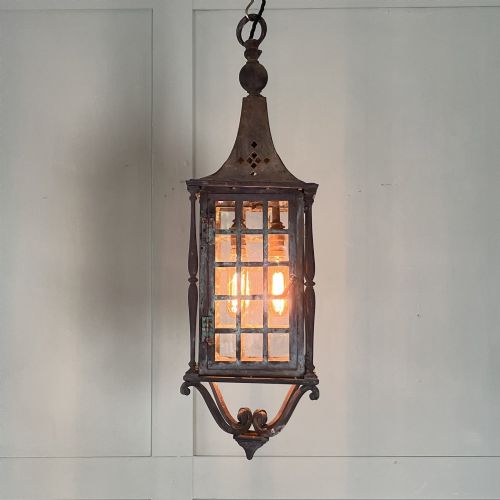
Buyers encounter both open branch lights holding multiple bulbs and enclosed hall lanterns designed for corridors and entranceways. Cast brass, gilt metal, and copper form the structural bodies of these hanging pieces.
Materials and Construction
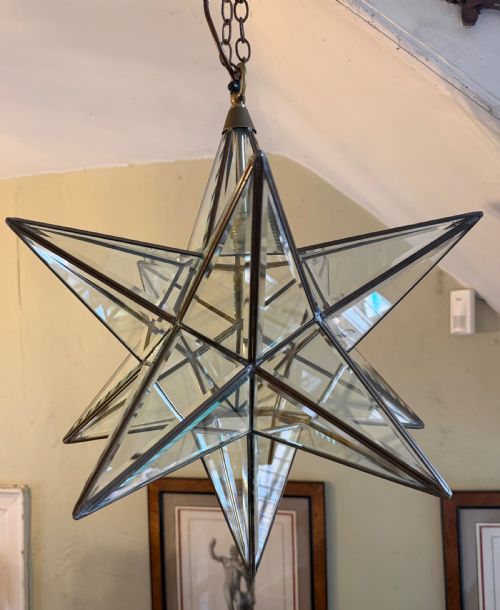
Makers shaped structural frames using cast, pierced, and spun brass, often augmenting the metal with gilt bronze or copper. Glass components include cut crystal lustres, bevelled glass panels, and etched globes.
Decorative details rely on applied ceramic flowers, toleware foliage, and leaded glass construction. Frames utilise mechanical joints, soldered metalwork, and riveted brass pins to secure glass panels and candle arms.
Listings feature brass, copper, and gilt metal paired with cut crystal, leaded glass, and etched globes across the Victorian and Edwardian periods.
Evaluating Quality and Detail
Quality rests in the crispness of the casting, the depth of the hand-chasing on bronze elements, and the clarity of the glass or crystal. Superior examples display substantial metal weight and integrated decorative flourishes.
The refinement of secondary materials, such as hand-cut crystal drops or hand-soldered leaded glass joints, separates standard production from exceptional artistry.
G.E.C
The Hanging Brass Chandelier Glossary
- Plafonnier
- A ceiling-mounted or shallow hanging light fixture with a bowl-shaped shade, often seen in cut glass.
- Lustre
- A cut glass pendant drop or prism suspended from a chandelier to reflect and refract light.
- Hall lantern
- An enclosed hanging light designed specifically for entryways and narrow passages, often featuring glazed sides in brass frames.
- Toleware
- Painted or lacquered sheet metal utilised for decorative floral or foliage elements on light fittings.
- Gilt bronze
- Bronze metal treated with a gold-wash surface finish, commonly called gilt bronze orOrmolu.
Hanging Brass Chandelier: Frequently Asked Questions
How do I hang a heavy chandelier?
Suspension requires fixing the weight directly to ceiling joists using a rated ceiling hook and suitable mounting bracket. Professional electrical installation ensures the brass frame hangs safely at the correct height.
Ceiling height determines the drop, ensuring clearance for inhabitants while maintaining the visual balance of the room.
Were these lights converted from gas?
Many Edwardian and Victorian fixtures originated as gas or candle fittings before undergoing conversion for electricity. Converted examples retain their original burner keys or candle drip pans alongside modern wiring.
Conversion methods preserve the structural integrity of the antique brass frame while adapting the interior sockets for contemporary bulbs.
How do I clean an antique brass chandelier?
Dusting with a soft brush prevents grime accumulation on the brass frame and glass lustres. Avoid harsh chemical polishes that strip historical patination from the metal surfaces.
Crystal drops and glass shades benefit from gentle washing in warm soapy water while unattached, then drying completely before re-hanging.
How do I date a brass hanging light?
Dating relies on stylistic clues, manufacturing techniques, and material combinations associated with periods like Art Deco, Edwardian, or Victorian. Cast brass details and glass cutting styles offer clear indicators of age.
Comparative analysis of documented pieces from the nineteenth and early twentieth centuries helps confirm the specific era of manufacture.